Wall Anchors: Choosing Between Plugs, Mechanical and Chemical Fixings
A heavy shelf comes off the wall after two months, taking a piece of block with it. An air conditioner's fixings slowly loosen until the unit tilts. In almost every case the cause is not that the anchor was weak, but that the anchor type did not suit the wall material. Anchor selection starts with one question, and it is not about load.
Base material is the most important decision
Every anchor works by one of three mechanisms: friction and pressure against the hole wall (expansion), mechanical interlock behind the wall (toggling), or bonding with a resin that fills the void (chemical). The material you drill into determines which mechanism can work at all.
| Base material | Behaviour | Suitable anchors | Avoid |
|---|---|---|---|
| Solid cast concrete | Homogeneous, strong, takes expansion pressure | Sleeve, wedge, chemical | Hollow-wall anchors |
| Hollow concrete block | Thin webs with internal voids | Toggle, resin with mesh sleeve, hollow-specific plug | Wedge and heavy expansion anchors that burst the web |
| Lightweight aerated block | Soft, friable, low strength | Dedicated aerated-block screw plug, resin with mesh | Anything relying on aggressive expansion |
| Solid fired brick | Strong but brittle, splits | Long plastic plug, chemical | High expansion near edges or joints |
| Plasterboard | Thin sheet; carries nothing by friction | Spring toggle, metal toggle, self-drill plasterboard plug | Ordinary plastic plugs |
A test hole tells you a lot: fine grey dust with high resistance means concrete; resistance that stops abruptly and the bit plunging means you have broken through a hollow block web into a void; red dust means brick; white dust and very little resistance means plaster or render only.
Frequent error: fixing into the render coat alone. Render is thin and weak and cannot be relied on for any load. The anchor must be long enough to engage the base material behind it, which means the required length increases by the full render thickness.
Plastic expansion plugs and their limits
The screw entering the plug expands its body against the hole wall, and friction carries the load — so performance depends entirely on the base material's ability to resist that side pressure. Suitable for pictures, light mirrors, cable and conduit clips, and lightly loaded shelves in sound solid walls.
Real limits: they do not work in hollow walls, spinning in the void with nothing to press against; performance collapses in soft aerated block that crumbles; they lose capacity under dynamic load and vibration as the plastic creeps; heat makes them more ductile and reduces grip; and they need an exactly matching hole — a millimetre oversize leaves a loose piece of plastic. The screw matters too: it must be the recommended diameter and long enough to expand the plug along its whole body. A short screw expands only the front.
Hollow-wall anchors
In hollow walls and plasterboard the logic reverses: there is no usable side surface, so you use the void and hang the load off the back face.
- Spring toggle: wings fold to pass through then open behind the board. The strongest option in plasterboard; the wings drop into the cavity if the screw is removed.
- Metal flip toggle: inserted folded then pulled to bear on the back face; some leave a fixed collar so the screw can be removed and refitted.
- Self-drill plasterboard plug: screwed straight into the board. Light loads only, since it relies on board material.
- Plastic umbrella anchor: legs spread behind the board; suitable for light to medium loads.
Key rule: however good the anchor, heavy loads in plasterboard must go into the steel or timber stud behind it, or onto a spreader batten fixed to studs. The board itself has a ceiling no anchor exceeds.
Mechanical anchors for concrete
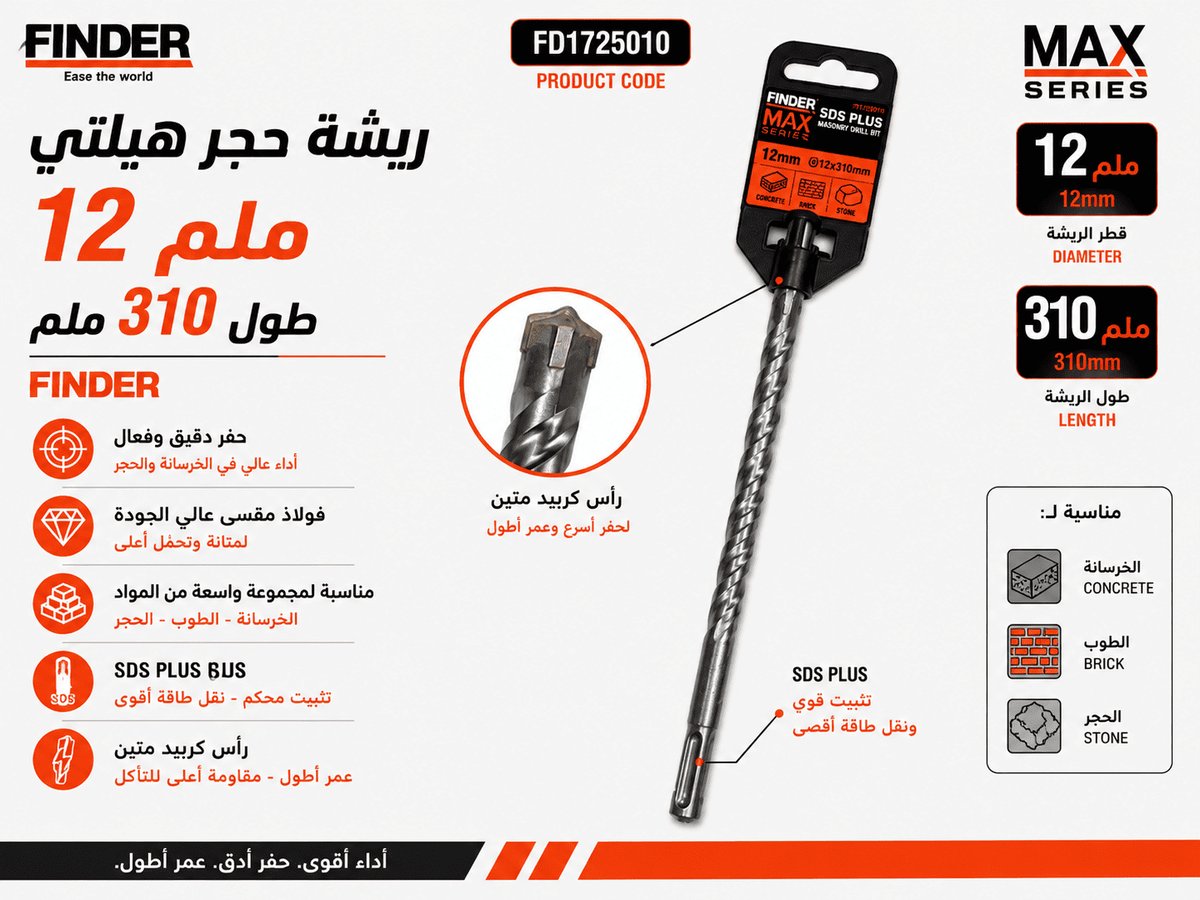
Sleeve anchors use a metal sleeve around a tapered bolt; tightening expands the sleeve over part of its length, spreading pressure over a larger area than a wedge anchor. That makes them gentler on brittle material and usable in solid brick.
Wedge anchors push small clips outward to engage over a short zone near the hole bottom. Very high capacity in sound concrete, but they concentrate high pressure at one point, making them very sensitive to correct embedment depth and edge distance, and unsuitable for hollow or friable material.
Concrete screws cut their own thread in a precisely sized hole. Fast, with no expansion and therefore less side pressure, which helps near edges — but they demand a very accurate hole diameter or they lose engagement.
Chemical anchors and when they are the right answer
Resin injected into the hole fills every void and bonds the rod to the surrounding material through adhesion and micro-interlock, exerting no expansion pressure at all. That property is why they win in specific situations:
- Close to an edge: an expansion anchor near an edge pushes a cone of concrete out; resin creates no such pressure.
- High loads: load is distributed along the full embedment rather than concentrated.
- Hollow base with a mesh sleeve: resin spreads through the mesh and forms behind the block web, acting as a mechanical key — practically the best solution for hollow block.
- Cracked, friable or old base material: the resin fills and consolidates.
- Non-standard depths and diameters, and post-installed reinforcement connections into existing concrete.
Limits: cure time depends on ambient temperature, and in hot weather the working time after mixing shortens noticeably, so everything must be prepared in advance. It is extremely sensitive to hole cleanliness, and loading before full cure ruins it permanently.
The hole is half the anchor
- Diameter: exactly as the manufacturer specifies. Oversize loses engagement and friction; undersize prevents insertion or damages the anchor during setting. A worn bit drills larger than its nominal size.
- Depth: must allow full embedment plus extra at the bottom for dust. An anchor bottoming out before reaching proper depth will not expand correctly. Mark depth on the bit with tape if the drill has no depth stop.
- Squareness: an angled hole loads the anchor asymmetrically, reducing capacity and making the fixture sit badly.
Hole cleaning is non-negotiable
Drilling dust stays as a loose layer on the hole wall and in its base. With mechanical anchors it reduces friction and part of the capacity. With chemical anchors it is immediately catastrophic, because the resin bonds to the dust rather than the concrete and pulls out under very light load with the dust layer attached.
Correct cleaning of a deep hole means blowing air from the bottom outward, brushing with a wire brush whose diameter actually contacts the wall, blowing again, and repeating the cycle. An undersized brush cleans nothing, and blowing alone does not remove the adhered layer.
Edge distance, spacing and load type
An anchor does not carry load in mid-air; it transfers it into a cone of surrounding material. Without that material, the material fails, not the anchor. Keep a sensible edge distance relative to embedment depth and respect the manufacturer's minimum — if being near an edge is unavoidable, use a chemical anchor. Space anchors adequately, because two anchors too close share overlapping load cones and the group carries less than the sum of the individuals. And do not fix into the mortar joint between blocks, which is weaker and may be incompletely filled.
Shear versus tensile load
Tensile load pulls the anchor out along its axis and is the harsher case because it tests engagement directly — for example a hanger suspended from a soffit. Shear load pushes the anchor sideways, perpendicular to its axis, resisted by the surrounding material at the side.
In practice most fixings combine both. A shelf on a wall generates shear from weight plus tension from the overturning moment trying to pull the top anchors out — which is why shelves always fail from the top, never the bottom. With combined loading, the available capacity in each direction is less than it would be alone.
For important or uncertain loads, a pull test on a trial anchor in the same material using the same installation method gives real information that tables cannot, especially in older buildings of unknown construction. For structural or safety-critical loads, engineer review is not optional.
Summary
Start with the base material, not the load: know what you are drilling and whether it is solid or hollow, then pick the matching mechanism. Plastic plugs for light loads in solid walls; toggles for hollow and plasterboard; expansion anchors for sound concrete away from edges; chemical anchors when the edge is close, the load is high, or the base is hollow or friable. Then drill to the right diameter and depth, clean by alternating blowing and brushing, and respect edge and spacing distances. The anchor is only part of a system; the material, the hole and the workmanship are the rest.