A Workshop Maintenance Schedule: Weekly, Monthly and Annual Checks
Handover day, two hours left, and the saw stops. You open it and find the vents completely blocked with dust and the brushes long gone. That was not a sudden failure; it was the predictable result of six months of not looking at it. Breakdowns always pick the worst moment, because the worst moment is exactly when the machine is working hardest. Reactive maintenance looks like less effort but costs more on every measure: downtime, late delivery, secondary damage, sometimes injury. Scheduled maintenance is a few minutes at times you choose.
Why a schedule beats waiting
- You choose the timing - planned replacement happens in a quiet hour, not mid-task.
- Small faults stay small - a worn brush is easy to replace; left alone it ruins the commutator.
- Safety - most workshop incidents are preceded by visible signs a simple check would catch.
- Longer equipment life - dust, heat and missed lubrication are the main killers, and routine checks address all three.
Adapt the framework below to your workshop. Manufacturer instructions remain the reference for each machine, and statutory electrical inspection is carried out by a competent person under local regulations.
Daily, or before each use
Cord and plug: run your hand along the full length looking for cuts, cracking or crushing, especially where the cord enters the tool body and the plug - the two points that flex most and fail first. Check the plug for cracks, bent pins, heat marks or a burnt smell. Any cord repaired with tape goes out of service; tape is not a repair.
Guards: present, secured, moving freely and returning on their own. No guards tied back to work faster - that practice has caused many amputation injuries. Switch and stop control working cleanly, side handles tight.
Sound, smell and vibration: run the tool briefly off-load and listen. A new metallic squeal, knocking, unusual vibration, burning insulation smell, or excessive sparking at the vents are all stop signals - do not finish the task and look later.
Bit or blade: no missing teeth, cracks or distortion, centrally tightened, fitted the right way round. A blunt tool makes you push harder, raising heat and kickback risk. Unplug or remove the battery before any bit change.
Weekly
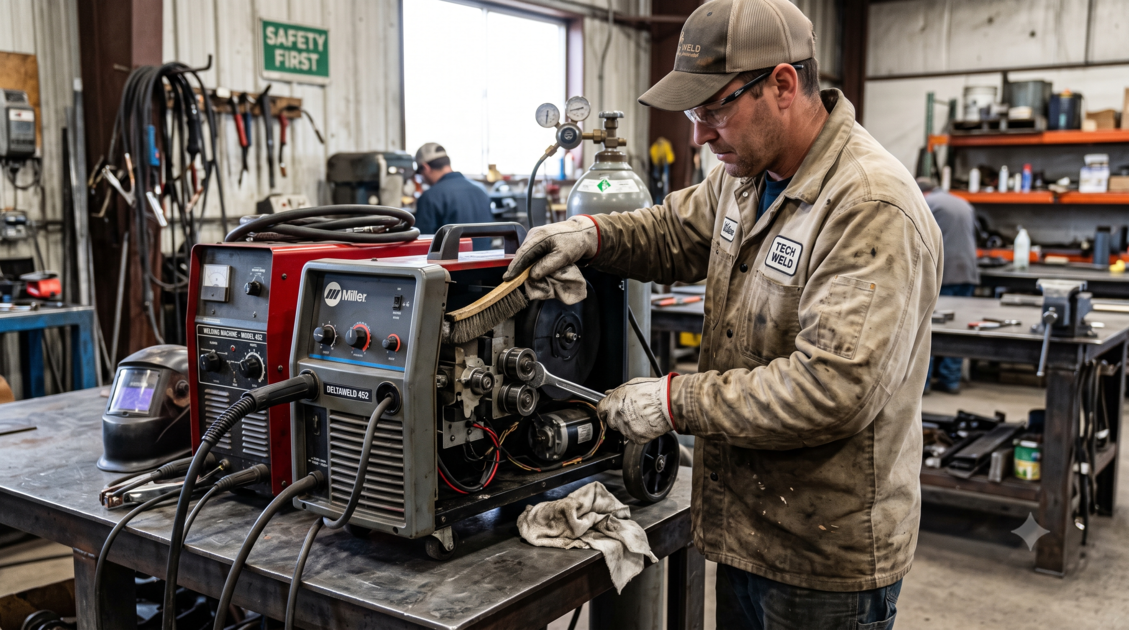
Clean the air vents - the single most important item. The main killer of power tool motors is overheating, and the main cause is dust-blocked vents: the internal fan draws cooling air through, and if that path is blocked the windings heat until the insulation fails. Clean weekly with a dry brush or low-pressure air, tool disconnected, wearing eye protection. Strong compressed air can drive dust deeper or damage bearings, so work outward.
Also weekly: check the chuck grips centrally with no wobble; check hammer, axe and file handles for cracks and loose heads, since a flying head is a serious hazard; uncoil and inspect extension leads, as a coiled lead under load overheats; keep the floor clear and the extinguisher in date; and drain air line water traps, since that water rusts air tools internally.
Monthly
- Brush inspection on heavily used brushed tools, to the stated wear limit. Worn brushes cause sparking and power loss and eventually damage the commutator. Replace as a matched pair.
- Lubricate pivots and slides - saw bases, mitre pivots, reciprocating shafts, adjustment mechanisms. Use a dry lubricant where it is dusty, since oil collects grit.
- Check measuring tools - compare two against each other, check caliper zero, and check a level by reversing it on the same surface. A wrong measuring tool produces entirely wrong work.
- Lifting and safety equipment - inspect slings, chains, hooks and hoists for distortion, cuts or wear, and check harnesses, helmets and eye protection. Anything doubtful goes out of service; this equipment also needs periodic statutory examination by a competent person.
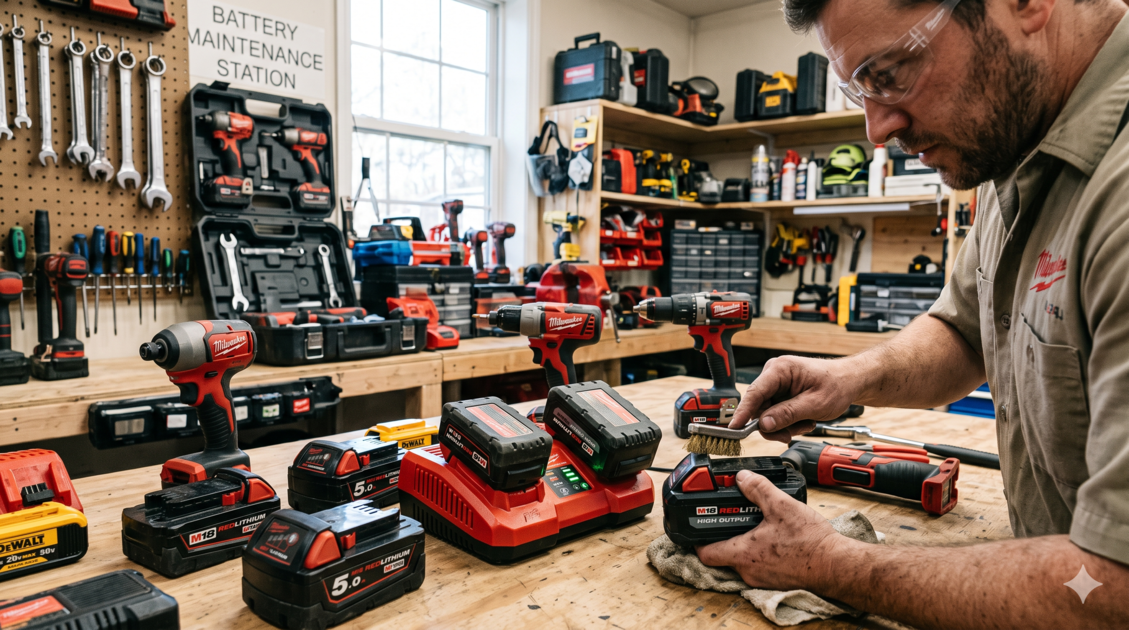
- Batteries - clean contacts, look for swelling, distortion, unusual heat or leakage, and isolate any swollen pack immediately. Store at moderate temperature, and for long storage follow the recommended state of charge rather than leaving packs flat or full for months.
- Fastener tightness on benches, stands and fixed machines - vibration loosens them over time.
Annually or as required
- Full electrical safety inspection of tools, leads, distribution board and residual current devices by a competent person under local regulations - not a visual check you do yourself. Record the result.
- Bearing condition - turn the shaft by hand and feel for roughness or play. A worn bearing causes vibration and heat and then damages what surrounds it.
- Deeper service - internal cleaning, regreasing, gear and seal inspection, per the manual or at a qualified service centre.
- Consumables and accessories - replace worn blades, discs, drums, files and cartridges, and check shelf-life dates.
- Inventory review - separate out tools past repair and dispose of them so they cannot be grabbed under pressure.
- Review controls - do extraction or ventilation systems need service? Has the work changed such that the risks have changed?
Summary table
| Interval | Checks |
|---|---|
| Daily / before use | Cord and plug, guards and safety devices, sound smell and vibration, bit or blade condition and tightness |
| Weekly | Clean dust from air vents, chuck operation, hand tool handle cracks, extension leads, housekeeping, drain air line water |
| Monthly | Carbon brushes, lubricate pivots and slides, check measuring tools, lifting and safety equipment, battery condition, fastener tightness |
| Annually / as required | Electrical inspection by a competent person, bearing condition, deeper service, replace consumables, review inventory and controls |
Making it work: do not check everything at once. Fix a weekly slot, perhaps half an hour before close, and use the first week of each month for the monthly items. Make the daily check part of taking the tool out. Consistency matters more than completeness.
Record keeping: why paper beats memory
One question exposes the need: when exactly were this saw brushes last changed? Nobody remembers, and memory fails even harder where several people share tools and each assumes someone else checked. A simple log solves it - a notebook or basic spreadsheet with a tool identifier, the date, what was done, who did it, observations to follow up, and current status.
The benefit goes beyond reminders. After a few months patterns emerge: a machine eating brushes faster than expected is overloaded or the wrong specification; bits failing quickly on one task means reviewing the method.
Keep out-of-service tags for any faulty tool so nobody grabs it in a hurry, and remove its plug or battery.
Conclusion
Breakdowns never come at a good time, and scheduled maintenance is cheaper and safer than waiting. Before each use check cord, plug, guards and blade, and listen and smell. Weekly, clear the air vents - dust-driven heat is the main motor killer - and check chuck, handles and leads. Monthly, check brushes, lubricate, verify measuring tools, inspect lifting and safety equipment and batteries. Annually, arrange a competent electrical inspection, check bearings, renew consumables and review the inventory. And write it down, because paper remembers and you do not.