Storing Tools in Damp Environments: Practical Rust Prevention
A technician opens his toolbox after two weeks and finds orange rust on spanners that were spotless when he closed it. No water got in and it was never left in the rain. The answer is not in the box but in the air and in temperature differences. Rust is not random: understand the one condition you can control and protecting your tools becomes a matter of simple habits.
Rust needs exactly three things
Iron, which is in your tool; oxygen, always in the air and not practically excludable; and moisture, the only one you can actually control.
So the whole discipline follows: anything that reduces water on the steel reduces rust, anything that traps water against it accelerates rust. Salts, sweat residue and acidic chemicals speed the reaction because they make the moisture film more conductive.
Condensation: the mechanism that catches people out
Air holds water vapour, and holds less of it as it cools. When warm humid air touches a colder surface, the air at that surface cools past its capacity and water condenses onto the metal - exactly what happens on a cold glass on a hot day. A metal tool is a dense mass that warms and cools slowly, so after a cold night it stays cold for hours into a warm humid day, and water condenses on it while everything around is dry.
The practical consequence: an unheated store with wide day-night swings rusts tools faster than a more humid but thermally stable one - stability matters more than humidity alone. That is why uninsulated metal garages, outdoor sheds and toolboxes left in vehicles are the worst places. Bringing a cold toolbox into a warm workshop causes immediate condensation, so let tools reach room temperature before sealing them in.
Practical controls
Desiccant in boxes
Silica gel sachets or rechargeable desiccants absorb moisture from a closed space. They work only if the space is fairly sealed and the desiccant is regenerated or replaced when saturated - most people put one in and forget it for a year, by which point it stopped working long ago. Choose an indicating type.
VCI paper and capsules
VCI means vapour corrosion inhibitor: paper or capsules releasing compounds that diffuse through an enclosed space and settle on metal as an invisible layer which interferes with the reaction. It reaches places you cannot oil and leaves tools dry to the touch. It needs a reasonably enclosed space and has a stated life, so it must be replaced. Excellent for precision and measuring tools.
A wipe of oil before storage
The oldest method: wipe the tool with a cloth carrying light oil or a rust preventative before it goes back in the box, forming a barrier between steel and humid air. A thin film is enough; excess collects dust. For longer storage, waxes and removable coatings outlast light oil, which evaporates.
Keep tools off concrete floors
Concrete is porous, wicks moisture from the ground and releases it into the air above, so a toolbox on a concrete floor lives in a much damper microclimate than the room itself. Put it on a shelf, pallet or feet. The same applies to external walls.
Foam inserts: a hidden problem
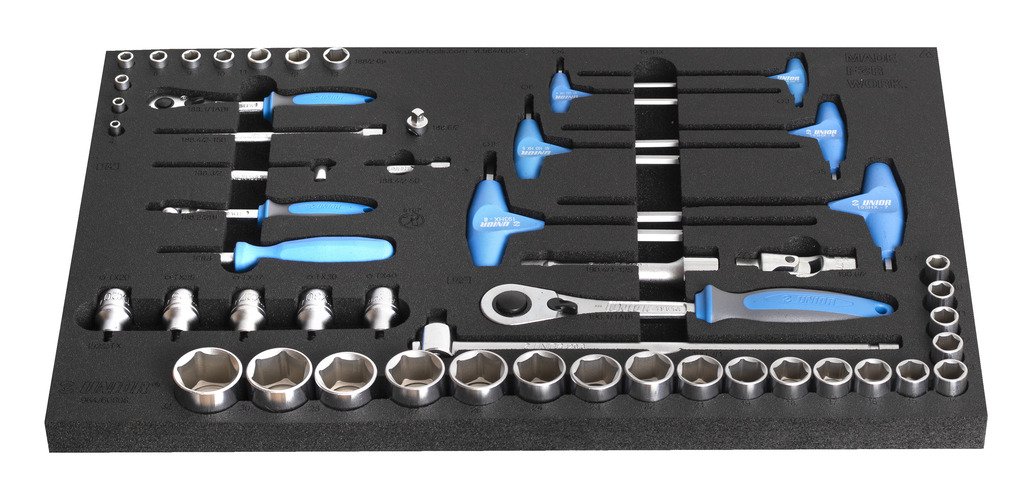
Foam cut-outs look like excellent care, but foam is porous: it absorbs moisture, holds it, and keeps it against the steel for hours. The result is localised rust exactly where the tool touched the foam while the rest stays clean. If you use foam, put only fully dry tools in, add a desiccant, air the box occasionally, and replace foam that feels damp.
Dry tools after use
Dry anything back from rain or washing, and watch cutting fluid residue - some water-miscible types leave a deposit that encourages rust once dry. Wipe tools handled for long periods, since sweat carries salts and a fingerprint on polished steel can appear as rust days later. Remove dust and sawdust, which hold moisture against the surface, and use compressed air for crevices and holes.
Comparison of methods
| Method | Best for | Watch out for |
|---|---|---|
| Silica desiccant | Closed boxes and cases | Saturates; must be renewed |
| VCI paper | Precision and measuring tools | Needs an enclosed space |
| Light oil wipe | Hand tools in regular use | Excess collects dust |
| Wax or coating | Long-term storage | Removed before use |
| Raising off the floor | Concrete-floored stores | Free, usually neglected |
| Thermal stability | Stores generally | Beats humidity control alone |
Removing existing rust
Treat it early: surface rust cleans off easily, but left alone it pits the metal irreparably.
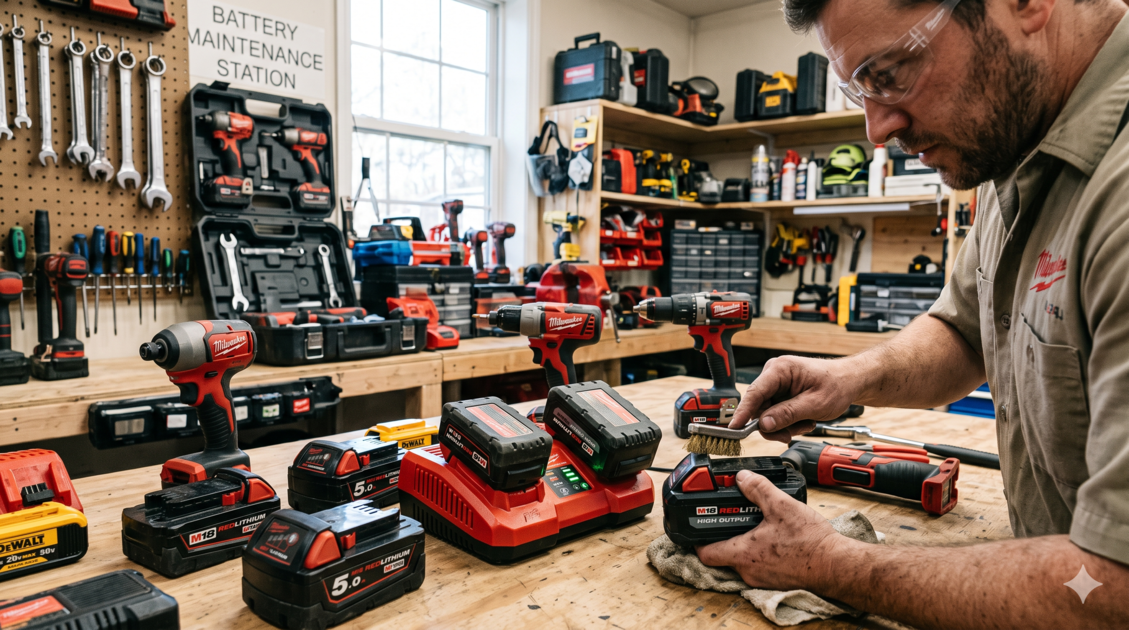
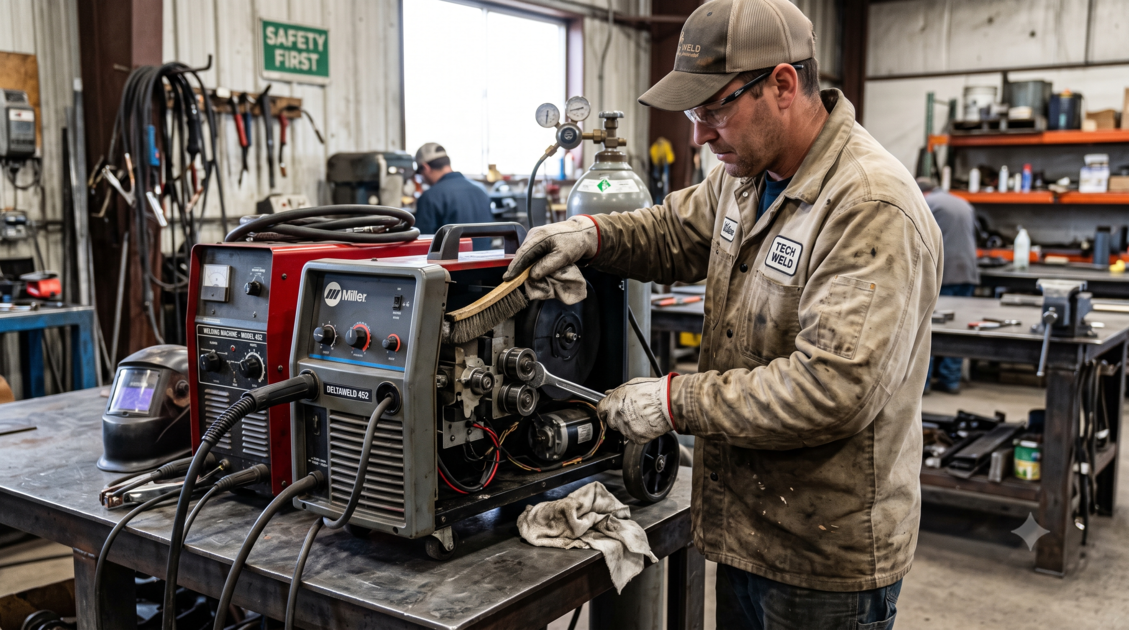
Mechanical: wire brush, fine steel wool, fine abrasive paper, or a brass brush for delicate surfaces. Fast, but it removes metal, scratches polished surfaces and strips finishes. Start with the gentlest option, wear eye protection, and use extraction or a mask for heavy work.
Chemical: rust removers convert or dissolve rust and suit complex shapes you do not want scratched. Follow the instructions precisely on dilution and soak time, use gloves, eye protection and ventilation, and read the safety data sheet. Do not exceed the recommended time, as some products attack sound metal.
Critical point: after rust removal by any method the steel is completely bare of any protective layer and at that moment rusts faster than before. Rinse, dry thoroughly and apply oil, wax or a protective coating immediately, in the same session. Leaving a freshly cleaned part until tomorrow usually means finding it rusting again.
Stainless and coated tools are resistant, not immune
Stainless steel is protected by a thin self-repairing oxide layer, which can be defeated by prolonged contact with chlorides such as salts and some cleaners, by oxygen starvation under stuck-on dirt, or by contamination with ordinary steel particles from a wire brush or shared bench - rust spots on a supposedly resistant surface. For chrome-plated, painted or black-finished tools, protection depends on the coating being intact: any scratch opens a path and corrosion can spread beneath and lift it. Treat chips promptly.
Long-term storage
Clean the tool completely of dust, old grease and working fluids, and dry it fully including crevices and holes. Apply a protective layer - heavier oil, wax or a removable coating - then wrap in VCI paper or a VCI bag and add a desiccant to the box. Store somewhere thermally stable, raised off the floor and away from external walls, avoiding cloth or newspaper wrapping, which holds moisture. Open and inspect every few months: early discovery saves the tool.
Summary
Rust needs iron, oxygen and moisture, and moisture is the only lever you have. A thermally unstable store is worse than a humid but steady one, and never seal a cold tool into a warm box. Use desiccants and VCI, wipe with light oil before storage, raise boxes off concrete, and remember foam traps moisture against steel. Dry everything after use, especially after cutting fluid or outdoor work. Treat rust early and protect immediately after cleaning, because bare steel rusts faster. Stainless and coated tools are resistant, not immune.