VDE Certification and 1000V Insulated Tools: What Actually Protects You
A dangerous belief circulates among electricians: that any screwdriver with a plastic handle is fit for work on live circuits. This belief has caused real injuries. An ordinary plastic handle is designed for comfort, not electrical insulation.
The difference between a certified insulated tool and one with a plastic handle is not a matter of quality or price — it is the difference between a tool tested at 10,000 volts and one never tested at all.
1. What VDE Certification Actually Means
VDE stands for "Verband der Elektrotechnik", the German Association for Electrical Engineering — an independent testing body that grants certification only after specific tests under international standards.
The actual test
A tool rated for 1000 V is tested at 10,000 V — ten times its stated working voltage. This wide margin is deliberate: it ensures the insulation remains safe even if its condition degrades partially with use. The tool is submerged in water with only its working tip exposed, then voltage is applied. Any current leakage fails the tool.
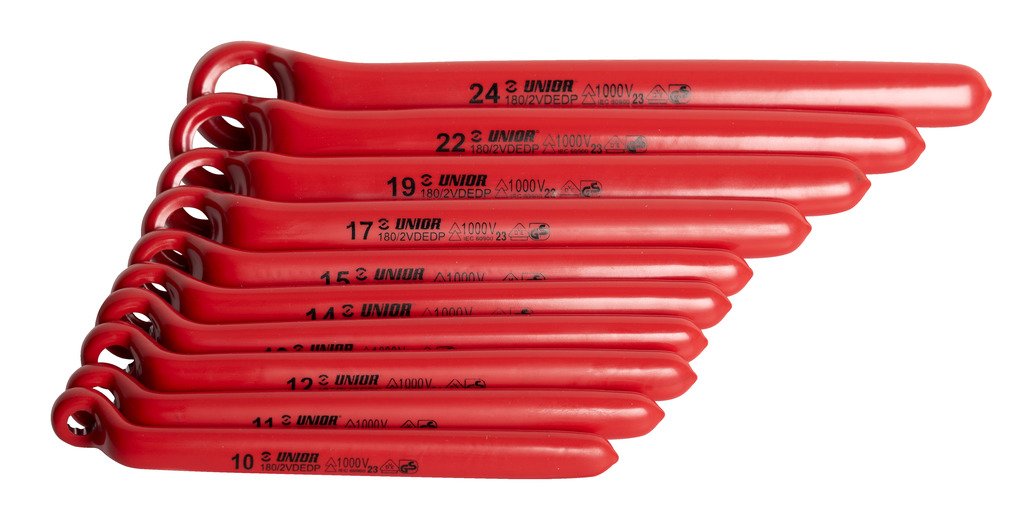
Critical point: the mark on the tool (double triangle and 1000V) must be printed or moulded into the handle material itself, not a sticker. A sticker can be applied to any tool. If the mark peels off, the tool is not trustworthy.
2. Reading the Marks
- Double triangle — indicates double insulation; the most important mark.
- 1000V — maximum AC voltage the tool is rated for.
- VDE logo — confirms German testing body approval.
- IEC 60900 — the international standard for insulated hand tools.
Locally, certified insulated screwdrivers start around 4.00 JD for PH0×60 and rise with size — about 4.50 JD for 2.5×75, 5.00 JD for 3.5×100, and 5.50 JD for PH2×100. Compare that with an ordinary screwdriver at one or two dinars. The difference of three or four dinars covers testing and certified insulating materials — trivial against what it protects.
3. Types by Tip
| Code | Type | Common use |
|---|---|---|
| 603VDE | Slotted (flat) | Terminal screws, traditional panels |
| 613VDE | Phillips (PH) | Most common in modern installations |
| 623VDE | Pozidriv (PZ) | Breakers and European distribution boards |
PH vs PZ — a common costly error
Many assume PH and PZ are the same because they look similar. In fact PZ (Pozidriv) has four additional ribs between the main wings. Using a PH driver on a PZ screw causes limited surface contact, cam-out slipping under torque, and damage to the screw head that makes later removal difficult. In distribution boards most breaker screws are European and use PZ.
4. Safe Use Rules
- Always isolate first. An insulated tool is backup protection against error, not a substitute for switching off.
- Visual inspection before every use. Look for cracks, deep scratches, swelling or discolouration. Any damage reaching metal ends the tool's life.
- Never use a tool exposed to heat. Heat alters insulating properties, not always visibly.
- Never modify the tool. Filing the tip or trimming the handle voids certification entirely.
- Replace on any doubt. An insulated screwdriver costs far less than any electrical injury.
- Store away from sharp edges. A crowded toolbox scratches insulation over time.
5. The Electrician's Core Set
- Insulated slotted 3.0×100 mm — about 4.75 JD
- Insulated slotted 4.0×100 mm — about 5.50 JD
- Insulated Phillips PH1×80 — about 4.75 JD
- Insulated Phillips PH2×100 — about 5.50 JD
- Insulated Pozidriv PZ1×80 — about 4.50 JD
Roughly 25 JD for a certified set covering most domestic and light commercial installation work.
6. Comparing Brand Tiers
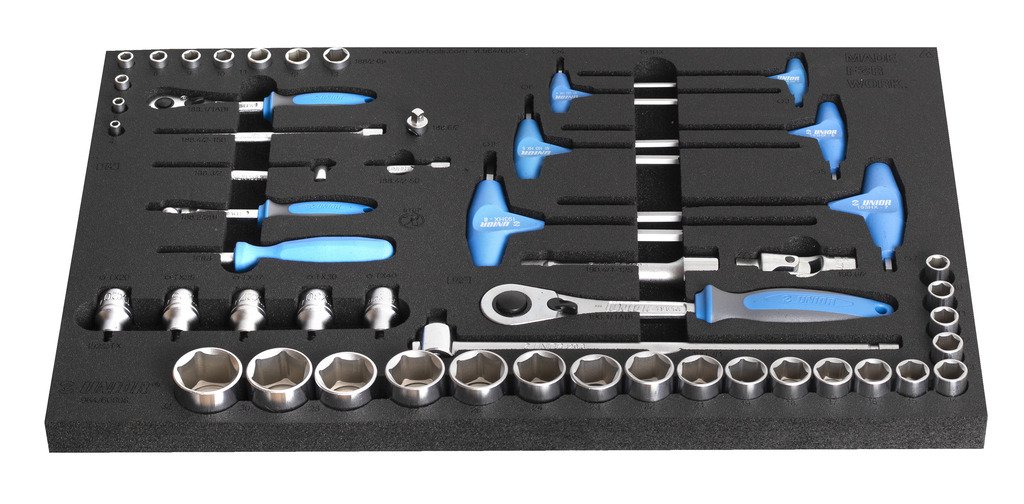
Professional tier: brands such as Slovenia's UNIOR offer complete VDE lines in the 603/613/623 series with individual testing per piece. This tier is the logical choice specifically for insulated tools, because the application allows no compromise.
Economy tier: well suited to general non-insulated tools. For insulated tools specifically, verify genuine certification rather than simply a coloured handle. A tool that merely looks insulated without certified testing is an ordinary tool at a higher price.
Global specialist tier: Knipex, Wiha and Klein Tools are internationally recognised specialists in insulated tools with a strong following among professional electricians.
7. Signs Demanding Immediate Replacement
- Metal visible anywhere through the insulation
- Cracks in the handle, however small
- Swelling or unusual softness in the insulating material
- Discolouration indicating heat exposure
- Partial separation between the two insulation layers
The two-colour layer design is deliberate: the inner colour appearing means the outer layer has worn through — a direct visual warning that the tool has reached the end of its safe life.
Conclusion
VDE certification is not a marketing detail. It is evidence the tool was tested at 10,000 volts to work safely at 1,000. A plastic handle alone offers no such protection, however thick it looks.
Remember the key rule: isolate the circuit first, and treat the insulated tool as a second line of defence.