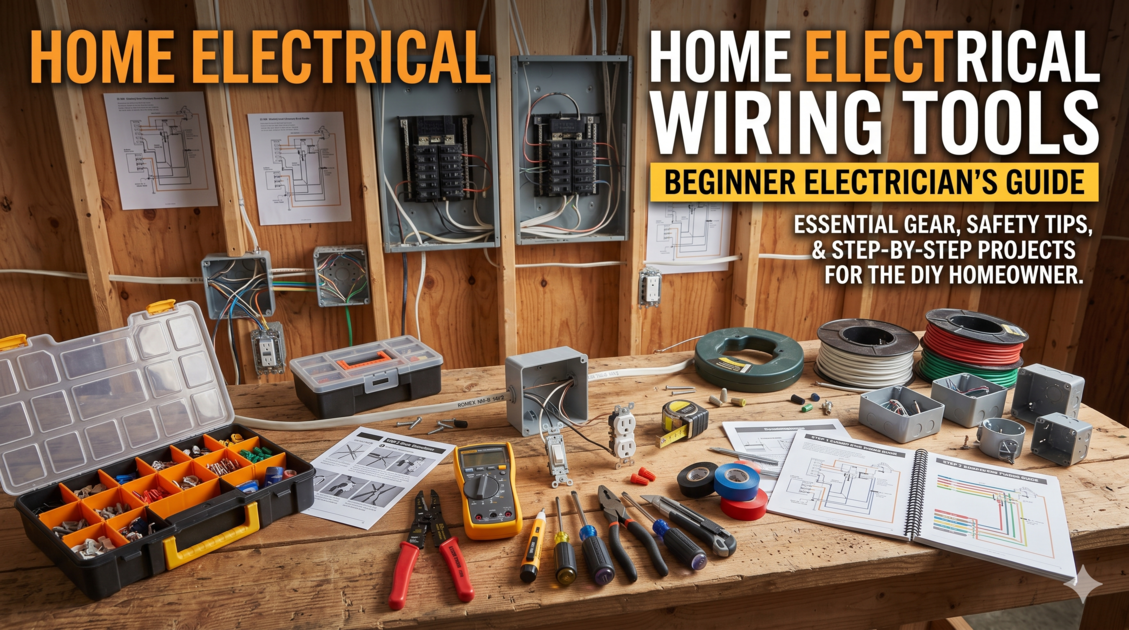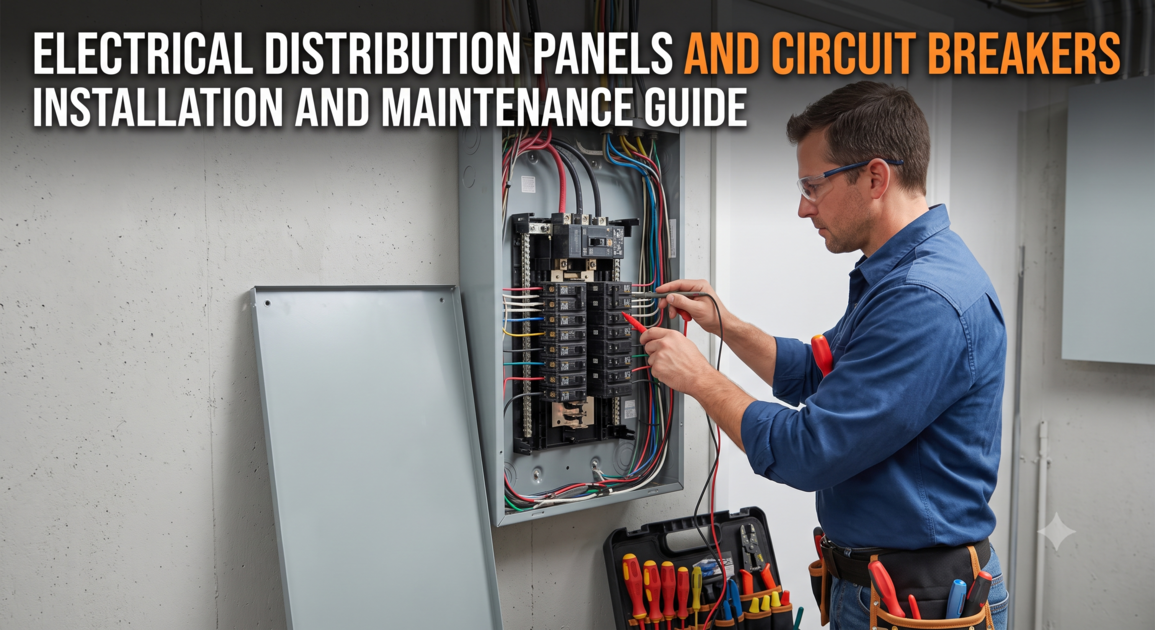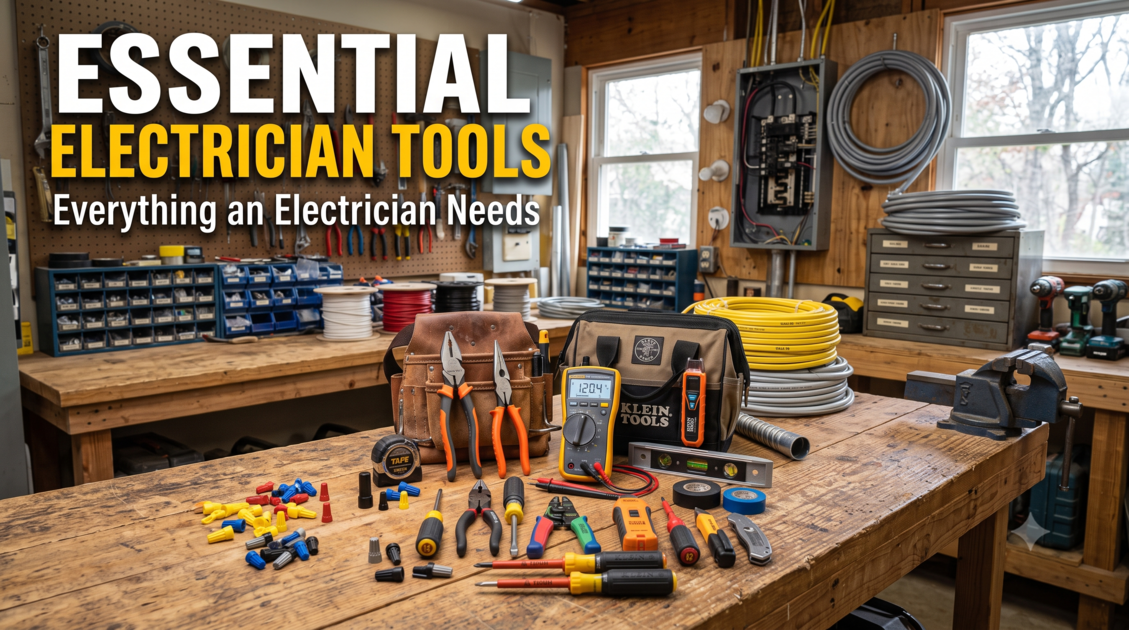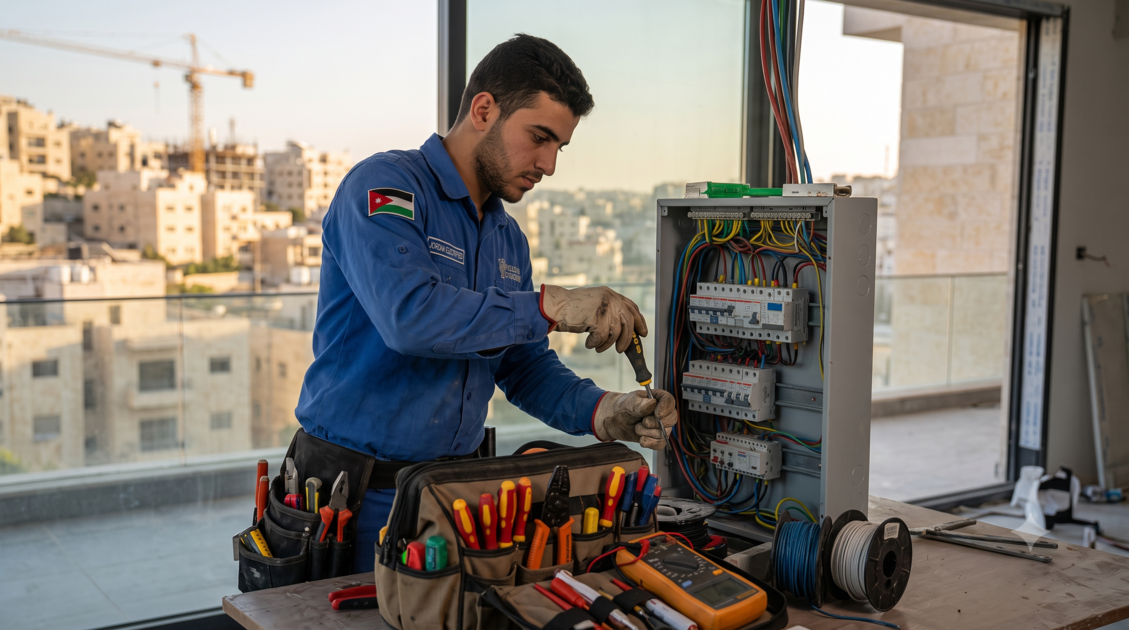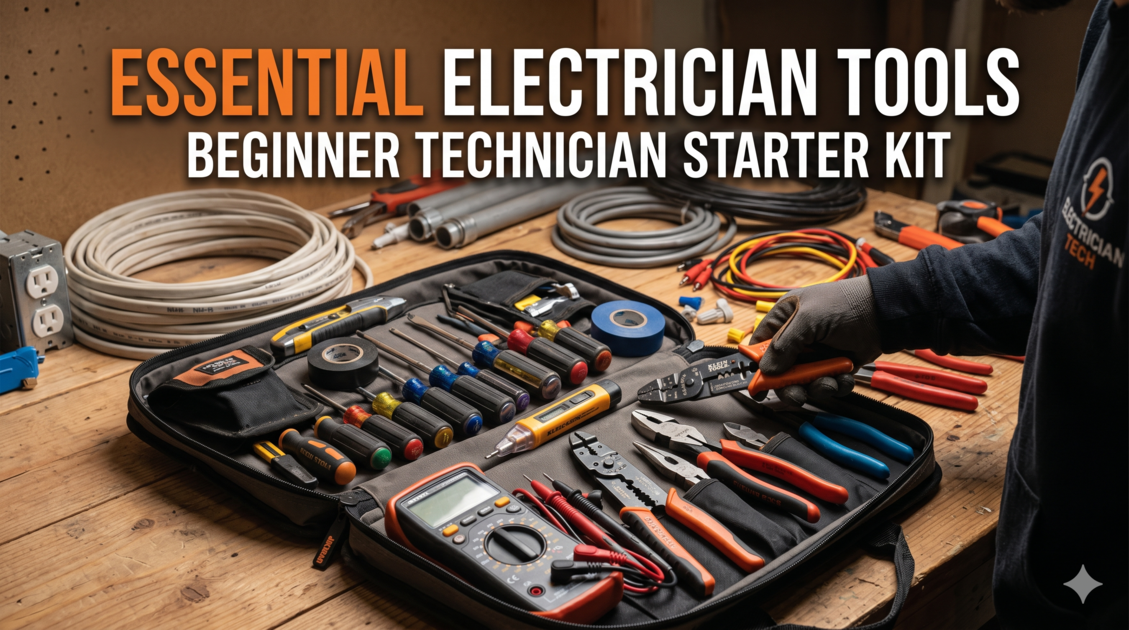
Essential Electrician Tools: Beginner Technician Starter Kit
Introduction: Why You Need Professional Electrician Tools From the Start
If you are taking your first steps in the electrical trade, whether as a vocational training student or a beginner technician starting your career, owning the right tools is not a luxury but an absolute necessity for your safety and work quality. Working with electricity is fundamentally different from any other trade because a mistake here could cost you your life or the lives of others.
In Jordan, the demand for qualified electrical technicians continues to grow with ongoing urban expansion and renewable energy projects. Many beginners start by purchasing cheap, non-insulated, or non-compliant tools, which is a serious mistake that can put them in danger. In this comprehensive guide, we will review every tool you need as a beginner electrician, with recommendations for the best brands and approximate prices available at ESCO, Jordan's largest industrial tools and hardware store.
Part One: Electrical Measurement and Testing Tools
Measurement tools are the electrician's eyes that see what the naked eye cannot. Without them, you are literally working in the dark, because electrical current is invisible and cannot be estimated by human senses.
1. Digital Multimeter
The multimeter is the number one tool that every electrician must own without exception. This device measures voltage (volts), current (amperes), and resistance (ohms), while some advanced models also measure capacitance, frequency, and temperature.
- For beginners: The INGCO DM200 or TOTAL TMT46001 multimeter, priced between 8-15 JOD, is an excellent economical choice for learning and basic use.
- For intermediate level: A FINDER digital multimeter with Auto-Range capability, priced at 20-35 JOD.
- For professional use: A Bosch or Milwaukee 2217-20 multimeter, priced at 50-120 JOD, with high accuracy and CAT III or CAT IV safety rating.
Important tip: Make sure to choose a multimeter with at least a CAT III safety rating for residential wiring work. The CAT rating determines the level of protection against sudden electrical surges, and the higher the number, the greater the protection.
2. Voltage Detector / Tester
A non-contact voltage detector is an essential safety tool that allows you to detect the presence of electrical current in wires and outlets without any direct contact. It is shaped like a pen with a red or green light and an audible alert when voltage is detected.
- INGCO offers a non-contact voltage detector priced at 3-7 JOD, a practical and economical option.
- TOTAL has a similar model in the same price range with good sensitivity.
- Stanley provides a voltage detector with a wider detection range up to 1000 volts.
Safety warning: A voltage detector never replaces a multimeter. Use it as a quick preliminary check, then verify with a multimeter before any work on the electrical circuit. This golden rule could save your life.
3. Test Screwdriver
The test screwdriver, commonly called a "tester," is one of the oldest and simplest electrician tools. Despite its simplicity, it remains an essential tool in every electrician's kit for quickly checking the presence of the phase (live wire). Available at very low prices starting from 0.5 JOD from brands like FINDER and TOTAL.
4. Clamp Meter
A clamp meter measures electrical current without needing to break the circuit or disconnect wires. Simply open the jaws of the device and pass the wire through them to read the current value. This tool is essential when checking electrical loads and diagnosing overload problems.
- INGCO DCM4001 digital clamp meter at approximately 15-25 JOD.
- TOTAL TMT44002 another economical option with a measurement range up to 400 amperes.
Part Two: Insulated Hand Tools
Insulated hand tools are your second line of defense after disconnecting power. Even if you are certain the electricity is off, always use insulated tools because mistakes happen and electricity is unforgiving. Insulated tools are manufactured with insulating handles rated to withstand up to 1000 volts according to the IEC 60900 standard.
1. Insulated Screwdriver Set
As a beginner, you need a screwdriver set that includes at least:
- Flat/Slotted screwdrivers in sizes 3mm, 4mm, 5.5mm, and 6.5mm
- Phillips screwdrivers in sizes PH1 and PH2
- Pozidriv screwdrivers PZ1 and PZ2 for European-style screws
Best options available at ESCO:
- Stanley 6-piece insulated screwdriver set at approximately 12-18 JOD.
- INGCO VDE insulated screwdriver set at 8-14 JOD.
- TOTAL 7-piece insulated set at an economical price starting from 7 JOD.
Tip: Look for screwdrivers bearing the red and yellow VDE triangle mark, which is an international certification guaranteeing insulation up to 1000 volts. Never use regular screwdrivers for electrical work even if they have plastic handles, as they are not designed to withstand electrical shocks.
2. Insulated Pliers
You need three basic types of pliers:
- Combination Pliers: The most commonly used tool, combining cutting, gripping, and bending capabilities. The 8-inch (200mm) size is ideal for electricians.
- Diagonal Cutting Pliers: Specialized for cutting wires precisely. A 6-7 inch size is sufficient for residential work.
- Long Nose Pliers: For working in tight spaces and bending wire ends for connecting to switches and outlets.
- INGCO offers a 3-piece VDE insulated pliers set at 12-20 JOD.
- Stanley 3-piece insulated set at 15-25 JOD with excellent quality.
- Milwaukee professional insulated pliers at 20-35 JOD per piece, with a longer service life.
3. Wire Stripper
Stripping wires with a knife or your teeth (which some beginners unfortunately do!) is a dangerous and unprofessional habit. A professional wire stripper removes insulation from wires precisely without damaging the internal copper conductor.
- Simple manual stripper: TOTAL or INGCO at 3-6 JOD, suitable for wires from 0.5mm2 to 6mm2.
- Automatic wire stripper: Stanley FATMAX or INGCO at 8-15 JOD, which automatically adjusts to the wire thickness and is easier and faster to use.
4. Crimping Tool
Used for crimping cable lugs and insulated terminals onto wire ends to ensure a safe and secure connection. An INGCO or TOTAL crimping tool at 5-12 JOD serves beginners well.
Part Three: Installation and Wiring Tools
1. Electrical Tape
Electrical tape is a basic consumable that no electrician can do without. Choose tape with a thickness of at least 0.15mm that is heat resistant to at least 80 degrees Celsius. 3M Super 33+ tape is considered the gold standard in the industry and is available at ESCO.
2. Cable Cutter
For thick cables exceeding 10mm2, you need a specialized cable cutter instead of regular pliers. An INGCO 10-inch cable cutter handles cables up to 60mm2 at a price ranging from 10-18 JOD.
3. Electrician's Knife
A special knife with an insulated handle and a blade designed for stripping thick cables and removing the outer sheath. Stanley offers a folding electrician's knife at 5-8 JOD.
4. Fixing and Installation Tools
- Caulking gun: For securing distribution boxes and conduits. TOTAL or INGCO at 3-7 JOD.
- Electric drill (hammer drill): For drilling walls to run cables and mount boxes and outlets. INGCO offers a 650W impact drill at 20-30 JOD, and the Bosch GSB 13 RE at 35-50 JOD as a professional option.
- Tape measure: A 5-meter size is sufficient for most residential work. Stanley or FINDER at 2-5 JOD.
- Spirit level: For installing switches and outlets straight and evenly. Stanley 30cm at 5-8 JOD.
Part Four: Safety and Personal Protective Equipment
Safety is not optional but a professional and ethical obligation. Electricity in Jordan operates at 230 volts and 50 Hz frequency, which is sufficient to cause a fatal shock. Therefore, you must never compromise on personal protective equipment.
1. Insulated Gloves
Class 0 or Class 00 insulated electrical gloves protect up to 1000 volts. Available at ESCO at prices starting from 8 JOD. Make sure to inspect gloves before each use by inflating them and checking for holes or cracks.
2. Safety Glasses
To protect eyes from electrical sparks and flying wire pieces during cutting. INGCO or TOTAL offer clear safety glasses at 2-4 JOD.
3. Insulated Safety Boots
Boots with electrically insulated and slip-resistant soles protect you from ground faults. Invest in quality boots at 25-50 JOD because this is an investment in your personal safety.
4. Lockout/Tagout Devices
Locks and warning tags to lock the distribution panel while working on the electrical circuit. This procedure prevents anyone else from turning on the electricity while you work. A basic lockout set starts from 5 JOD.
Part Five: Tool Bag and Organization
A good tool bag is not just a carrier but an organizational system that saves you time and protects your tools. Look for a bag with the following features:
- Water-resistant and tear-resistant material
- Multiple pockets dedicated to each tool type
- Reinforced hard bottom
- Appropriate size to carry 20-30 tools
INGCO offers a specialized electrician's tool bag at 12-20 JOD, and Stanley FATMAX provides a professional bag at 25-40 JOD with greater durability. ESCO also carries tool belts suitable for working on ladders and electrical panels at 8-15 JOD.
Part Six: Estimated Total Cost for a Beginner Kit
Here is an approximate cost estimate for equipping a beginner electrician's tool bag with economical yet acceptable quality tools:
- Digital multimeter: 10-15 JOD
- Non-contact voltage detector: 4-7 JOD
- Test screwdriver: 1 JOD
- Insulated screwdriver set (6 pieces): 10-15 JOD
- Insulated pliers set (3 pieces): 12-20 JOD
- Wire stripper: 4-8 JOD
- Crimping tool: 5-10 JOD
- Electrical tape (3 rolls): 2-3 JOD
- Tape measure: 3-5 JOD
- Insulated gloves: 8-12 JOD
- Safety glasses: 2-4 JOD
- Tool bag: 12-20 JOD
Approximate total: 73-120 JOD for an economical kit from brands like INGCO, TOTAL, and FINDER. If you want higher-quality tools from Stanley, Bosch, or Milwaukee, expect the cost to reach 200-350 JOD.
We recommend visiting ESCO branches or their website esco.jo to take advantage of bundle offers on tool sets that save you good money compared to buying each tool individually.
Part Seven: Golden Tips for Beginner Electricians
1. Invest in Quality Gradually
It is perfectly fine to start with economical tools from INGCO or TOTAL, but as you gain experience and income, gradually upgrade your tools to professional brands like Milwaukee, Hilti, or DeWalt. Professional tools last longer and deliver better results.
2. Always Follow the Power Disconnect Rule
Before any work on an electrical circuit: disconnect the main breaker, verify with a voltage detector, confirm with a multimeter, then begin work. These three steps are non-negotiable.
3. Learn to Read Electrical Diagrams
Tools alone are not enough. Learn to read wiring diagrams and the electrical symbols adopted in Jordan's building code. This skill distinguishes the professional technician from the amateur.
4. Maintain Your Tools
Clean your tools after each use and regularly inspect the insulation for cracks or damage. Replace any damaged tool immediately and never attempt to repair insulation with adhesive tape. Storing tools in a proper bag away from moisture extends their service life.
5. Know Your Limits
As a beginner, do not attempt to work on main distribution panels or high-voltage lines. Start with simple wiring and installing switches and outlets, and work under the supervision of an experienced electrician until you gain sufficient confidence and skill.
6. Understand Jordan's Climate Conditions
Jordan's climate is hot and dry in summer with low humidity in most areas. However, in winter, especially in mountainous areas like Amman and Ajloun, humidity rises, which increases the risk of electrical shocks. Take extra precautions when working in wet weather or near water sources.
Part Eight: Common Mistakes to Avoid
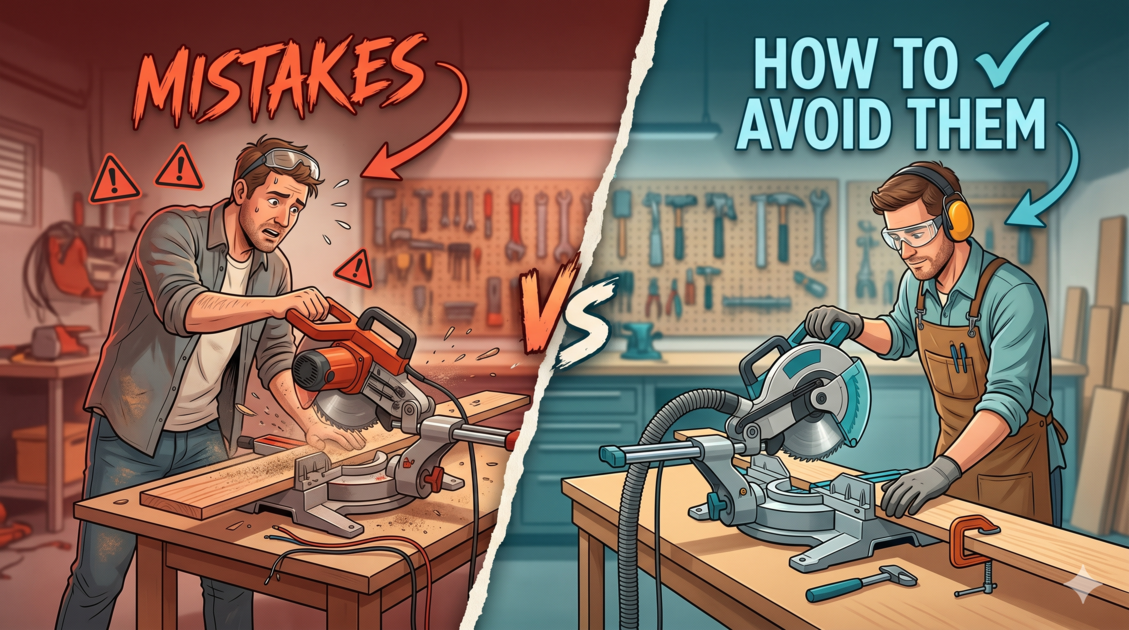
- Using non-insulated tools: Even if you have disconnected the power, always use insulated tools. Residual current in capacitors can cause a painful shock.
- Ignoring wire colors: In the Jordanian system (based on the British standard), brown is for live (phase), blue is for neutral, and green/yellow is for earth. Never mix up these colors.
- Connecting wires of different sizes: Each electrical circuit is designed for a specific wire size. Using thinner wire than required causes excessive heating and can lead to fire.
- Not testing new tools: Before relying on a new multimeter or voltage detector, test it on a known power source to ensure it works correctly.
- Buying counterfeit tools: Be wary of counterfeit tools sold at very low prices in some markets. Purchase from trusted sources like ESCO to ensure product authenticity and valid warranty.
Conclusion
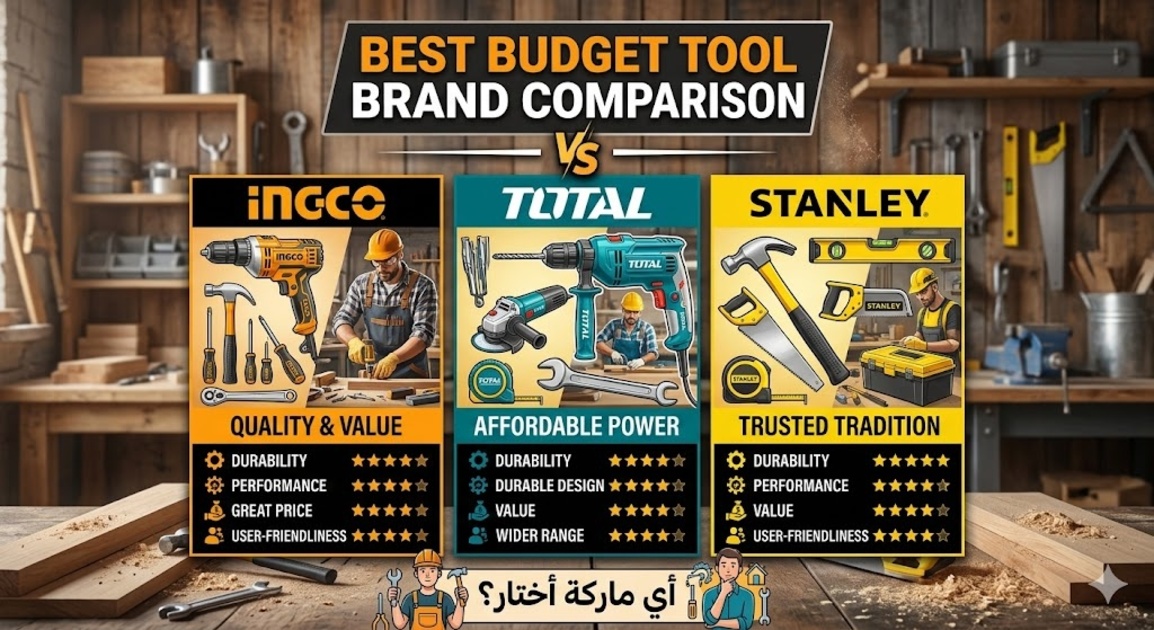
Equipping a beginner electrician's tool bag does not require a huge budget, but it does require smart choices. Focus on VDE-certified insulated tools, invest in a good multimeter and reliable voltage detector, and never skimp on personal protective equipment. Start with trusted economical brands like INGCO, TOTAL, and FINDER, then upgrade your tools gradually as you advance in the profession.
Visit ESCO (esco.jo) to browse the latest deals on electrician tools and get specialized consultation from their team to choose the right tools for your needs and professional level. Whether you are a student, a beginner technician, or a professional looking to update your kit, you will find everything you need under one roof.