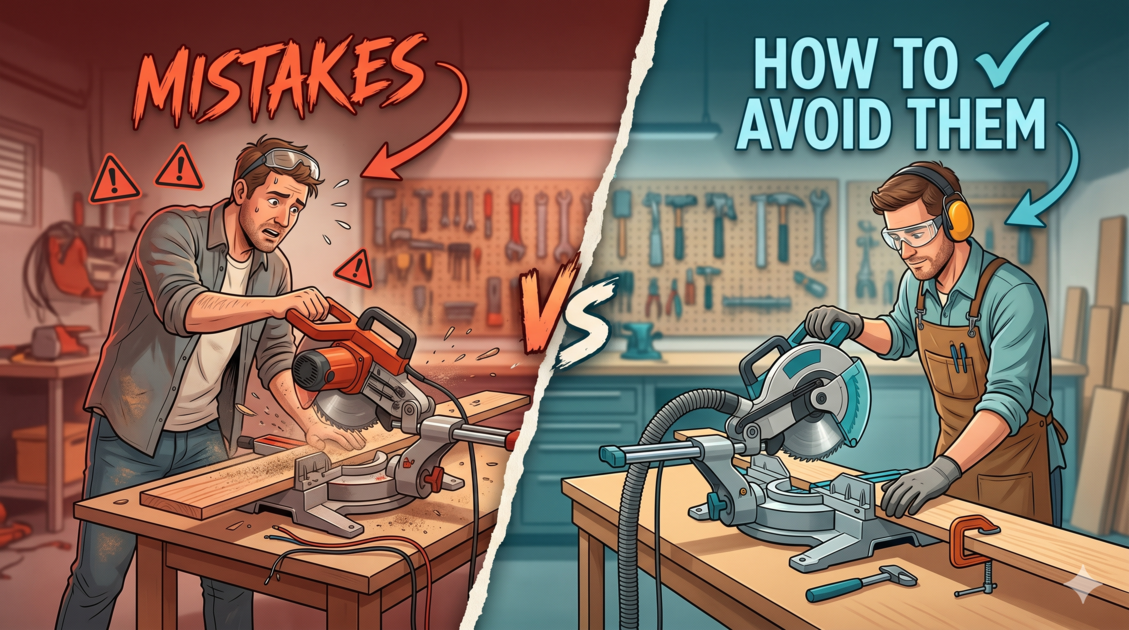
Common Power Tool Mistakes and How to Avoid Them
Introduction: Why Do Power Tool Accidents Happen?
Power tools have become an integral part of our daily lives, whether you are a professional tradesperson in your workshop or a DIY enthusiast handling home maintenance tasks. However, with the great power these tools provide comes a significant responsibility to use them correctly and safely. Global statistics indicate that more than 400,000 injuries per year occur due to improper use of power tools, and most of these accidents could have been easily prevented.
In Jordan, with the growing number of construction and home improvement projects, we at ESCO notice that many customers ask about the proper way to use their tools after experiencing dangerous situations or after their tools break down prematurely. In this comprehensive guide, we review the top 10 most common power tool mistakes and provide practical solutions to avoid them.
Mistake #1: Not Wearing Personal Protective Equipment
The Problem
Many users ignore wearing personal protective equipment (PPE), believing that quick or simple tasks do not require it. This mistake is the primary cause of more than 70% of eye injuries related to power tools. Metal or wood fragments and dust can hit the eye in a fraction of a second.
The Solution
- Safety Glasses: Wear ANSI Z87.1 certified safety glasses when using any power tool without exception. Safety glasses from TOTAL or INGCO available at ESCO provide excellent protection starting from just 2 JOD.
- Protective Gloves: Use gloves appropriate for the type of work. INGCO leather gloves are ideal for welding and cutting work, while nitrile gloves suit precision tasks. Prices range from 1.5 to 8 JOD.
- Ear Protection: Tools like circular saws and angle grinders produce noise exceeding 90 decibels, a level sufficient to cause permanent hearing damage. Use earplugs or earmuffs from Stanley.
- Dust Masks: Essential when cutting wood, concrete, or sanding surfaces to protect the respiratory system.
Mistake #2: Using the Wrong Tool for the Job
The Problem
One of the most common mistakes is using a tool for a purpose it was not designed for, such as using an angle grinder to cut wood instead of a circular saw, or using a regular drill on reinforced concrete instead of a rotary hammer. This not only puts you at risk but also damages the tool quickly and produces poor results.
The Solution
- Read the user manual that comes with each tool to learn about permitted and prohibited uses.
- For cutting wood, use a circular saw like the Bosch GKS 190 or Makita HS7010.
- For drilling concrete, use a rotary hammer like the Bosch GBH 2-26 or DeWalt D25133K instead of a regular drill.
- For grinding and finishing, use an angle grinder with the appropriate disc -- a cutting disc for cutting and a grinding disc for grinding.
- Consult ESCO experts at the showroom to help you choose the right tool for your project before purchasing.
Mistake #3: Neglecting Pre-Use Tool Inspection
The Problem
Many users start working immediately without inspecting the tool, meaning they might be working with a damaged power cord, a cracked disc, or a worn drill bit. Exposed wires can cause fatal electric shock, and cracked discs can explode during high-speed rotation.
The Solution
Before each use, perform the following inspection:
- Inspect the power cord: Check for any cuts, cracks, or exposed insulation in the cord.
- Check the plug and switch: Ensure the plug is intact and the on/off switch works properly.
- Inspect tool accessories: Verify the integrity of cutting discs, drill bits, saw chains, etc.
- Run the tool in the air: Let it run for 10-15 seconds without a load to observe any unusual vibrations or sounds.
- Check the mounting: Verify that all parts are securely fastened, especially the safety guard.
Mistake #4: Not Properly Securing the Workpiece
The Problem
Trying to hold a workpiece with one hand while cutting or drilling with the other is a recipe for disaster. The piece may spin or fly suddenly, causing severe injuries. This mistake is especially common when using circular saws, miter saws, or angle grinders.
The Solution
- Use a vise or clamps to firmly secure the workpiece before starting. Stanley and FINDER vises available at ESCO start from 3 JOD.
- Use a stable workbench on a level floor.
- Never work on an uneven surface or on a moving ladder with heavy power tools.
- When cutting long pieces, ensure additional support is available so the cut piece does not fall suddenly and pull the tool with it.
Mistake #5: Overloading the Tool
The Problem
Pressing too hard on the tool to speed up cutting or drilling is a mistake made by beginners and professionals alike. Overloading causes a sharp rise in motor temperature, significantly reduces the tool's lifespan, and can cause sudden kickback, which is one of the most dangerous situations during work.
The Solution
- Let the tool work at its own pace: Press gently and let the tool do the work. A sharp, appropriate tool will cut smoothly without excessive pressure.
- Monitor the motor sound: If the rotation speed drops or the motor sound changes, you are pressing too hard.
- Take breaks: During continuous work, let the tool rest every 15-20 minutes to cool down, especially in Jordan's hot summer climate where temperatures can exceed 40 degrees Celsius.
- Use a tool with appropriate power: If the job requires more power, choose a tool with a stronger motor. For example, a 2200W angle grinder like the Bosch GWS 22-230 is better suited for heavy-duty work than a 750W grinder.
Mistake #6: Removing Safety Guards from the Tool
The Problem
Some users remove the safety guard from an angle grinder or the protective cover from a circular saw, claiming it obstructs their view or slows down work. This deadly mistake exposes you to direct risk from flying debris, exploding discs, and exposed rotating parts.
The Solution
- Never remove the safety guard: This component exists to protect you, and removing it also voids the warranty.
- If the guard is damaged, replace it immediately with an original spare part from the manufacturer's authorized dealer.
- Ensure the guard is positioned correctly so it directs debris away from your face and body.
- Tools from trusted brands like Bosch, Makita, DeWalt, and Milwaukee come with advanced protection systems -- do not tamper with them.
Mistake #7: Working in an Unsuitable Environment
The Problem
Working in a cramped, dark, wet, or cluttered area significantly increases the probability of accidents. Similarly, working near flammable materials while using a spark-producing tool is a grave mistake.
The Solution
- Lighting: Ensure the work area is adequately lit. LED work lights from TOTAL and INGCO are available at ESCO starting from 5 JOD and provide 1000 lumens or more.
- Ventilation: When working in enclosed spaces, ensure adequate ventilation, especially when cutting metals or welding.
- Cleanliness: Keep the work area clean from sawdust, debris, and electrical cords lying on the floor.
- Moisture: Do not use power tools in wet areas or in the rain unless they are rated for outdoor use (appropriate IP Rating).
- Flammable Materials: Keep any flammable materials at least 3 meters away from the work area when using angle grinders or welding equipment.
Mistake #8: Using Incompatible or Counterfeit Accessories
The Problem
Using cheap, unknown-brand cutting discs or counterfeit drill bits to save money is false economy. These accessories may break during high-speed use, causing serious injuries. Using a disc with the wrong diameter or speed rating for the tool is among the most dangerous mistakes.
The Solution
- Check compatibility: Always ensure the accessory's diameter and specifications match the tool's specifications. For example, never use a 230mm disc on a grinder designed for 125mm discs.
- Check maximum RPM: The maximum speed printed on the disc must be higher than the tool's rotation speed.
- Buy original accessories: Bosch, DeWalt, and Makita discs are made from high-quality materials and certified according to international standards. The price difference is minimal compared to the cost of injury or tool repair.
- At ESCO, we provide a complete range of original accessories for all brands at competitive prices.
Mistake #9: Ignoring Regular Maintenance
The Problem
Many users perform no maintenance on their power tools until they stop working completely. Worn carbon brushes, inadequate lubrication, and clogged filters all lead to gradual deterioration of tool performance and can cause serious electrical problems.
The Solution
- Clean the tool after each use: Use compressed air to clean dust and debris from ventilation openings and the motor. Small air compressors from INGCO or TOTAL are ideal for this purpose.
- Inspect carbon brushes: Replace them when their length reaches less than 5mm or as specified in the maintenance manual.
- Lubricate moving parts: Use appropriate grease for power tool gears on a regular basis.
- Inspect wires and connections: Replace any damaged cord immediately and do not attempt to fix it with tape.
- Store the tool properly: In a dry place away from moisture and dust, preferably in its original case. Tool cases from Stanley and FINDER provide organized and safe storage starting from 7 JOD.
Mistake #10: Not Understanding Kickback and How to Handle It
The Problem
Kickback occurs when a cutting disc or saw chain suddenly binds in the workpiece, causing the tool to kick back toward the user with great force at a speed that does not allow for reaction. This phenomenon is responsible for a significant percentage of serious power tool injuries.
The Solution
- Learn the proper grip position: Hold the tool firmly with both hands and keep your body away from the potential kickback line.
- Do not cut with the edge of the cutting disc: Enter the disc straight into the workpiece.
- Use tools equipped with anti-kickback systems: Many tools from Bosch, Milwaukee, and Makita come equipped with electronic brakes and anti-kickback systems like Bosch KickBack Control.
- Ensure cutting accessories are sharp: Worn discs and bits are more prone to binding and kickback.
- Do not plunge the tool into the workpiece while it is off: Start the tool first, let it reach full speed, then begin cutting.
Additional Important Safety Tips
Dealing with Electricity
- Always use high-quality extension cords with appropriate wire gauge for the electrical load. Thin wires overheat and can cause fires.
- Use a Ground Fault Circuit Interrupter (GFCI/RCD) when working outdoors or in wet environments.
- Do not connect more than one high-consumption tool to the same electrical outlet.
- Disconnect the tool from the power source before changing accessories or performing any maintenance.
Safe Work Habits
- Do not work when tired or distracted: Fatigue slows reaction times and weakens concentration.
- Do not use power tools under the influence of any substances: Even some medications can cause dizziness or slow reaction times.
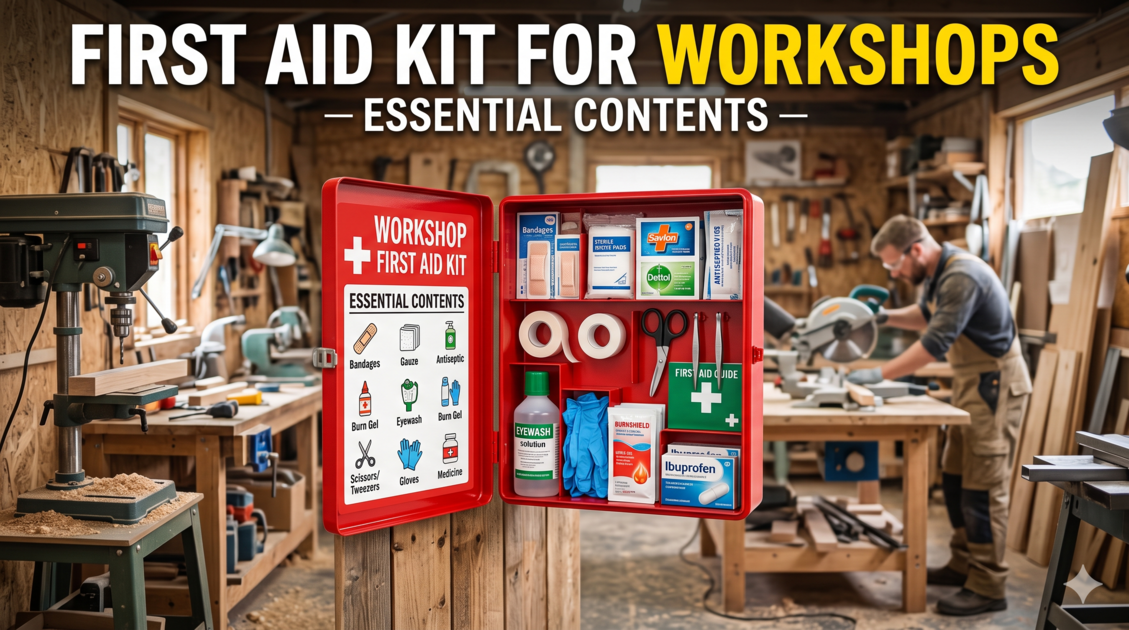
- Learn first aid: Always keep a first aid kit in your workshop.
- Never leave a running tool unattended: Turn it off and wait for it to come to a complete stop before setting it down.
- Educate others: If working with a team, ensure everyone knows the basic safety rules.
Essential Protective Equipment: An Indispensable Checklist
Here is a list of personal protective equipment that should be in every tradesperson's or hobbyist's workshop:
| Equipment | Use | Approximate Price (JOD) |
|---|---|---|
| Safety Glasses | Eye protection from debris and dust | 2 - 12 |
| Protective Gloves | Hand protection from cuts and heat | 1.5 - 8 |
| Ear Protection | Hearing protection from loud noise | 2 - 15 |
| Dust Mask/Filter | Respiratory system protection | 1 - 25 |
| Safety Boots | Foot protection from falling and sharp objects | 15 - 45 |
| Safety Helmet | Head protection at construction sites | 3 - 20 |
All of these items are available at ESCO from trusted global brands at competitive prices suitable for the Jordanian market.
When Should You Replace a Power Tool?
Even with the best maintenance, power tools reach the end of their service life. Here are the signs that indicate replacement is necessary:
- Persistent abnormal vibrations despite inspecting accessories and mechanical parts.
- Noticeable and continuous decline in power and performance.
- The tool heats up quickly and unusually.
- Visible electrical sparks from the motor or carbon brushes despite replacement.
- Repair costs exceed 50% of the price of a new tool.
When considering purchasing a new tool, visit the ESCO showroom or browse our website esco.jo to compare available options from Bosch, Makita, DeWalt, Milwaukee, Hilti, INGCO, and TOTAL, where our team will help you choose the right tool for your needs and budget.
Conclusion
Safety when using power tools is not a luxury or an exaggeration -- it is an absolute necessity that protects your life, health, and tools. Most accidents occur due to simple mistakes that can be avoided with a little knowledge and attention. Always remember: no job is so urgent that it justifies compromising safety procedures.
At ESCO, we are committed to providing not only the best power tools from the world's most renowned brands but also all the personal protective equipment and original accessories you need to work safely and efficiently. Visit us at our showrooms in Amman or shop online at esco.jo.