Pliers and Cutters: Types and When to Use Each
You pick up a new cutter and snip a thin hardened steel wire or a protruding small screw. The cut feels rough and takes more force than usual, but the wire parts. Then you look at the edge and see a small semicircular notch. From that moment this cutter will never cut copper cleanly again, because the notch cannot be repaired.
This is the most repeated mistake in cutter use, and it comes from assuming a cutter cuts whatever its jaws can close on. The real rule is different.
Plier types and their purposes
Combination pliers. Serrated flat jaws for gripping, a curved section for round stock, and a cutting edge near the pivot. A good general tool — but a generalist, best at none of its jobs.
Long nose (needle nose). Slim extended jaws reach into confined spaces: inside a box, between bundled conductors, behind a panel. Excellent for precise gripping and forming wire loops. The long thin jaw is a long lever, so heavy torque bends it permanently. Use them for precision, not force.
Side (diagonal) cutters. Two opposed angled edges for cutting only — not for gripping. The edge sits near the tip so wires can be cut close to a surface. The reference tool for wires, cables and cable ties.
Water pump / slip joint. An adjustable multi-position pivot opens the jaws wide while keeping the handles within hand span. For pipes, large nuts and fittings.
Locking pliers. A lever mechanism clamps and stays locked without continuous hand pressure, with a screw to set the opening. A portable vice or clamping wrench — invaluable for holding parts while welding or removing a rounded nut. The serrated jaws leave deep marks, so keep them off finished, galvanised or painted surfaces.
Circlip pliers. Specialised for retaining rings, classified on two axes. Internal versus external: internal pliers open to expand a ring inside a bore; external pliers close to compress a ring onto a shaft — opposite actions, not interchangeable. Straight versus bent tip: straight for direct access, bent (often 45 or 90 degrees) for angled access inside an assembly. The thin tips break easily if misused, and retaining rings fly when they escape — eye protection is not optional.
Crimping pliers. Neither gripping nor cutting: they form an electrical connection by controlled deformation of a terminal onto a conductor. The jaw cavities suit specific terminal sizes and types, and the wrong cavity produces a joint that loosens later. Crimping with ordinary pliers yields connections that heat up and fail.
End cutters. Edges perpendicular to the handles, cutting flush with a surface. Good for protruding nails and wire ends flush to a board.
Cutters are rated for material hardness
This is the central point. A cutter's edge is heat treated to a specific hardness, and its capacity is defined by material type and diameter together. Attempt something harder than the rating and the edge does not cut the material — the material notches the edge. That notch is permanent: hardened steel has been removed, and no sharpening restores the original opposed-edge geometry.
| Material | Standard side cutter | Hard-wire rated cutter | Note |
|---|---|---|---|
| Copper and soft aluminium | Suitable | Suitable | Normal use |
| Thin mild steel wire | At the limit of capacity | Suitable | Respect the stated diameter |
| Hardened steel wire | Not suitable | Suitable within rating | Notches a standard edge at once |
| Screws and nails | Not suitable | Usually not suitable | Use a saw or cutting disc |
| Stranded cable | Suitable | Suitable | Cable shears cut cleaner |
| Tension wire / wire rope | Not suitable | Dedicated tool only | Standard cutters splay strands and get damaged |
Joint types and load capacity
The pivot carries the load, and its design dictates durability more than most people expect.
Lap joint: one half overlaps the other, joined by a rivet or screw. Simpler to make, but side loading tends to spread the halves apart, so lateral play develops and the jaws lose alignment.
Box joint: one half passes through a slot machined in the other, captured on both sides. That double support resists side loading and keeps the jaws aligned under far higher loads for much longer. The advantage is geometric rather than metallurgical: the halves physically cannot spread. Worth seeking in cutters and tools that work under high repeated force; lap joints are fine for light occasional pliers.
Pliers are not a wrench
Using pliers on a nut or hex bolt is among the most damaging habits, and the reason is geometric. A correct wrench surrounds the fastener and loads its flats — wide surfaces able to carry the load. Pliers grip at two points on opposite corners, concentrating all force on two sharp edges, and corners are the weakest part of a fastener. They round off.
The damage does not stop at a spoiled nut. Once rounded, a proper wrench will never grip it, and a ten-second job becomes one needing extraction tools or cutting. The rule: pliers for things without a regular hex form, wrenches for nuts and bolts, no exceptions.
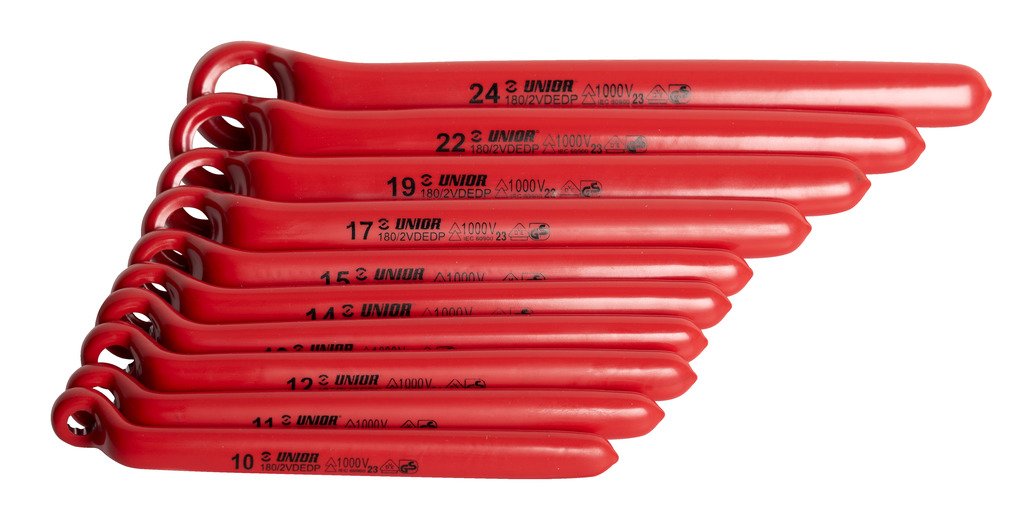
Handle insulation versus certified insulated tools
Care that extends tool life
- Oil the pivot. A drop of light oil and a few cycles. A dry pivot resists motion, raises the force needed and rusts stiff.
- Keep cutting edges from impact. A cutting edge is thin and hard, which makes it chip-prone. Never use cutters as a chisel, strike them, or throw them loose among heavy steel tools.
- Never extend the handles. A pipe multiplies force past the design limit, bending jaws, loosening the pivot or chipping the edges.
- No heat, no welding. Heating destroys the heat treatment permanently.
- Clean and dry after wet work, with a thin oil film on steel surfaces before storage.
- Check alignment. Close the cutter against a light: visible light between the edges means misalignment and no clean cut.
Conclusion
Each plier type has an intended job: combination for general work, long nose for precision not force, side cutters for wire only, water pump for large diameters, locking pliers as a marking portable vice, circlip pliers specialised across internal/external and straight/bent. The key rule: cutters are rated for hardness, and cutting something harder notches the edge permanently. Box joints carry higher loads because the geometry prevents spreading. Never use pliers as a wrench. Distinguish comfort grips from certified insulated tools, oil the pivot, protect the edges, and never extend the handles.