Sandpaper Types and Grits - The Right Selection Guide
Sandpaper - Essentials You Need to Know
Sanding is a crucial step in any wood, metal, or paint work. Using the correct grit determines the quality of the final result.
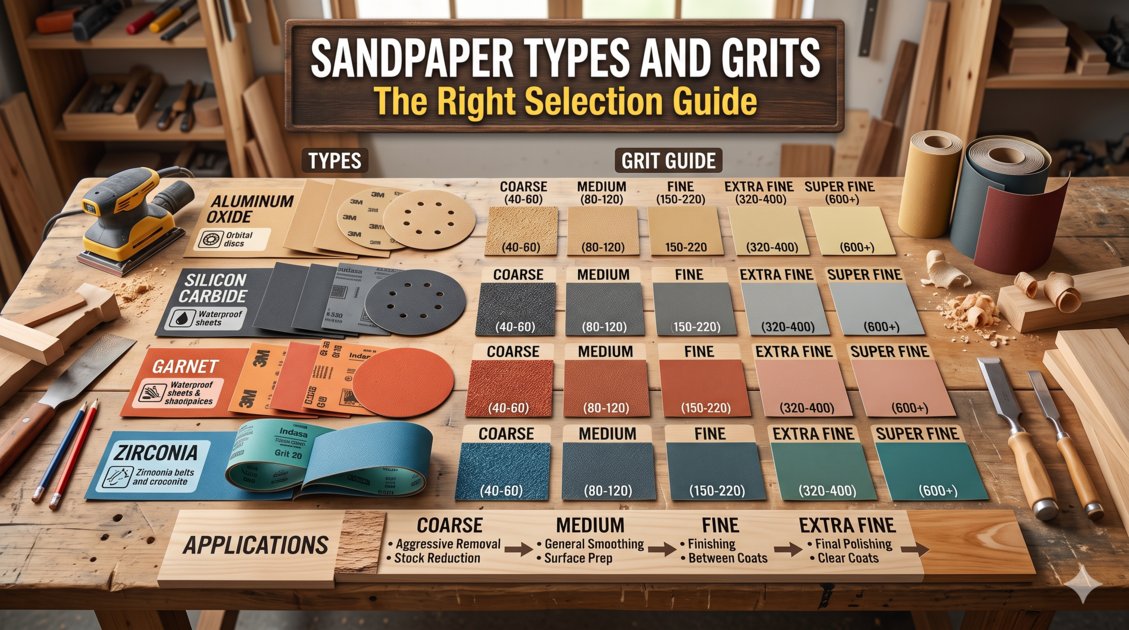
Grit Numbering System
| Number | Description | Use |
|---|---|---|
| 40-60 | Very Coarse | Removing old paint, leveling raw wood |
| 80-120 | Coarse | Initial shaping, removing large defects |
| 150-180 | Medium | General sanding before painting |
| 220-320 | Fine | Between paint and varnish coats |
| 400-600 | Very Fine | Final polishing, wet sanding |
| 800-2000 | Ultra Fine | Car polish, metals, clear coat |
Sandpaper Material Types
- Aluminum Oxide: Most popular, versatile, for wood and metal.
- Silicon Carbide: For wet sanding, hard metals, and polishing.
- Zirconia: For metals and heavy duty, lasts longer.
- Ceramic: Most expensive and strongest, for intensive machine sanding.
Sandpaper Forms
- Sheets: For hand use or vibrating sanders.
- Discs: For orbital sander.
- Belts: For belt sander.
- Sponge: For curved surfaces and corners.
- Flap Discs: For angle grinder.
The Progression Rule
Start coarse and move to fine gradually. Don't skip more than two grits:
- Start with 80 to remove defects.
- Move to 120 then 180.
- For painting: finish with 220.
- Between paint coats: 320-400.
All types of sandpaper and sanding discs in various grits at ESCO Engineering Warehouses.