Working Safely with Dust and Chemicals: Ventilation and Storage
In a small workshop someone grinds steel with no extraction. Beside him a shelf holds thinner, an acid, and an unlabelled water bottle full of solvent, and the door is shut because it is cold. Three serious errors in one picture: uncontrolled dust, incompatible materials together, and a chemical in a drink container.
This is a system problem, not a gloves-and-mask problem. Binding details come from local regulations, manufacturer instructions and safety data sheets, and a competent person should assess your site.
The hierarchy of controls
Controls have a fixed order of strength. Higher controls work whether or not a worker remembers; PPE depends on every person wearing the right item correctly every time. Any gap cancels the protection.
| Level | Principle | Example |
|---|---|---|
| 1. Elimination | Remove the hazard | Use pre-cut material |
| 2. Substitution | A less hazardous material | Water-based cleaner, not solvent |
| 3. Engineering | Enclosure, extraction | Local exhaust, wet cutting |
| 4. Administrative | Work organisation | Shorter exposure, signage |
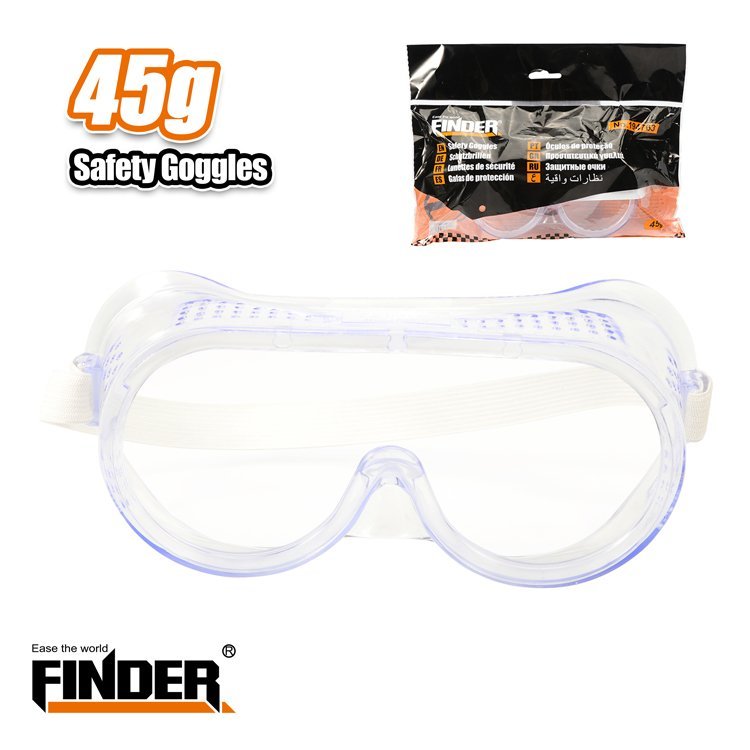
| 5. PPE | Protect the individual | Respirator, goggles, gloves |
The shift in thinking: if the only answer on the table is a mask and gloves, the four higher levels have not been explored. PPE is never a reason to leave dust and vapour in the air.
Dust at source
Dust never released needs no filtering. Extraction at the point of work, nozzle close to the source, changes exposure entirely; a general extractor in the corner does almost nothing. Wet cutting stops dust becoming airborne at all and is preferred for concrete, stone and tile - use equipment rated for wet work.
What does not work: sweeping with a broom, which re-suspends fine dust; blowing dust off clothing or benches with compressed air, one of the worst practices there is; and an open door instead of extraction.
General versus local exhaust ventilation
- General ventilation dilutes the air in the whole space, but slowly, and does not stop the contaminant reaching your breathing zone first.
- Local exhaust captures it at source - far more effective for welding, cutting and spraying.
Place extraction between the source and your face, and do not stand where contaminated air passes your breathing zone on its way to the hood. A fan blowing welding fume away from you just delivers it to a colleague: extract, do not push.
Confined spaces
Tanks, pits, deep excavations and vessels have killed many workers, and often those who tried to rescue them. The main hazards:
- Oxygen displacement by an inert gas such as nitrogen, argon or carbon dioxide - no smell, no warning, and loss of consciousness very quickly with no sense of suffocation.
- Heavier-than-air vapours accumulating low down - the air at the opening can be fine while the bottom is lethal.
- Oxygen consumed by rusting or fermentation in a closed vessel, and fire or explosion from accumulated flammable vapour.
Warning: nobody enters a confined space on personal judgement. Entry requires a permit, atmosphere testing before and during entry, forced ventilation, an attendant who does not leave the post, suitable breathing and rescue equipment, and a rescue plan that does not rely on an unprotected rescuer entering. Improvised rescue is a leading reason these incidents claim more than one life.
Chemical storage
- Segregate incompatible materials - acids away from bases, oxidisers away from flammables and oils. A small leak between two incompatible containers can produce heat, toxic gas or fire; the safety data sheet lists incompatibilities.
- Keep containers closed, since an open one releases vapour continuously, and keep the label legible, relabelling immediately if material is transferred.
- Store cool, ventilated and out of direct sun, use containment trays under larger containers, and keep heavy containers off high or unsecured shelving.
A genuinely fatal habit: decanting chemicals into a water bottle, soft-drink container or cup. This is a real and repeated cause of serious poisoning, especially with children, new workers or in poor light. Never do it.
Every industrial chemical has a safety data sheet listing hazards, PPE, incompatibilities, storage, spill procedure, first aid and firefighting information. Keep a file of sheets somewhere everyone can reach quickly - after an incident, that sheet is what the first aider or doctor needs.
Spills, skin and eyes
Spill basics: clear the area, remove ignition sources and ventilate, stop the source only if safe with correct PPE, contain with absorbent, collect for proper disposal, and never wash chemicals into the drain. Large or unidentified spills are for specialists. Keep a spill kit ready.
Many treat solvents as strong cleaners. In fact a number are absorbed through the skin into the body, and they strip natural oils, causing drying, cracking and chronic dermatitis. Washing hands in thinner is common and thoroughly harmful: use gloves rated for that specific chemical, and wash with soap and water.
Eyes do not tolerate delay. Provide eye wash wherever acids, bases or solvents are used, reachable in seconds. Flush with plenty of water for a prolonged period, seek medical care, and take the safety data sheet with you.
Fire from solvent vapour
It is the vapour that ignites, not the liquid. Heavier-than-air solvent vapour travels along the floor, can reach an ignition source metres away, and the flame tracks back to the container.
- No sparks, flames or hot work where solvents are in use - and switches, drill motor brushes, chargers and fan motors are all ignition sources.
- Ventilate at floor level, because vapour settles low.
- Collect oil- and solvent-soaked rags in a lidded metal container; some can self-heat.
- Keep a suitable extinguisher nearby and make sure people can use it.
Summary
Start at the top of the hierarchy: can the process be eliminated or the material substituted? Then control dust and vapour at source - local exhaust beats general ventilation. Never enter a confined space without a full permit procedure, atmosphere testing, an attendant and a rescue plan. Segregate incompatible chemicals, keep containers closed and labelled, and never decant into a drink container. Keep safety data sheets accessible, provide eye wash and spill containment, protect skin from solvents, and remember vapour ignites, not liquid. PPE remains necessary but is the last line of defence, never a replacement for engineering control.