Respirator Classes: The Difference Between FFP1, FFP2 and FFP3
A painter sprays a solvent-based product wearing a white dust mask and believes he is protected. That mask stops nothing of the solvent vapour. An hour later he has a headache and dizziness and blames fatigue. Lungs do not recover from some damage, and the harm is cumulative. What follows is principle; binding requirements come from local regulations and manufacturer instructions, and assessing your site needs a competent person.
What the FFP classes mean
FFP stands for Filtering Face Piece - a mask where the filter is the mask body itself, used and then discarded. The class describes filtration efficiency and permitted leakage.
| Class | Protection level | Typical use |
|---|---|---|
| FFP1 | Lowest | Coarse, relatively non-toxic dust, general cleaning |
| FFP2 | Medium | Fine dust from cutting, grinding and sanding; much construction work |
| FFP3 | Highest | Fine and hazardous dust such as silica, metal fume, biological material |
Higher number, higher efficiency, lower permitted leakage. Choose from the actual hazard, not from what is in the drawer; the table is indicative only and the required class comes from a formal risk assessment.
Critical warning: FFP masks of every class protect against particles only - dust, mist, solid fume. They offer no protection at all against gases, chemical vapours, or solvent, paint and thinner fumes. Vapour passes through the filter medium as if it were not there. Gases and vapours require a respirator with the correct cartridge type.
Cartridge respirators and colour coding
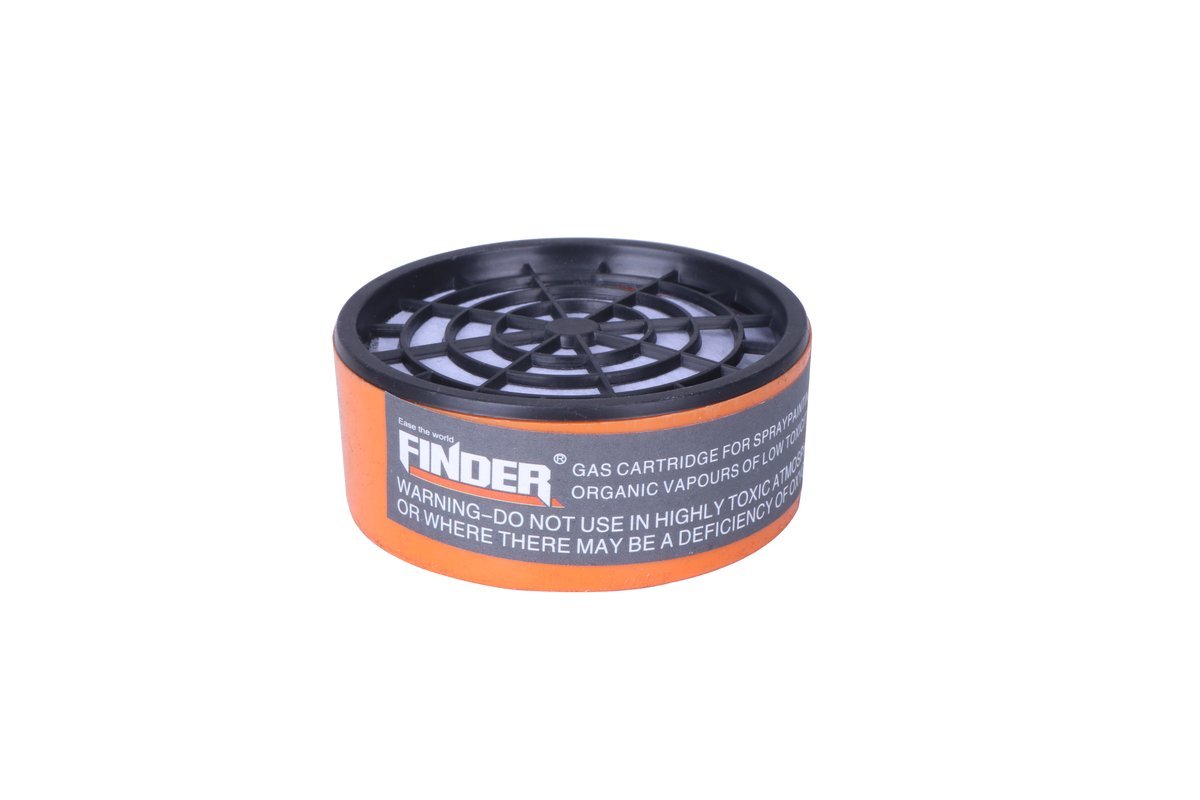
For paints, solvents, acids and chemicals the right tool is a half-face or full-face respirator with replaceable cartridges holding an adsorbent, usually activated carbon. Cartridges carry colours and letter codes for families of contaminant - organic vapours and solvents, acid gases, ammonia and derivatives, other specialist groups, plus combination types pairing a particle and a gas filter. That coding varies between systems and makers, so never go by colour alone. Read the marking, match it to the safety data sheet for your substance, and confirm it fits that respirator body - cartridges are not interchangeable between brands.
A filtering respirator is never enough where oxygen is depleted (it purifies air, it does not make oxygen), where concentrations are high or unknown, or where no suitable filter exists - those need supplied-air equipment and a competent decision.
Fit matters more than class
A poorly fitting FFP3 gives less protection than a well-fitting FFP2. Air takes the easy path: a gap at the nose, cheek or chin lets it bypass the filter entirely. The class describes the material, not the mask on your face.
Facial hair: a beard, or even a day or two of growth, breaks the seal at the skin, and tightening the straps does not fix it. Anyone working where a tight-fitting mask is required must either shave the sealing area or use a type that does not rely on a face seal, such as a powered hood system. Decide that in advance, not mid-task.
Fit check every time: fit per the instructions, mould the nose clip with both hands, cover the mask and exhale firmly (it should bulge with no edge leak), then inhale sharply (it should pull in). Air escaping at the eyes or cheeks means re-fit; if it persists the size is wrong for you.
Faces differ, and in hazardous environments a quick check is not sufficient - formal fit testing by a competent person is required.
Valved or unvalved
An exhalation valve reduces heat build-up and suits long exertion, but does not raise the wearer protection level and does not filter what you breathe out. Where others must be protected from your exhaled air, choose unvalved.
Filter life
- Particle filter: it clogs rather than expires. Noticeably harder breathing means change it.
- Gas cartridge: it saturates. Smelling or tasting the substance means leave for fresh air immediately and change it.
- The trap: some substances have no detectable odour at harmful concentrations, and the sense of smell dulls with exposure. Do not rely on smell alone - use a documented change schedule based on manufacturer instructions and competent assessment.
- Replace any mask that is damaged, soiled inside, wet, deformed or has a failed strap. Single-use masks are never washed or reprocessed.
Silica dust: the quiet hazard
Cutting tile, stone and concrete, grinding and demolition release fine dust containing crystalline silica. The dangerous fraction is too fine to see, reaches deep into the lung, and causes cumulative, irreversible damage that may take years to show. The visible dust on clothing is not the main risk; the invisible fraction is.
Control it in order: wet cutting or water feed at the blade; local extraction suited to fine dust; good ventilation with others kept clear; and only then a suitable mask. The mask is the last line, never a substitute for control at source.
Storage between uses
- Do not leave it on your neck or on a dusty shelf - the inside picks up the dust you are avoiding. Store it in a clean closed bag or box, away from sun, heat and oils.
- Gas cartridges keep adsorbing from workshop air even unused - seal them in a bag or their container.
- Clean reusable facepieces per the manufacturer instructions, never with solvents, and do not share masks between people.
Summary
The class gives the filtration level - FFP1 lowest, FFP3 highest - but means nothing without a seal, and facial hair destroys the seal. Above all: a dust mask does not protect against gases, vapours or solvents; those need the correct cartridge from the safety data sheet. Change filters on rising breathing resistance or on detecting the contaminant, never on smell alone. For cutting and grinding, control dust at source first. For your site specifically, follow local regulations, manufacturer instructions and a competent safety professional.