Masonry Bits and Hammer Chisels: A Guide to Drilling and Breaking on Site
On construction sites, drilling and breaking consume more time and money than most people expect. The wrong bit snaps after three holes; a chisel incompatible with the machine will not seat at all. Worse still: a machine damaged because the user forced it into work it was never designed for.
1. The SDS System — The Fundamental
SDS stands for the German "Steck-Dreh-Sitzt" — insert, turn, seated. The system lets the bit move freely along its axis inside the chuck while still transmitting rotation, which is what makes hammering possible without the bit slipping.
| System | Shank diameter | Machines | Use |
|---|---|---|---|
| SDS-Plus | 10 mm | Medium rotary hammers | Most common, holes up to about 30 mm |
| SDS-Max | 18 mm | Heavy breakers | Breaking and wide drilling, structural work |
| Hex shank | Varies | Demolition hammers | Heavy breaking chisels |
Important: there is no safe adapter allowing an SDS-Max bit in an SDS-Plus machine. The difference is not only diameter but the impact energy the tool is built to absorb. Working around it damages the machine or breaks the tool in use.
2. Choosing Bit Diameter and Length
Diameter is chosen by what will go into the hole:
- 10 mm — the most used size, for ordinary fixings and shelving. From about 1.50 JD at 210 mm length.
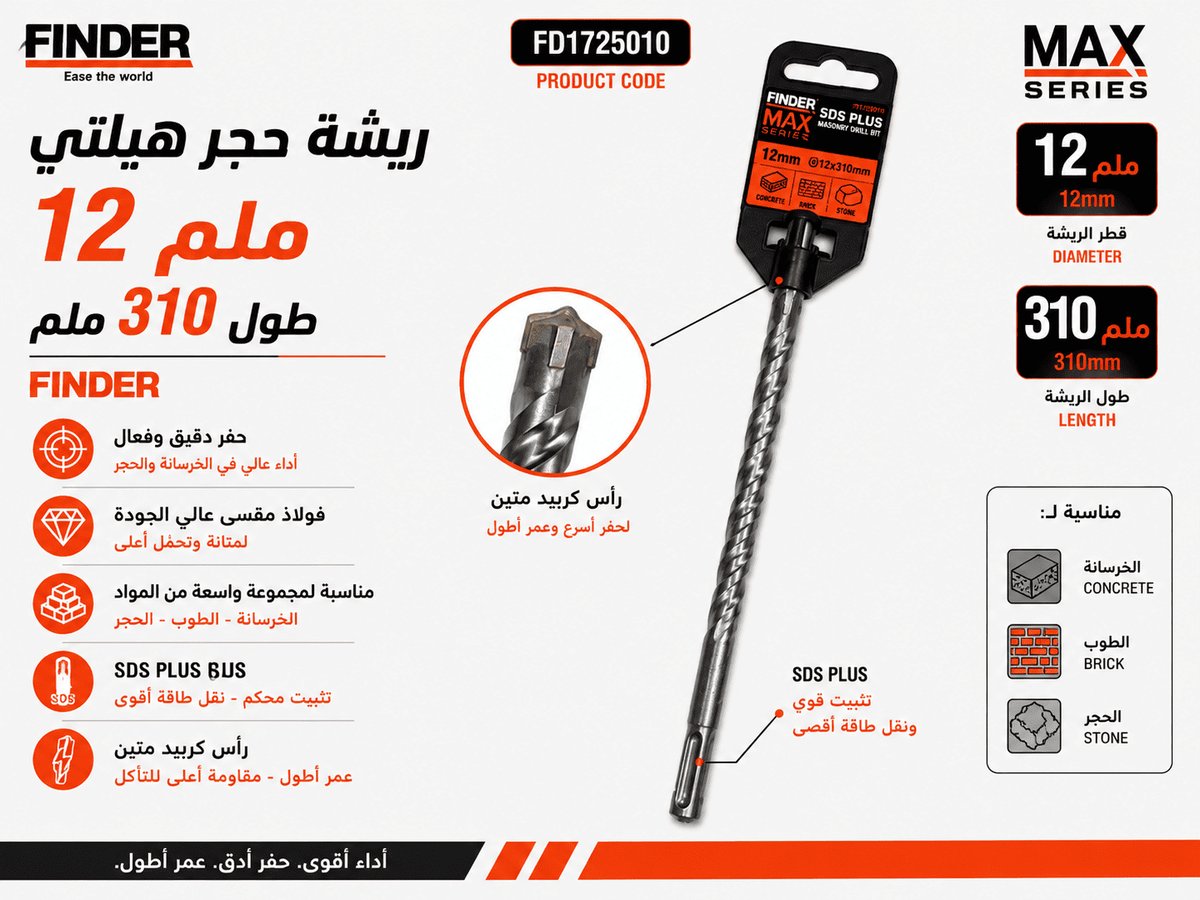
- 12 mm — heavier fixings, air-conditioner brackets, metal frames. About 2.00 JD.
- 14 - 16 mm — structural fixings, large expansion bolts. From about 2.25 JD.
- 18 mm and above — heavy structural work and pipe runs. About 3.25 JD at 400 mm.
Length is often forgotten. Total bit length is not achievable drilling depth: part sits in the chuck and part must stay outside the hole for control. Usable depth is roughly 40 to 50 mm less than total length. For a 150 mm hole, do not buy a 160 mm bit — choose at least 210 mm. Common lengths are 160, 210, 310 and 400 mm, and the price gap between consecutive lengths is usually under one dinar.
3. Hammer Chisel Shapes
| Shape | Function | Approx. price |
|---|---|---|
| Pointed | Concentrates energy at one point to start breaking | 2.50 JD |
| Flat | Widening cracks, removing layers, cleaning surfaces | 3.75 JD |
| Pointed 400 mm | Deep breaking in thick walls | 4.50 JD |
Correct breaking sequence: always start with the pointed chisel to open an initial crack, then move to the flat one to widen it. Starting flat on an intact surface wastes energy and strains the machine for little result.
4. Drilling Mistakes That Break Bits
- Excessive pressure. Contrary to common belief, pressing harder does not drill faster. The hammer mechanism breaks the concrete; excess pressure stops the bit rebounding freely and generates heat that destroys tip hardness.
- Continuous drilling without withdrawal. Pull the bit out every few centimetres to clear dust, which otherwise insulates and overheats the bit.
- Using hammer mode on tiles. Tile and ceramic shatter under impact. Use rotation only with a ceramic bit to pierce the layer, then switch to hammer for the concrete behind.
- Ignoring rebar. The drilling sound changes clearly on contact. Forcing through ruins the bit immediately — stop and move a few centimetres.
- Drilling at an angle. Bits are designed for axial load; tilting creates side stress that snaps them.
- Cooling with water. Masonry bits run dry. Water causes thermal shock that cracks the carbide tip.
5. Complementary Site Tools
The trowel remains essential for plastering and masonry. A 280×140 mm blade at 3 mm thickness is a common practical size at around 3.50 JD. Choose stainless where possible — it does not rust and cleans more easily.
The formwork hammer at around 500 g is necessary for timber formwork and pulling nails.
6. Comparing Brand Tiers
Economy tier: brands such as FINDER cover masonry bits and chisels from about 1.50 JD. This makes particular sense here, because bits and chisels are inherently consumable — they wear out regardless of quality. Buying a premium bit for occasional work is not economical.
Professional tier justifies its cost under intensive daily use, where the difference appears in holes-per-bit and diameter consistency over time.
Global specialist tier: Bosch, Hilti and Makita are internationally recognised in drilling and breaking equipment, generally noted for spare parts and service — essential for contractors for whom machine downtime is a direct daily loss.
7. Safety in Drilling and Breaking
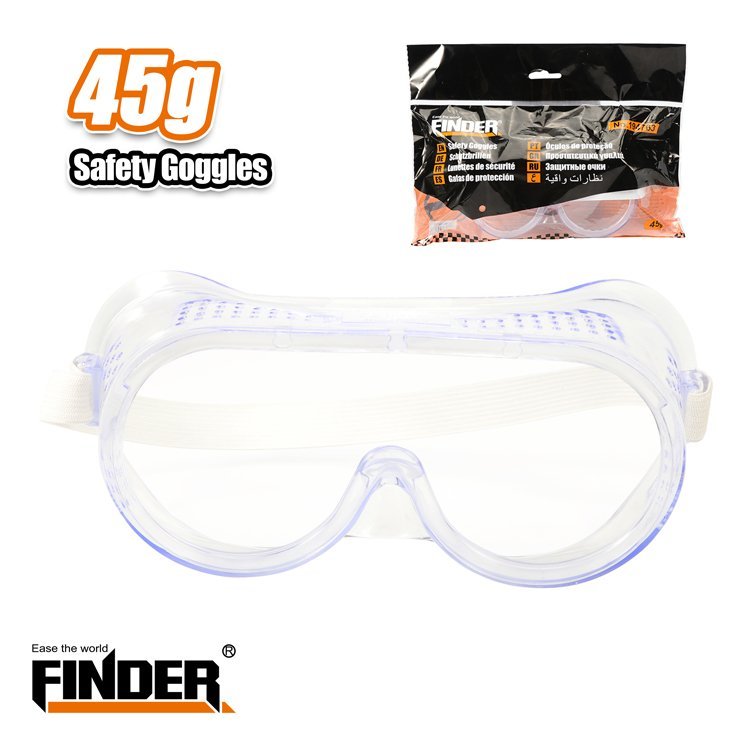
- Eye protection, always. Concrete fragments fly at high speed. Non-negotiable.
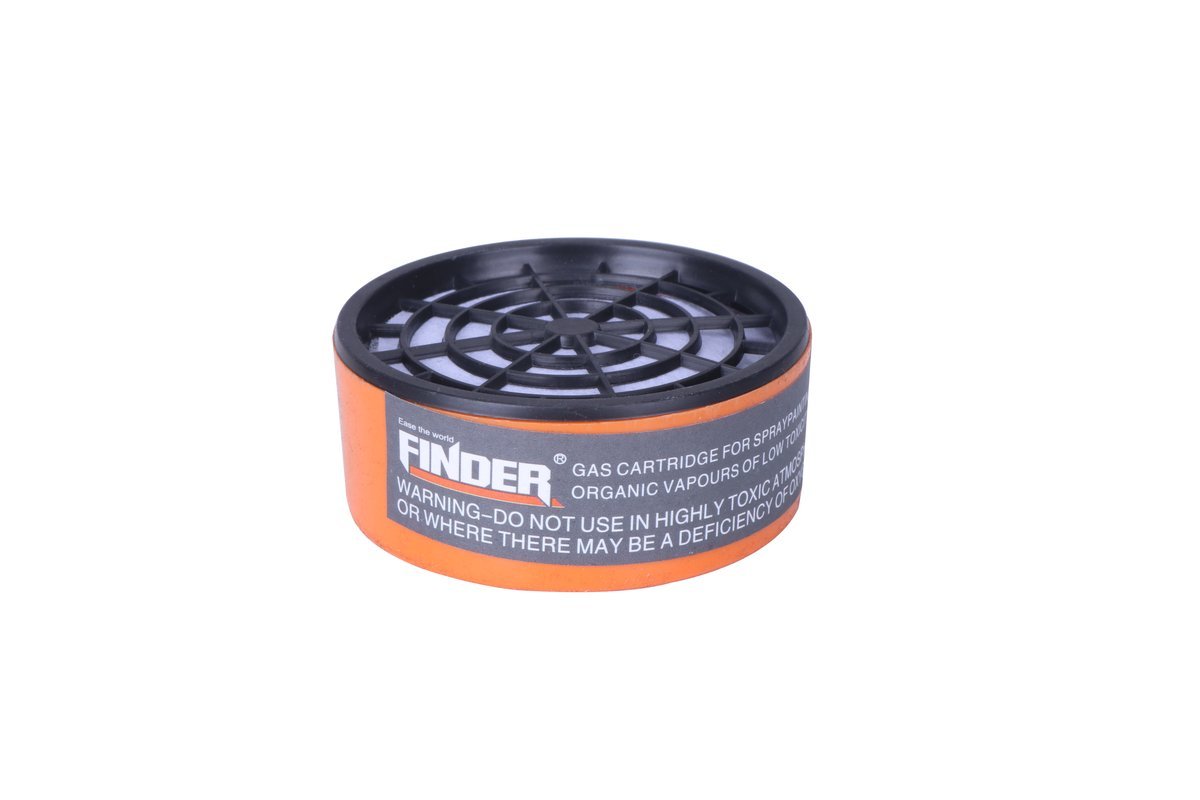
- Dust mask. Silica dust from concrete drilling harms the lungs cumulatively over time.
- Hearing protection. Breakers clearly exceed safe noise levels.
- Scan the wall first. Use a metal and cable detector — blind drilling can hit a power cable or water pipe.
- Anti-vibration gloves. Prolonged hammer use causes Hand-Arm Vibration Syndrome (HAVS), a permanent occupational injury.
Conclusion
Success in drilling and breaking rests on three decisions: choosing the right system (SDS-Plus or SDS-Max) for your machine, choosing the right diameter and length for the job, and using technique that protects both tool and machine.
The key point to remember: the hammer mechanism breaks the concrete, not the pressure of your hand. Let the machine work, withdraw the bit periodically to clear dust, and you will get cleaner holes and longer-lasting tools.