Brushless vs Brushed Motors: What Is the Difference and Is It Worth It?
Introduction: Why Does the Motor Type in Your Power Tool Matter?
When you stand in front of the power tools display at an ESCO showroom or browse the online store, you will notice that many manufacturers like Bosch, Makita, and DeWalt prominently label their products with the word "Brushless", and sometimes the price is 30% to 50% higher than the standard model. Is this price difference actually justified? Is the brushless motor worth the extra investment?
In this comprehensive guide, we will explain in detail how each type of motor works, what the real advantages and disadvantages of each are, and when a brushless motor is a necessity versus when a brushed motor is perfectly adequate for your needs. The goal is for you to finish this article equipped to make a smart purchasing decision that saves you money and serves you for years.
How Does a Brushed Motor Work?
The brushed motor is the classic design that has been used in power tools for over 100 years. It operates on a simple and effective principle:
- Rotor (Armature): Consists of copper wire coils wound around an iron core. This is the part that actually spins inside the motor.
- Stator: Permanent magnets fixed to the outer housing of the motor that create a stationary magnetic field.
- Carbon Brushes: Two small pieces of compressed carbon that press against a metal ring called the commutator on the rotating shaft. Their function is to transfer electrical current to the spinning coils.
- Commutator: A segmented metal ring that automatically reverses the direction of current in the coils with every half-rotation, keeping the motor spinning continuously.
Step-by-Step Operation
- Electrical current flows through the brushes to the commutator and from there to the rotor coils.
- A magnetic field is generated in the coils that interacts with the permanent magnets, pushing the rotor to spin.
- As the shaft rotates, the commutator automatically reverses the current direction, sustaining continuous rotation.
- The brushes slide against the commutator throughout operation, causing continuous mechanical friction.
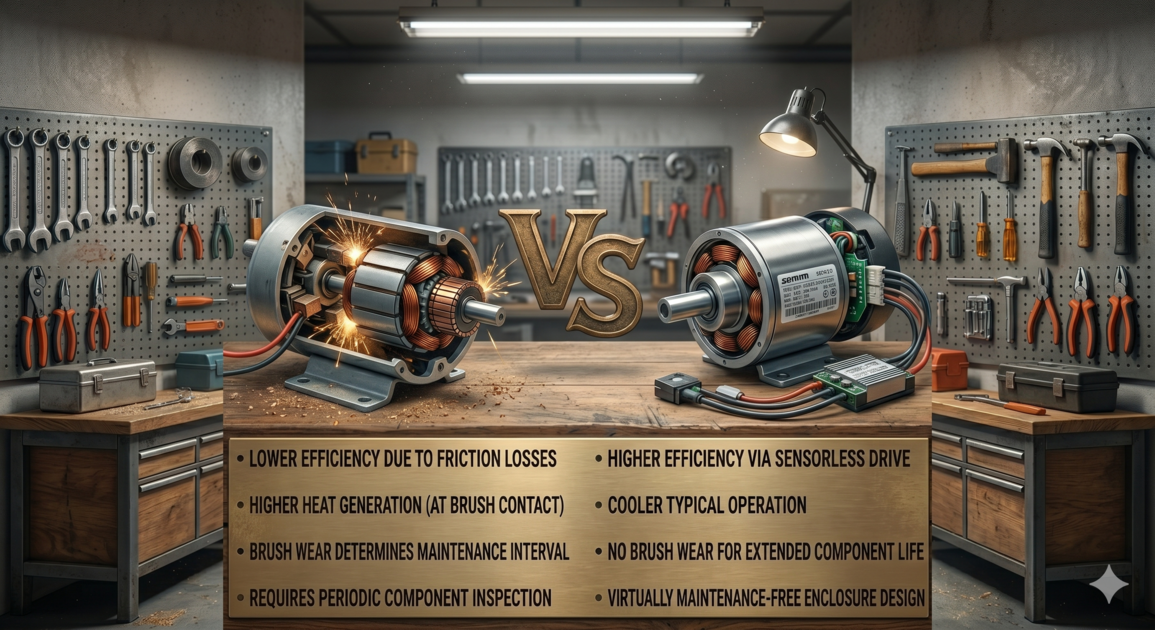
This friction between the brushes and commutator is the main weakness: it generates heat, wastes a portion of energy, and causes the brushes to wear down over time, requiring periodic replacement.
How Does a Brushless Motor Work?
The brushless motor flips the classic design on its head. Instead of brushes and a mechanical commutator, it uses a smart electronic board to control current flow:
- Stator: Contains stationary copper wire coils around the outer housing of the motor.
- Rotor: Consists of powerful permanent magnets (usually neodymium) fixed to the rotating shaft.
- Electronic Speed Controller (ESC): An electronic board containing transistors (MOSFETs) and position sensors (Hall Sensors) that precisely control the timing of current delivery to each coil.
How It Works
- Hall Sensors read the current position of the rotating magnets.
- This information is sent to the electronic controller, which determines which coil to energize and when.
- Current passes through the stationary coils in an electronically calculated sequence, generating a changing magnetic field that drives the rotating magnets.
- This process repeats thousands of times per second with extreme precision, without any mechanical contact.
The result: no friction, no electrical sparking, no energy wasted on friction, and intelligent control over speed and torque based on the actual load on the tool.
Comprehensive Comparison: Brushed vs. Brushless
Let us lay out a direct and practical comparison between the two types:
1. Efficiency and Power Consumption
A brushed motor converts approximately 60% to 75% of electrical energy into kinetic energy, while the rest is wasted as heat due to friction and electrical resistance in the brushes. In contrast, a brushless motor achieves 85% to 92% efficiency, meaning better performance with the same amount of energy.
What this means in practice: If you are using a drill running on a 20-volt battery, the brushless version will drill more holes on a single charge - the difference ranges from 25% to 50% additional work per charge.
2. Lifespan and Maintenance
Carbon brushes in traditional motors wear down with use and need replacement approximately every 50 to 100 working hours depending on intensity of use. The commutator itself also wears over time. A pair of brushes in Jordan costs between 1.5 to 5 JOD depending on the brand and model, but the real inconvenience is the work stoppage required to change them.
A brushless motor requires no periodic maintenance because it contains no contact parts that wear down. The motor's lifespan can reach two to three times that of a brushed motor.
3. Weight and Size
Brushless motors are typically smaller and lighter by 15% to 30% compared to a brushed motor delivering the same power. This is a tangible difference, especially with handheld tools like drills and screwdrivers that you use overhead or in tight spaces for hours at a time.
4. Heat and Noise
A brushed motor generates higher heat due to continuous friction and produces visible electrical sparking at the rear vents of the tool. This sparking is not only annoying but can be dangerous in work environments containing wood dust or flammable materials. A brushless motor runs quieter and at lower temperatures, increasing user comfort and workplace safety.
5. Intelligent Performance Control
This is where the greatest advantage of the brushless motor becomes apparent. The electronic control unit can:
- Automatically adjust speed and torque based on the hardness of the material you are working on. For example, when drilling soft wood it consumes less energy, and when it encounters a hard knot it automatically increases torque.
- Protect the motor from overload by shutting down before the motor or battery is damaged.
- Maintain constant speed under load, whereas a brushed motor noticeably loses speed when resistance increases.
- Fast electronic braking that stops rotation within fractions of a second when you release the trigger.
6. Price
Here we come to the sensitive point. Brushless motors are more expensive due to the cost of powerful magnets and the electronic board. The price difference:
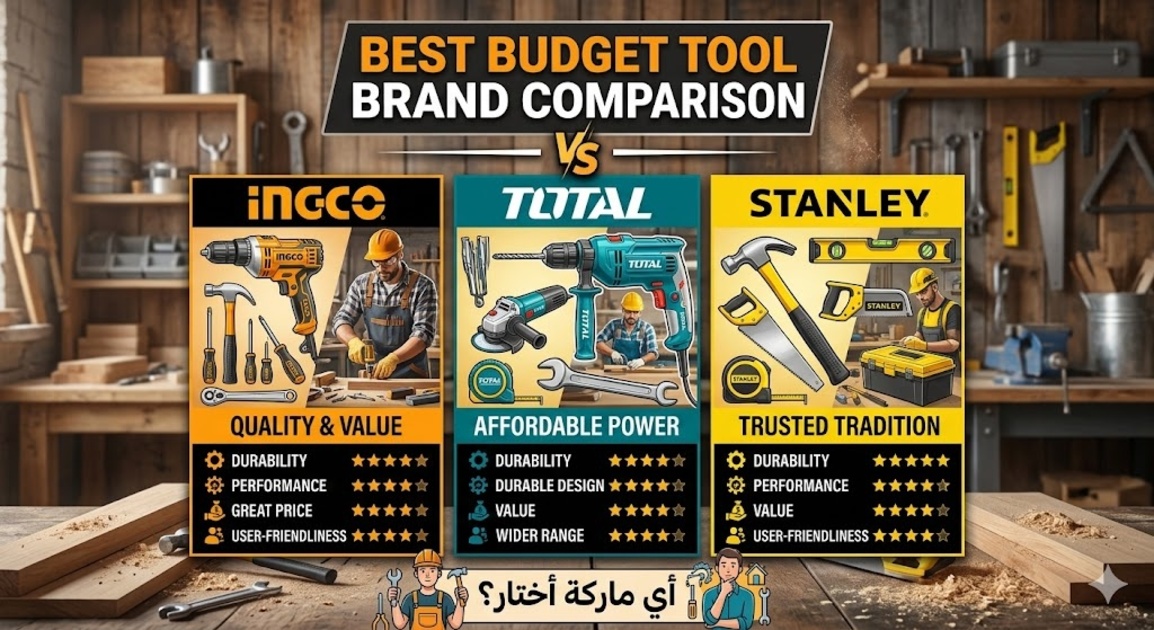
- Standard drill (Brushed): Starts from around 25-45 JOD for economy brands like INGCO and TOTAL, and 70-120 JOD for professional brands like Bosch and Makita.
- Brushless drill: Starts from around 45-70 JOD for economy brands, and 120-200 JOD or more for professional brands.
- Angle grinder (Brushed): From 15-35 JOD for economy and 50-90 JOD for professional.
- Angle grinder (Brushless): From 40-65 JOD for economy and 90-180 JOD for professional.
When to Choose a Brushed Motor?
Do not rush to dismiss the brushed motor as "outdated" or "inferior." In many cases, it is the smarter choice:
Scenarios Where Brushed Is Sufficient
- Light home use: If you use your drill once or twice a month to hang shelves or drive screws, you will not notice a meaningful difference in performance.
- Limited budget: A brushed INGCO drill at 30 JOD will serve you well for years in home use, and you can save the difference to buy high-quality accessories or drill bits.
- Corded power tools (direct electricity): When the tool is plugged into mains power, energy efficiency becomes less important since the power source is unlimited. A brushed Bosch GWS 700 angle grinder at 700 watts, for example, is excellent for medium-duty use.
- Specialized, rarely-used tools: Such as heat guns or welding machines - these tools do not benefit much from brushless technology.
Recommended Brushed Models from ESCO
- INGCO ID6808: 680W brushed impact drill, very suitable for home and light trade use.
- TOTAL TG1061336: 900W brushed angle grinder with 5-inch disc, economical price with reliable performance.
- Bosch GSB 13 RE: 600W brushed impact drill from Bosch, the classic reliable choice for multi-purpose use.
- Stanley STDR5510: 550W brushed drill, lightweight and suitable for light work.
When to Choose a Brushless Motor?
Investing in brushless technology becomes justified and logical in these cases:
Scenarios Where Brushless Excels
- Daily professional use: If you are an electrician, plumber, or carpenter using your tools 4-8 hours daily, a brushless motor will save you brush replacement time, give you longer battery life, and reduce fatigue thanks to lighter weight.
- Cordless tools (battery-powered): This is where the biggest difference shows. With an 18V or 20V battery, you will get 25% to 50% more work per charge with a brushless motor. This means fewer charges during a workday and higher productivity.
- High-load applications: Angle grinders for continuous cutting, rotary drills for concrete, circular saws - all benefit significantly from the efficiency and power of a brushless motor.
- Working at construction sites: Where dust, heat, and harsh working conditions during Jordan's summers prevail, a brushless motor handles heat better and is not affected by dust the way a brushed motor is.
- Building a unified battery system: If you are building a tool collection from one brand with the same battery (such as Makita 18V LXT or DeWalt 20V MAX), investing in brushless multiplies battery life across all your tools.
Recommended Brushless Models from ESCO
- Makita DHP486: 18V brushless hammer drill with torque up to 130 Nm. One of the most powerful drills in its class and a preferred choice for professionals in Jordan.
- DeWalt DCD791: 20V MAX brushless drill/driver, lightweight (only 1.6 kg) with LED light and compact design.
- Bosch GWS 18V-10: 18V brushless angle grinder with 5-inch disc, featuring KickBack Control for recoil protection.
- Milwaukee M18 FUEL: A complete line of brushless tools with POWERSTATE technology, featuring exceptional power and high durability. Available at ESCO.
- INGCO CIDLI20608: 20V brushless impact drill at an excellent economical price, a smart choice for those who want brushless technology on a limited budget.
- Hilti SF 6H-A22: 22V brushless hammer drill from Hilti, designed for the harshest working conditions in major construction projects.
Quick Comparison Summary
To simplify the comparison, here is a summary of the key differences:
- Efficiency: Brushed: 60-75% | Brushless: 85-92%
- Battery life per charge: Brushed: Less | Brushless: 25-50% longer
- Maintenance: Brushed: Periodic brush replacement | Brushless: No maintenance needed
- Motor lifespan: Brushed: 500-1,000 working hours | Brushless: 2,000-5,000 working hours
- Weight: Brushed: Heavier | Brushless: 15-30% lighter
- Heat: Brushed: Higher heat | Brushless: Lower heat
- Noise: Brushed: Louder with sparking | Brushless: Quieter with no sparking
- Performance control: Brushed: Manual | Brushless: Smart electronic
- Price: Brushed: 30-50% less | Brushless: Higher
Practical Tips Before Buying
1. Calculate the Total Cost of Ownership
Do not look only at the purchase price. A brushed drill at 80 JOD + brushes every 6 months (3 JOD) + extra batteries due to higher consumption = costs that accumulate. A brushless drill at 130 JOD may be more economical in the long run if you use it frequently.
2. Start with Your Most-Used Tool
If your budget does not allow buying all brushless tools at once, start with the tool you use the most. For most tradespeople in Jordan, this is usually the drill or impact driver.
3. Pay Attention to the Battery System
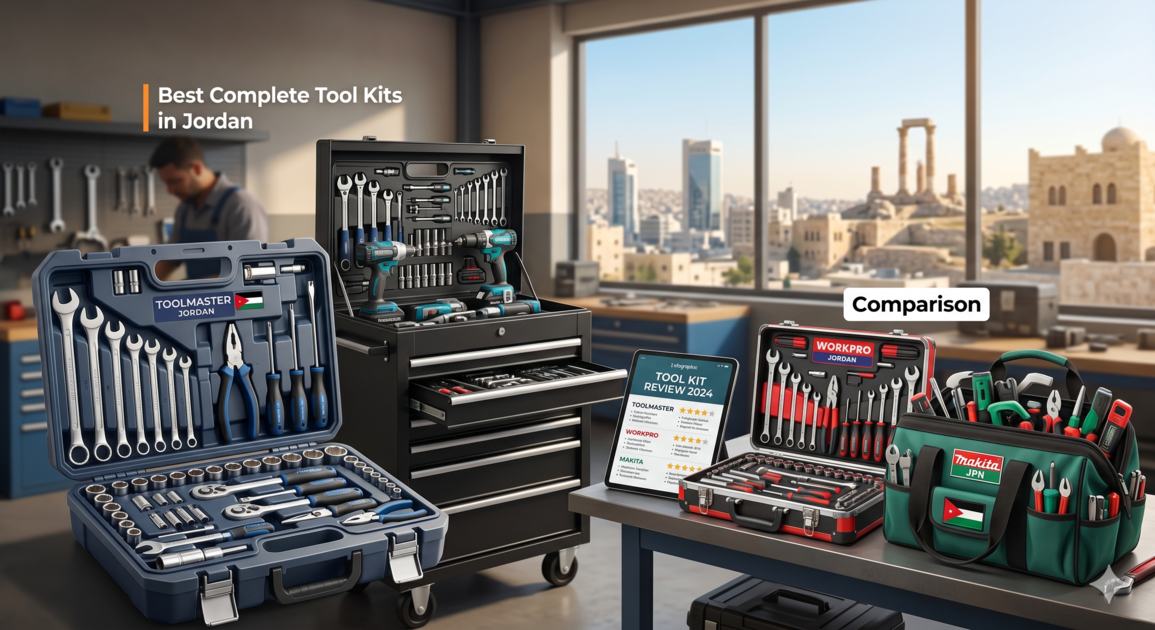
Choose one brand and stick with it. Makita 18V batteries work with over 300 tools, and DeWalt 20V MAX with over 250 tools. This means you buy the battery once and use it across all your tools. At ESCO, you will find combo kits that come with two batteries and a charger at a better price than buying each piece separately.
4. Try Before You Buy
At ESCO showrooms in Jordan, you can ask to try the tool before purchasing. Hold the brushless drill and compare it with the brushed one - you will notice the difference in weight and vibration immediately. This hands-on experience cannot be replaced by any written specifications.
5. Do Not Forget Safety Accessories
Regardless of motor type, always make sure to wear safety glasses, appropriate gloves, and ear protection when using angle grinders and high-speed tools. ESCO carries a wide selection of safety equipment from brands like FINDER and Stanley.
Common Myths About Brushless Motors
Myth One: "Brushless Is Always More Powerful Than Brushed"
The truth: Not necessarily. Power depends on the overall motor design, not just its type. A 1000W brushed drill will be more powerful than a 500W brushless drill. The difference lies in efficiency: the brushless motor utilizes its energy better.
Myth Two: "Brushed Motors Will Disappear from the Market Soon"
The truth: Brushed motors are still being manufactured and sold in large numbers, especially in corded tools and economy categories. Companies like INGCO and TOTAL offer excellent brushed tools at very competitive prices.
Myth Three: "Brushless Motors Cannot Be Repaired"
The truth: While repairing an electronic board is more complex than changing two brushes, brushless motors rarely need repair. When necessary, authorized service centers at ESCO handle all types of motors.
Jordan-Specific Considerations
Working in Jordan has its own challenges that affect your motor type selection:
- High summer temperatures: Temperatures exceeding 35-40 degrees Celsius in Amman and 45 degrees in the Jordan Valley and Aqaba increase strain on brushed motors. Brushless motors handle heat better.
- Dust: Construction sites in Jordan are full of fine dust that enters ventilation openings. Dust accelerates wear on brushes and the commutator in brushed motors.
- Power fluctuations: In some remote areas, voltage fluctuations can affect the performance of corded tools. Cordless tools (regardless of motor type) avoid this problem entirely.
- Parts availability: Carbon brushes for most common models are easily available at ESCO and tool shops in downtown areas. However, electronic parts for brushless motors may require special ordering.
Conclusion: Which Should You Choose?
The decision depends on three main factors:
- Usage volume: Light and intermittent use = Brushed is sufficient. Daily and intensive use = Brushless is worth the investment.
- Power source: Corded tool = the Brushless advantage matters less. Cordless tool (battery) = Brushless makes a big difference.
- Budget: Limited budget = a Brushed tool from a good brand is better than Brushless from an unknown brand. Flexible budget = Brushless is a worthwhile investment.
In all cases, we recommend visiting the nearest ESCO branch in Jordan or browsing the website esco.jo to check the latest offers and compare prices. The specialized sales team will help you choose the tool that perfectly matches your needs and budget.
Important Safety Reminders
- Never use a power tool that produces abnormal sparking or a burning smell - stop immediately and inspect the brushes (in brushed motors) or send it for service.
- When replacing brushes, disconnect the tool from power or remove the battery first.
- Always replace brushes as a complete pair, even if only one is worn.
- Use original or high-quality replacement brushes - cheap brushes damage the commutator and shorten motor life.
- Ensure proper ventilation of the tool during operation and never block the cooling vents.