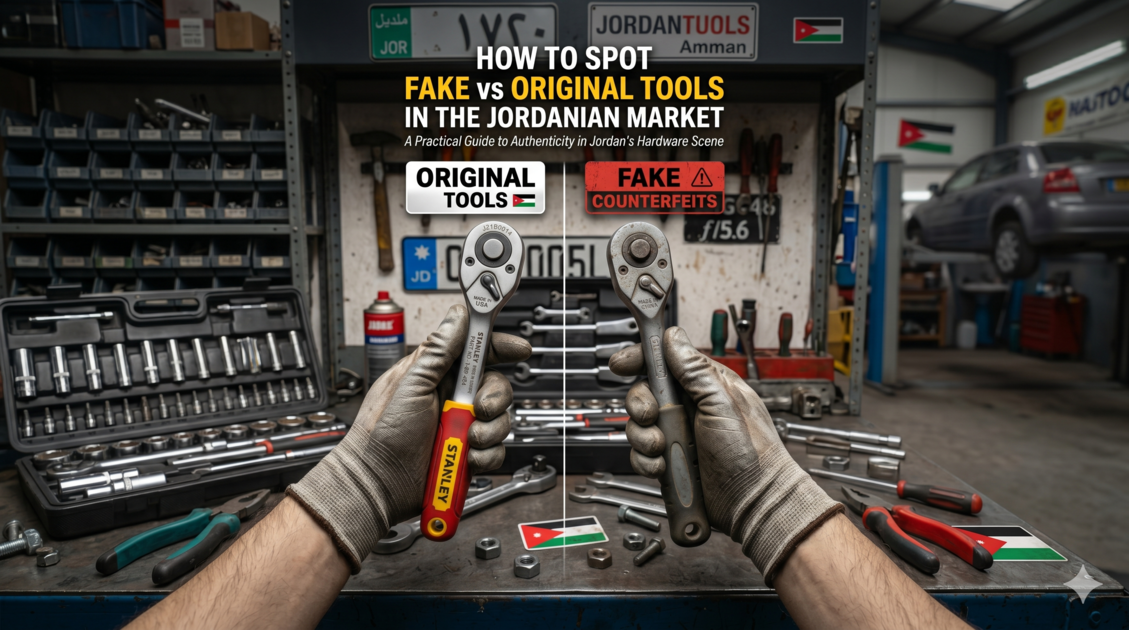
How to Spot Fake vs Original Tools in the Jordanian Market
Why Are Counterfeit Tools So Prevalent in the Jordanian Market?
The Jordanian market is an active marketplace for industrial tools and hardware, with growing demand from craftsmen, technicians, contractors, and even DIY enthusiasts. With this increasing demand, the trade in counterfeit tools bearing the names of renowned brands like Bosch, Makita, DeWalt, Milwaukee, and Hilti has flourished -- despite these products being low-quality fakes with no connection to the genuine brands.
Counterfeit tools are estimated to comprise more than 30% of the total stock in some Arab markets, a concerning figure that means one in three products could be fake. These products do not just pose a financial risk; they directly threaten user safety. A counterfeit drill may explode during operation, a fake cutting disc can shatter at high rotational speeds, and a substandard electrical cable can cause a fire or electric shock.
The Real Dangers of Using Counterfeit Tools
Personal Safety Risks
- Battery explosions: Counterfeit lithium-ion batteries lack protection circuits against overcharging or overheating, making them susceptible to explosion or spontaneous combustion.
- Cutting and grinding disc shattering: Fake discs are made from brittle materials that cannot withstand high rotational speeds (up to 11,000 RPM in angle grinders), sending fragments flying at dangerous speeds.
- Electric shock: Electrical insulation in counterfeit tools does not meet international safety standards such as IEC 60745, increasing the risk of electrical leakage.
- Unstable rotating parts: The drill chuck or saw blade may come loose during operation due to poor manufacturing quality.
Financial Risks
- Short lifespan: A counterfeit tool works for weeks or a few months compared to years of service from genuine tools.
- No real warranty: Even if the seller claims there is a warranty, the original manufacturers will not accept repairs on counterfeit products.
- Higher total cost: Buying a fake tool for 25 JOD three times is more expensive than buying a genuine tool for 65 JOD that lasts years.
- Material and project damage: Inaccurate counterfeit tools can ruin workpieces and cause losses in raw materials.
Visual Inspection: Your First Line of Defense Against Counterfeits
Checking the Packaging and Outer Box
Packaging is the first thing to inspect, and it is often the easiest way to detect counterfeits. Here is what to look for:
- Print quality: In genuine Bosch products, for example, colors are vibrant and consistent, text is sharp and clear, and the logo matches the official design exactly. In counterfeits, you will find faded or off-tone colors and blurry text upon close inspection.
- Product information: The genuine box contains the complete model number, precise technical specifications (watts, RPM, voltage), country of origin, and manufacturer address. Counterfeits often have incomplete or illogical information.
- Barcode (UPC/EAN): Every genuine product carries a unique barcode that can be verified through scanning apps. Barcodes on counterfeit products are either fake or point to a completely different product.
- Hologram sticker: Major brands like Makita and DeWalt use security hologram stickers that are difficult to replicate. Look for three-dimensional visual effects that change with viewing angle.
Inspecting the Tool Body Itself
After opening the box, inspect the tool carefully:
- Weight: Genuine tools are usually heavier than counterfeits because they use better metals and real copper motors. For example, the genuine Bosch GSB 13 RE drill weighs approximately 1.8 kg; if it is noticeably lighter, it is likely counterfeit.
- Plastic quality: The plastic in genuine DeWalt tools is hard and durable with a distinctive, uniform yellow color. Counterfeits use cheap plastic that looks unnaturally shiny or has a strong chemical smell.
- Engravings and markings: Serial numbers and engravings on genuine products are laser-printed or precisely engraved. On counterfeits, they are printed with regular ink that can be rubbed off.
- Ventilation openings: Genuine products have engineered ventilation slots designed for motor cooling. Counterfeits either lack these openings or have irregular ones.
Performance and Technical Specification Testing
Motor Testing
When turning on a genuine tool, observe the following:
- Motor sound: A genuine motor produces a consistent, steady sound when running without load. A counterfeit motor produces a loud, fluctuating, or clicking sound.
- Vibration: Genuine tools from Makita and Bosch are designed with anti-vibration systems. Counterfeit tools vibrate excessively and uncomfortably.
- Response speed: Genuine tools reach maximum speed quickly and smoothly. Counterfeits are slow to reach top speed and may never actually reach the advertised speed.
- Heat: After 5-10 minutes of continuous operation, a genuine tool remains comfortably warm. A counterfeit heats up rapidly to the point where it cannot be touched.
Battery Inspection (For Cordless Tools)
Batteries are among the most commonly counterfeited components, and the most dangerous. Here is how to tell the difference:
- Actual battery capacity: A genuine Makita BL1850B battery has a capacity of 5.0Ah and weighs approximately 680 grams. A counterfeit battery may claim the same capacity but weighs significantly less (400-500 grams), indicating smaller or fewer internal cells.
- Battery charge indicator: Genuine batteries from DeWalt and Makita have LED indicators that work smoothly and accurately. Counterfeits either lack this indicator or it works inaccurately.
- Runtime: A genuine 18V/5Ah Makita battery runs for 45-60 minutes of continuous drill operation. A counterfeit manages only 15-20 minutes at best.
- Charger compatibility: Genuine batteries contain a smart communication chip that interfaces with the original charger. Some modern genuine chargers automatically refuse to charge counterfeit batteries.
Verifying Warranty and Authorized Dealer Status
The Importance of Warranty as Proof of Authenticity
A warranty is not just a piece of paper; it is one of the strongest indicators of product authenticity. Here is what to verify:
- Official warranty card: It should bear the name of the authorized dealer in Jordan, a contact phone number, a store or agency stamp, and the purchase date.
- Warranty duration: Each brand has a specific warranty period. For example:
- Bosch: One year standard warranty, extendable to 3 years through online registration.
- Makita: One year from the date of purchase.
- DeWalt: One year comprehensive warranty, with 3 years of free service on some products.
- Milwaukee: 5 years on some professional products.
- Hilti: Lifetime warranty on certain products through the Hilti Fleet program.
- Authorized service centers: Ensure there is an authorized service center in Jordan that can activate the warranty and perform maintenance. ESCO provides authorized dealer warranty on all the brands it sells.
Electronic Authenticity Verification
Many major companies now offer electronic verification tools:
- Bosch: You can enter the serial number on the official Bosch website to verify product authenticity.
- Makita: Offers a mobile app to scan the QR code on the product and verify its authenticity.
- DeWalt: You can verify the serial number through the DeWalt website or by contacting the local dealer.
If the seller cannot provide this information or refuses to let you verify, this is a strong indicator that the product is counterfeit.
Price Comparison: When a Low Price Is a Warning Sign
An illogically low price is one of the clearest signs of a counterfeit. Here is an approximate comparison in Jordanian Dinars (JOD):
Examples of Price Differences (in JOD)
- Bosch GSB 13 RE drill (600W): Genuine price 55-70 JOD; counterfeit sells for 20-30 JOD.
- Makita GA4530 angle grinder (720W): Genuine price 45-55 JOD; counterfeit sells for 15-25 JOD.
- DeWalt DCD771 cordless drill (18V): Genuine price 120-150 JOD with two batteries; counterfeit sells for 40-60 JOD.
- Makita 18V/5Ah battery: Genuine price 50-65 JOD; counterfeit sells for 12-20 JOD.
- Milwaukee M18 circular saw (18V): Genuine price 180-220 JOD; counterfeit sells for 55-80 JOD.
The golden rule: If the price is less than 50% of the standard market price, be cautious. Genuine promotions rarely exceed a 20-30% discount off the original price.
Most Commonly Counterfeited Products in the Jordanian Market
Based on the experience of ESCO experts and feedback from craftsmen in Jordan, these are the products most frequently targeted by counterfeiters:
1. Batteries and Chargers
Makita, DeWalt, and Milwaukee batteries are among the most commonly counterfeited products. The reason is simple: genuine batteries are expensive (50-80 JOD), so some resort to cheap alternatives. However, the risk is significant: a counterfeit lithium-ion battery may explode or catch fire during charging or use.
2. Cutting and Grinding Discs
Counterfeit cutting discs are widely available and may cost half the price of genuine ones. However, they wear down much faster and can shatter during high-speed use. Always look for the EN 12413 marking and the expiry date on the disc.
3. Drill Bits and Screw Bits
Counterfeit drill bits are made from low-quality steel that loses its edge quickly and may break inside the workpiece. Genuine Bosch and Stanley bits are made from HSS (High Speed Steel) or tungsten carbide and last much longer.
4. Handheld Drills and Grinders
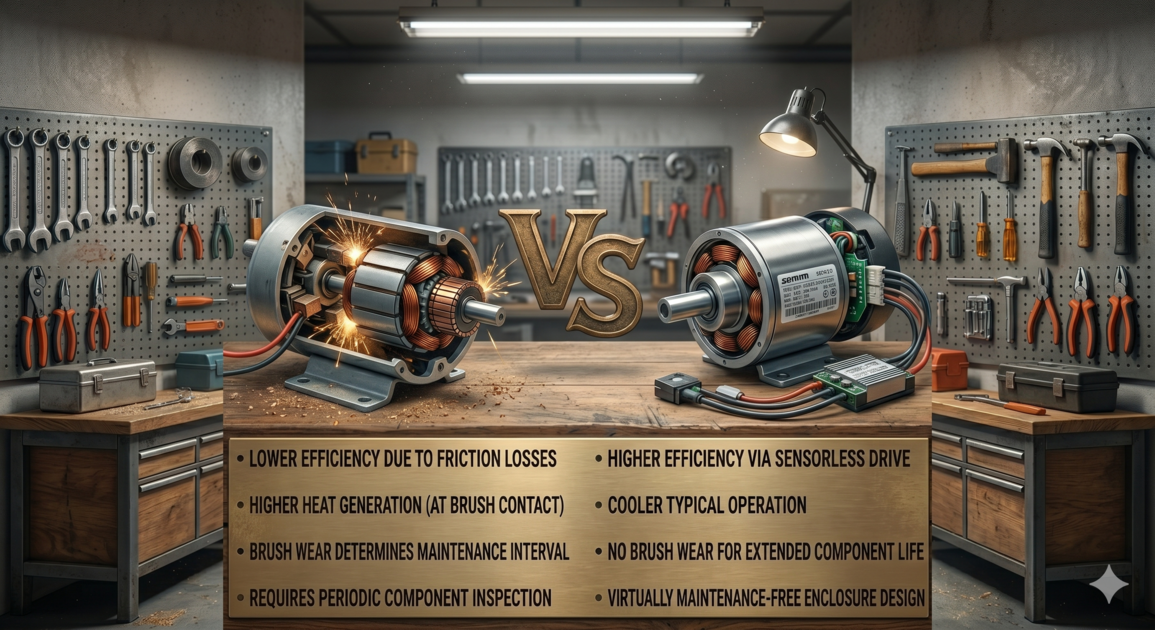
Counterfeit power tools use aluminum motors instead of copper, thin electrical wires, and poor-quality switches. The greatest risk is the absence of double insulation required for user safety.
5. Measuring Tools (Tape Measures, Spirit Levels, Laser Levels)
Counterfeit measuring tools may appear acceptable on the surface, but their accuracy is poor. A counterfeit tape measure may have an error of 2-3 mm per meter, which is a significant difference in construction and precision carpentry work. Genuine measuring tools from Stanley and FINDER are calibrated to high accuracy.
How to Protect Yourself: 10 Practical Tips
- Buy from an authorized dealer or trusted distributor: ESCO (esco.jo) is the largest industrial tools store in Jordan and sells only genuine products from authorized distributors with real warranties.
- Request an official invoice: An official tax invoice is a legal document that protects your rights and proves the product source.
- Compare prices before buying: Check the product price at several authorized sellers. If the price is much lower than average, be cautious.
- Inspect the packaging carefully: Apply all the visual inspection points we discussed earlier.
- Verify the serial number: Use official company websites or apps to verify the serial number validity.
- Ask to test the tool before buying: Any seller who refuses to run the tool in front of you before purchase should raise suspicion.
- Pay attention to the plastic smell: Cheap plastic in counterfeit tools often has a strong chemical odor not present in genuine products.
- Check the tool weight: Compare the tool weight with specifications published on the official company website.
- Ask about after-sales service: Authorized dealers provide genuine spare parts and maintenance service. Ask the seller about the availability of these services.
- Do not buy from unknown online sources: Avoid purchasing from unverified social media pages or unknown online stores. Buy from reputable stores like ESCO.
Genuine Alternative Brands at Affordable Prices
If your budget is limited and you do not need heavy-duty professional tools, there are genuine alternatives at prices much lower than counterfeits claiming to be premium brands:
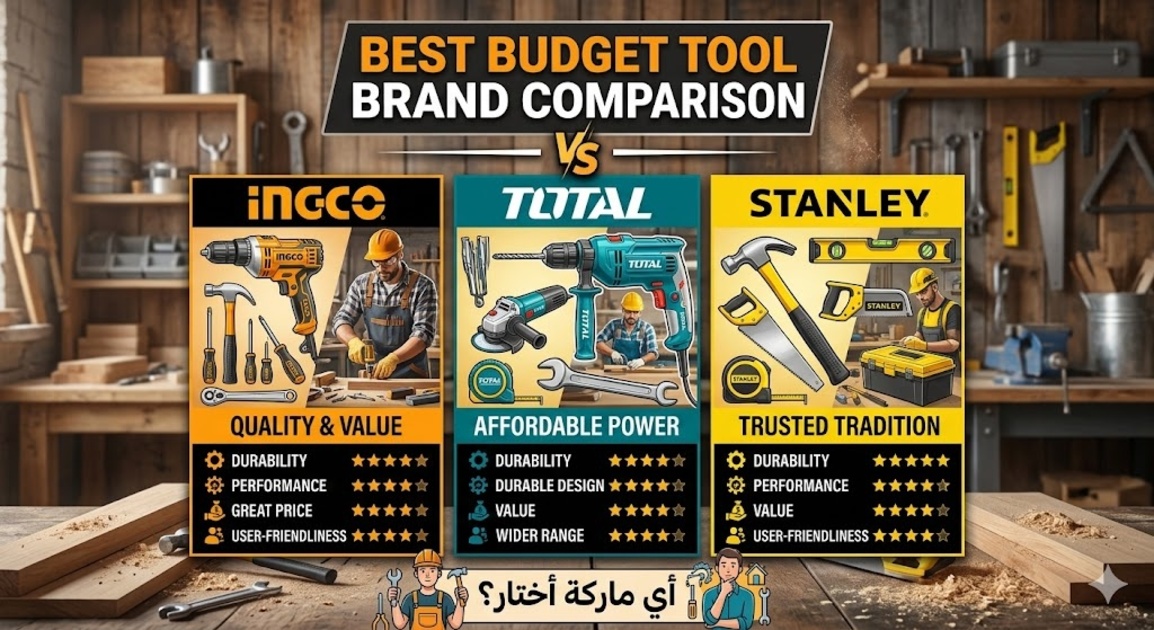
- INGCO: A global brand offering tools with good quality at economical prices. For example, an INGCO drill rated at 680W is available for 18-25 JOD with a genuine warranty.
- TOTAL: An excellent choice for hobbyists and light home use. Complete tool sets are available starting from 30 JOD.
- FINDER: Specializing in hand tools and measuring instruments with high quality and competitive prices.
- Stanley: A prestigious global brand offering hand and power tools at mid-range prices with excellent quality.
Buying a genuine product from these brands is far better than purchasing a counterfeit claiming to be Bosch or Makita. You will get a real warranty, reliable performance, and guaranteed safety.
What to Do If You Discover You Bought a Counterfeit Tool
If you discover after purchase that the tool is counterfeit, follow these steps:
- Stop using the tool immediately: Do not risk your safety, especially with power tools and batteries.
- Return to the seller: Request a refund or product exchange. Bring the invoice if available.
- File a complaint with consumer protection: In Jordan, you can file a complaint with the Jordanian Consumer Protection Society or the Anti-Commercial Fraud Directorate.
- Warn others: Share your experience with fellow craftsmen to warn them about the suspicious source.
- Learn from the experience: Next time, buy from a trusted source like ESCO, which guarantees the authenticity of all its products.
Why ESCO Is Your Best Choice for Genuine Tools in Jordan
ESCO (esco.jo) is the largest specialized store for industrial tools and hardware in Jordan, distinguished by:
- 100% genuine products: All products are imported directly from authorized distributors.
- Wide selection: Featuring the most in-demand brands including Bosch, Makita, DeWalt, Milwaukee, Hilti, INGCO, TOTAL, Stanley, and FINDER.
- Real warranty: Authorized dealer warranty on all products with an official invoice.
- Competitive prices: Competitive pricing with seasonal offers and discounts for large projects.
- After-sales service: A specialized team for customer service and technical support.
- Delivery across all of Jordan: Fast delivery service to Amman and all governorates.
Conclusion
Protecting yourself from counterfeit tools is not a luxury but a necessity that concerns your personal safety, financial investment, and work quality. Always remember that a genuine tool is a long-term investment that saves you money in the long run, while a counterfeit tool is a guaranteed loss no matter how tempting its price may seem. Buy from trusted sources like ESCO, request the warranty and invoice, and never compromise on the quality of your tools regardless of circumstances.