Open-End, Ring and Socket Wrenches: Differences and When to Use Each
A rusted nut under a vehicle or on an old fitting. You reach for an open-end wrench because it was nearest, pull hard, hear a slight slip, and the wrench turns on the nut. Two corners are now rounded. That wrench no longer grips, and the nut has become a job for extraction tools.
The difference between wrench types is not cosmetic or a matter of preference. It is the number and location of contact surfaces on the fastener — and that decides whether the nut comes off or rounds off.
Open-end wrenches and their design limits
An open-end wrench has a U-shaped opening gripping the nut on two opposed faces only, with one side fully open. That is two contact surfaces out of six available on a hex nut.
Mechanically, all the force passes through those two faces, and the open mouth lets the jaws spread under load. As they spread, contact migrates from the middle of each flat out to the corners — the weakest part of a fastener. They round.
Why does the tool exist? Because it slides on from the side. Often there is no way to pass a closed wrench or socket over a fastener: a pipe behind it, a fitting fixed at both ends, a shaft blocking access from above. That is its correct place — when access forbids anything better.
Ring wrenches, and 12-point versus 6-point
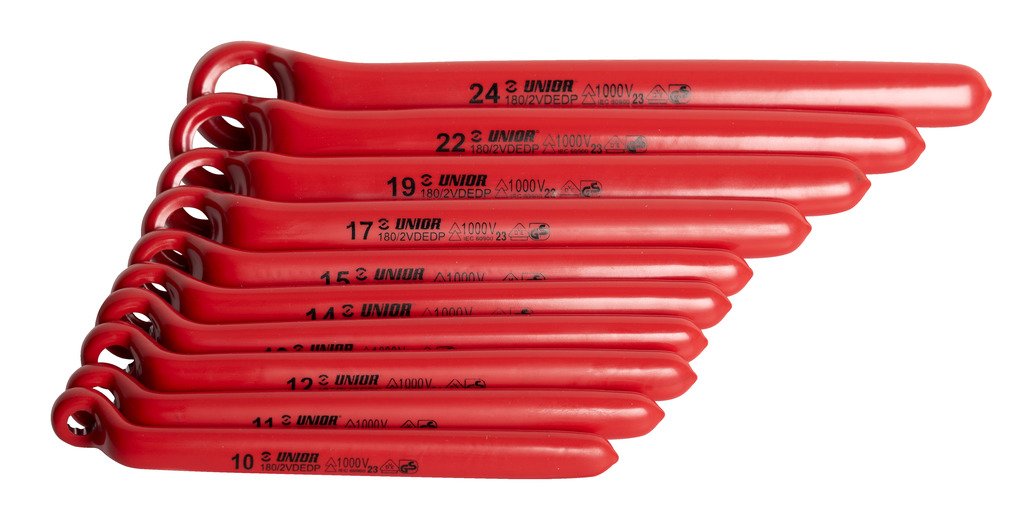
A ring (box) wrench is a closed loop surrounding the fastener, which changes the mechanics: the ring cannot spread under load, contact is distributed all round rather than on two sides, the ring supports the corners from outside, and there is no sideways slip-off. Ring wrenches therefore carry markedly more torque while preserving the fastener. The drawback is that they must pass over the nut or bolt end, which is not always possible.
6-point geometry matches the hex exactly and contacts all six flats, spreading load across wide surfaces away from the corners — the right choice for any tight, rusted or already-degraded fastener.
12-point offers more engagement angles, seating every 30 degrees instead of 60 — a real advantage where swing is limited. The trade-off is narrower contact surfaces closer to the corners, so rounding is more likely at high torque.
| Criterion | 6-point | 12-point |
|---|---|---|
| Contact location | The flats | Closer to the corners |
| Resistance to rounding | High | Lower |
| Smallest engagement angle | 60 degrees | 30 degrees |
| Confined spaces | Less flexible | Better |
| Tight or rusted fasteners | Correct choice | Not advised |
| Square fasteners | Will not fit | Fits |
Combination wrenches, sockets and drive sizes
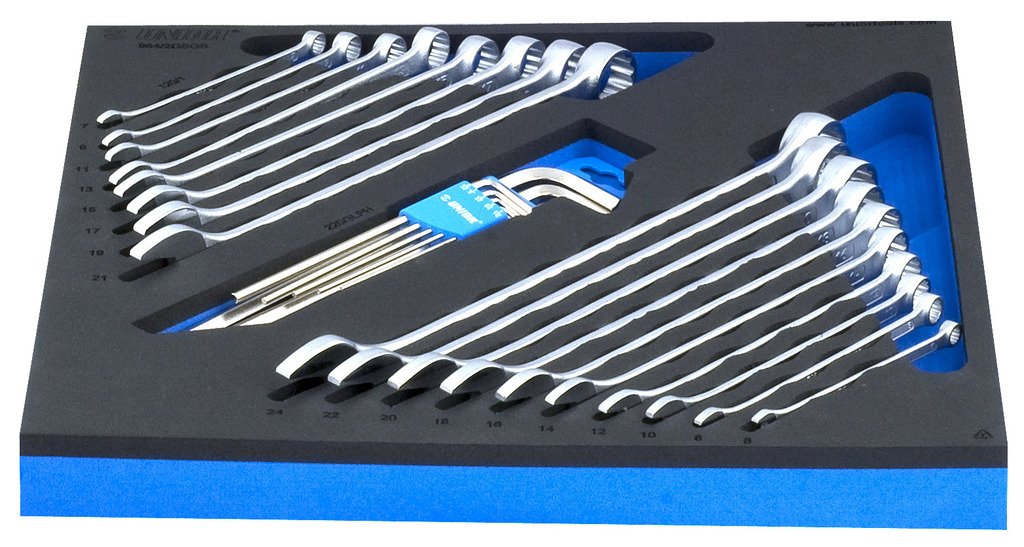
A combination wrench pairs an open end and a ring end in the same size: use the ring end to break loose and for final tightening, and the open end for fast spinning in between or for tight access.
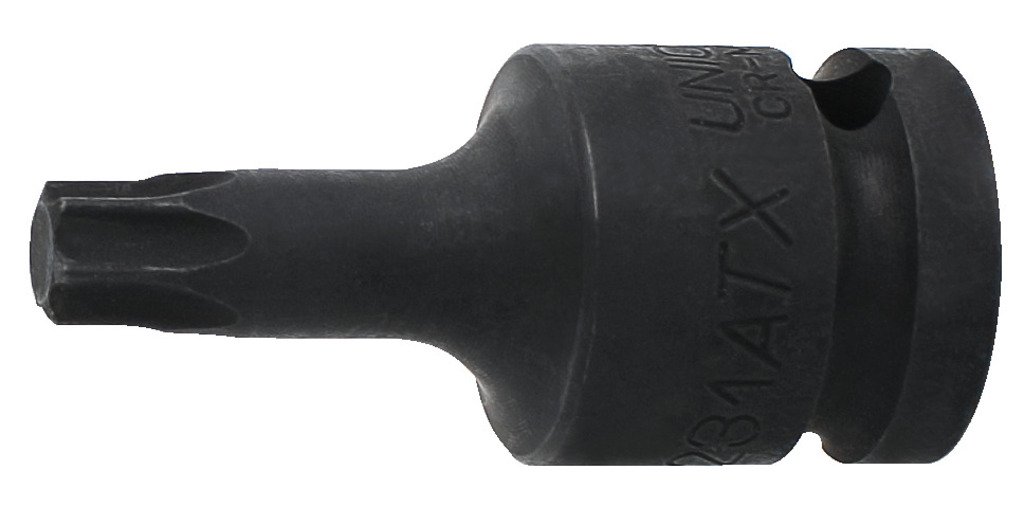
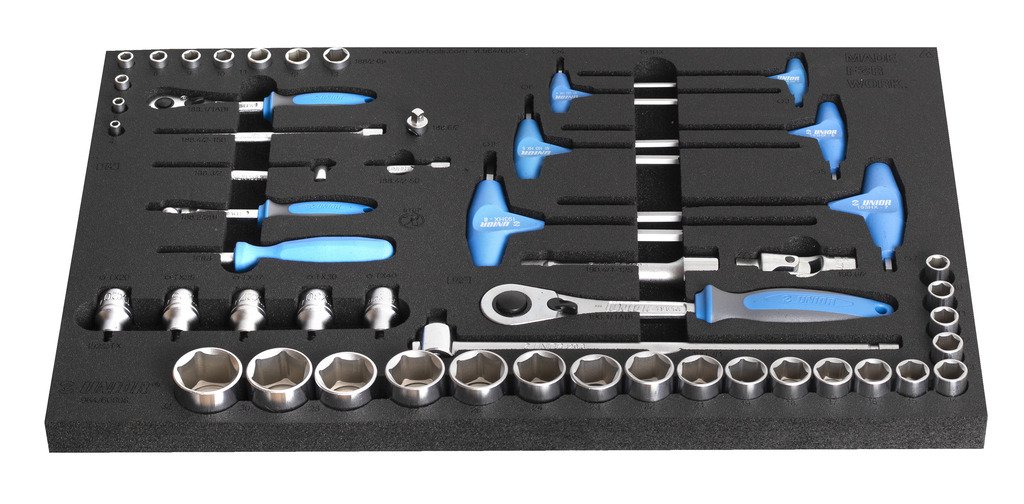
A socket surrounds the fastener like a ring but mounts on a bar or ratchet through a square drive. The ratchet allows continuous turning without reseating, and extensions and joints reach deep locations. Sockets also come in 6- and 12-point, and the same rule applies.
Square drive sizes run from very small for fine work, through mid sizes for general mechanical work, to large drives for structural fasteners. Smaller drives are lighter and better at access but torque-limited; larger drives carry more torque but are bulky. A small drive with a long bar at high torque snaps the square.
Flare nut wrenches for hydraulic and brake fittings
Hydraulic and brake line fittings pose a specific problem: the fitting nut is thin-walled, often in a relatively soft metal, and it sits on a tube that prevents passing a ring or socket over it. An open-end wrench rounds such a nut almost on the first attempt.
A flare nut wrench solves it: a ring with a gap just wide enough to pass over the tube, surrounding the nut on five of six sides. You get near-complete support with side entry. Using one on brake, fuel and oil fittings is not a luxury — it is the difference between undoing a fitting and replacing a whole line.
Adjustable wrenches and jaw direction
An adjustable wrench is a compromise: a fixed jaw and a movable jaw on a toothed worm track. It covers many sizes but grips less securely than any fixed-size wrench, because the adjusting mechanism carries unavoidable clearance.
The decisive rule: the movable jaw must face the direction of pull — the direction the tool moves as you pull.
The reason is mechanical. The fixed jaw is integral with the body and handle and carries load directly; the movable jaw is carried by the weaker adjusting track. Oriented correctly, the major force passes through the fixed jaw and the track works in compression. Reversed, the major force passes through the movable jaw, which spreads, increases clearance, slips on the nut and rounds two corners. Practically: establish the pull direction first, flip the wrench so the movable jaw faces it, then close the jaws tight enough that no play can be felt.
Pull rather than push, and never extend with a pipe
- Control. Pulling engages back and shoulder muscles with better control and finer sensing of changing resistance, so you feel a slip beginning before it completes.
- Injury direction. If a wrench slips while pushing, your hand drives at full force into whatever is ahead of it — a sharp edge, an engine, bodywork. Pulling carries the hand toward your body where it stops safely.
- Stability. Pushing often requires an unstable stance leaning on body weight, so a slip costs your balance.
If the position forces you to push, push with an open palm rather than closed fingers so your fingers do not strike surroundings on a slip.
Metric, imperial and the near-miss sizes
In mixed workshops, the most common cause of rounded fasteners is not a bad tool but a near-fitting size. A wrench slightly larger than the nut touches only at the corners and rounds them reliably.
| Metric | Nearby imperial | Verdict |
|---|---|---|
| 8 mm | 5/16 in | Small difference, not interchangeable |
| 10 mm | 3/8 in | Imperial slightly larger, rounds corners |
| 13 mm | 1/2 in | Very close, a common cause of damage |
| 16 mm | 5/8 in | Small difference, stay in one system |
| 19 mm | 3/4 in | Close, not interchangeable |
| 22 mm | 7/8 in | Small difference, easy mistake |
Practical rule: seat the wrench and wiggle it before loading. Any rock or angular movement means the wrong size. A correct wrench seats snugly and does not move. Never settle for a slightly loose wrench because the right size is missing — you lose the fastener and the time. Store metric and imperial sets separately to reduce mistakes.
Conclusion
An open-end wrench contacts only two faces and concentrates force on the corners, so use it only where access forbids anything better. A ring wrench surrounds and supports the fastener; 6-point grips the flats and is the right choice for any high torque or rust, while 12-point buys a smaller engagement angle in tight spaces. Use sockets with a ratchet for continuous work and a breaker bar to break torque. Brake and hydraulic fittings need a flare nut wrench. On an adjustable, the movable jaw faces the pull. Pull rather than push, never extend with a pipe, and make sure the size is exact, not close.