Angle Grinder Disc Types and Their Correct Uses
Introduction: Why Choosing the Right Disc Matters
The angle grinder is one of the most commonly used power tools in workshops, construction sites, and even homes. However, what many users overlook is that choosing the right disc is just as important as choosing the grinder itself. Using an unsuitable disc for the material or task at hand can lead to poor work results, damage to the workpiece, or -- most critically -- serious injuries.
In this comprehensive guide, we will explore all types of angle grinder discs available in the Jordanian market, the correct use for each type, along with practical safety and selection tips. Whether you are a professional welder, a maintenance technician, or a hobbyist working on a home project, you will find everything you need to know in this article.
1. Cutting Discs
Metal Cutting Discs
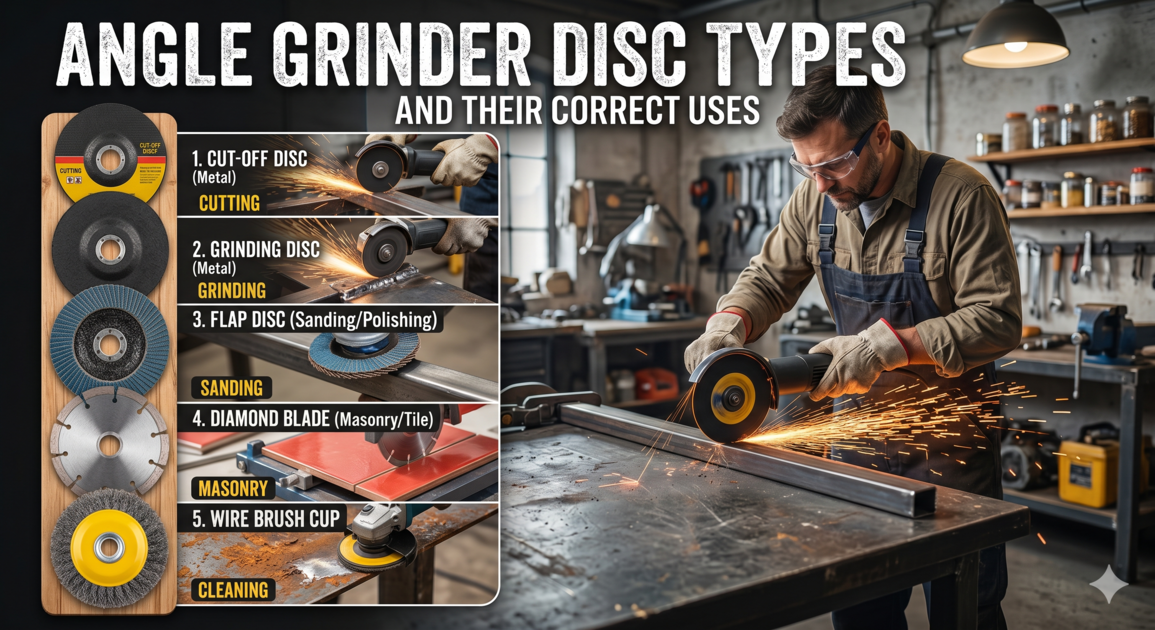
Metal cutting discs are the most common and widely used. They feature a thin profile typically ranging from 1.0 mm to 3.2 mm in thickness, made from abrasive materials such as aluminum oxide bonded with resin.
- 1.0 - 1.6 mm thickness: Ideal for precise and fast cutting of thin metal sheets and thin-walled pipes. They provide clean cuts with minimal material waste.
- 2.5 - 3.2 mm thickness: More durable and capable of handling heavy-duty cutting of rebar, angle iron, and thick pipes.
Among the best brands available at ESCO Jordan: Bosch Expert for Metal discs, known for their long lifespan and high cutting speed, and TOTAL discs, which offer good performance at an economical price starting from approximately 0.35 JOD per disc for the 115 mm size.
Stainless Steel Cutting Discs (Inox)
These discs are specifically designed for cutting stainless steel. The fundamental difference between them and regular metal cutting discs is that they are free of iron and sulfur in their composition, preventing contamination of the stainless steel surface and subsequent rust formation.
Important warning: Never use a regular metal cutting disc on stainless steel! The excessive heat and iron particles will cause rust spots to appear on the stainless surface within days. Bosch Rapido Inox discs at 1.0 mm thickness are among the best options available, providing fast and clean cuts.
Multi-Material Cutting Discs
In recent years, discs designed to cut multiple materials with a single disc have emerged, including metals, PVC plastic, and even wood in some varieties. They are a practical choice for those working with different materials who do not want to constantly switch discs. DeWalt Multi-Material discs are a reliable option in this category.
2. Grinding and Leveling Discs
Depressed Centre Grinding Discs
These are characterized by their substantial thickness, ranging from 6 mm to 8 mm, and are designed for removing excess material, leveling weld surfaces, and smoothing rough edges. They are used at an angle of 15 to 30 degrees to the work surface.
Practical tip: Do not apply excessive pressure on the grinding disc during use. Let the weight of the grinder and disc do the work -- excessive pressure causes overheating, reduces disc life, and increases the risk of breakage. Makita A-80933 discs at 180 mm diameter excel in heavy-duty grinding tasks.
Flap Discs
Flap discs consist of overlapping layers of sandpaper fixed on a fiber or plastic base. They are among the most versatile discs, combining grinding and finishing capabilities in a single disc.
- 40 - 60 grit: For removing welds, heavy rust, and leveling rough surfaces.
- 80 - 120 grit: For medium smoothing and surface preparation for painting.
- 180 - 320 grit: For final finishing and achieving a smooth surface.
INGCO flap discs in 115 mm diameter are available in various grits at competitive prices starting from approximately 0.75 JOD, making them an excellent economical choice for daily use.
3. Diamond Discs
Continuous Rim Diamond Blades
These feature a continuous edge of diamond segments without any gaps. Specifically designed for cutting tiles, ceramics, marble, and granite. They provide clean, smooth cuts without edge chipping and are essential for professional tiling work.
Note: It is preferable to use them with water cooling for the best results and to extend disc life. The Bosch Standard for Ceramic disc at 115 mm diameter is one of the best options available at ESCO, starting from approximately 4.5 JOD.
Segmented Diamond Blades
These feature gaps between the diamond segments, allowing airflow to cool the disc during cutting. Suitable for cutting concrete, bricks, blocks, and building stone. They can be used for dry cutting without water.
Hilti SPX dry-cutting discs feature exceptional cutting speed and long lifespan but are targeted at heavy professional use. For general use, TOTAL and INGCO segmented diamond discs offer good performance at reasonable prices starting from approximately 2 JOD.
Turbo Diamond Blades
These combine the advantages of both previous types, with a wave-pattern serrated edge that allows airflow while maintaining cleaner cuts than segmented discs. Suitable for cutting tiles, concrete, and natural stone. Makita turbo discs at 125 mm diameter offer an excellent balance between cutting speed and edge cleanliness.
4. Cleaning and Finishing Discs
Wire Brush Discs
Used for removing rust, old paint, and accumulated dirt from metal surfaces. Available in several forms:
- Crimped Wire Disc: For light to medium cleaning and surface rust removal.
- Knotted Wire Disc: For heavy cleaning, weld slag removal, and deep rust.
- Cup Wire Brush: Excellent for cleaning large flat surfaces and paint removal.
FINDER wire brushes are available at ESCO in all shapes and sizes, featuring high quality at reasonable prices.
Non-Woven Cleaning Discs (Strip Discs)
Made from nylon fibers impregnated with coarse abrasive materials. Used for rapidly removing paint, rust, and varnish without damaging the metal underneath. They are an excellent alternative to wire brush discs as they do not leave deep scratches on the surface.
These discs are ideal for surface preparation before painting or welding and are available in 115 mm and 125 mm sizes. TOTAL Strip Discs are an excellent economical choice for this purpose.
Polishing Pads
Sponge or felt discs used with polishing compound to achieve a high shine on metal and stone surfaces. Available in different softness levels for progressive polishing from coarse to very fine.
5. Other Specialized Discs
Wood Carving Discs
Critical warning: Wood cutting discs must be handled with extreme caution. Never use circular saw blades on an angle grinder! There are dedicated discs for carving and shaping wood specifically designed for grinders, such as chain carving discs. Full protective equipment must be worn when using them.
Mortar Raking Discs
Thicker diamond discs designed for removing old mortar between rows of bricks and tiles. Essential for renovation work and re-tiling bathrooms and kitchens.
How to Choose the Right Disc: A Quick Guide
Follow these steps to select the correct disc:
- Identify the material: Steel, stainless steel, concrete, tile, wood.
- Determine the operation type: Cutting, grinding, cleaning, polishing.
- Check your grinder size: Ensure the disc diameter matches your grinder (115 mm, 125 mm, 180 mm, or 230 mm).
- Verify the maximum RPM: The maximum RPM printed on the disc must be equal to or higher than your grinder's speed. Using a disc with a lower maximum RPM than the grinder is extremely dangerous and may cause the disc to explode.
- Choose the appropriate brand: For daily professional use, choose Bosch, Makita, or DeWalt. For light to medium use, TOTAL and INGCO offer excellent value for money.
Essential Safety Rules When Using Grinder Discs
Safety is not optional -- it is a necessity. Always follow these rules:
- Always wear safety glasses: Disc and metal fragments fly at very high speeds and can cause serious eye injuries.
- Wear leather gloves: To protect hands from sparks, heat, and sharp edges.
- Use ear protection: Grinder noise exceeds 90 decibels and causes cumulative hearing damage.
- Never remove the guard: The protective guard on the grinder exists to protect you from debris and in case the disc breaks.
- Inspect the disc before mounting: Any crack, chip, or deformation means the disc must be discarded immediately.
- Never use a cutting disc for grinding or vice versa: Cutting discs are thin and designed for straight cuts only. Using them for side grinding will cause them to shatter.
- Start the grinder and let it reach full speed before contacting the workpiece: Starting a cut before the grinder reaches full speed causes dangerous kickback.
- Secure the workpiece properly: Use a vise or clamps to secure the piece. Never hold the workpiece by hand during cutting.
Common Mistakes to Avoid
- Using a damaged or worn disc: Many users continue using a disc until it becomes very small. When a disc wears down to less than two-thirds of its original diameter, replace it immediately.
- Mounting a disc larger than the grinder: Some users remove the guard to fit a larger disc. This is literally a fatal mistake!
- Cutting without ventilation: When cutting concrete or stone, dense dust containing silica is generated. Continuous exposure to this dust causes silicosis. Use an appropriate mask or work in a well-ventilated open area.
- Not checking the disc expiry date: Yes, grinding and cutting discs have an expiry date printed on them (usually 3 years from manufacture date). Expired discs lose their integrity and become dangerous.
- Improper disc storage: Discs should be stored flat and horizontally in a dry place. Vertical storage or humid environments weaken the disc structure.
Quick Reference: The Right Disc for Each Task
For easy selection, here is a quick summary:
- Cutting iron and pipes: Thin metal cutting disc (1.0 - 1.6 mm)
- Cutting thick iron and angle iron: Thick metal cutting disc (2.5 - 3.2 mm)
- Cutting stainless steel: Dedicated Inox disc
- Cutting tiles and ceramics: Continuous rim diamond disc
- Cutting concrete and bricks: Segmented diamond disc
- Weld leveling and material removal: Thick grinding disc (6 mm)
- Smoothing and paint preparation: Flap disc at 80-120 grit
- Rust and paint removal: Wire brush or strip disc
- Metal polishing: Felt pad with polishing compound
Best Brands Available at ESCO Jordan
ESCO store in Jordan offers a wide selection of angle grinder discs from the best global brands:
- Bosch: The top choice for professionals. Their discs feature long lifespan and consistent performance. The Expert and Best series deliver the highest performance levels.
- Makita: Reliable discs with Japanese technology. Excellent for daily professional use.
- DeWalt: Durable discs designed for tough working conditions, especially the XR cutting discs that last 50% longer than standard discs.
- Milwaukee: Offers cutting and grinding discs with Precision Crafted technology for superior performance.
- Hilti: For heavy professional use in major construction projects. Hilti diamond discs are the best in their class.
- TOTAL: An excellent economical choice offering good performance at competitive prices. Ideal for light to medium use and home projects.
- INGCO: Another economical brand offering a wide range of discs with acceptable quality at reasonable prices.
- Stanley: High-quality discs with proven durability, a middle-ground option between economical and professional.
- FINDER: Specialists in wire brushes and cleaning tools with high quality.
Tips for Extending Grinder Disc Lifespan
- Do not apply excessive pressure on the disc during use. Excessive pressure generates high heat that reduces disc life.
- Use the appropriate rotation speed. Some materials like aluminum require lower speeds to prevent disc clogging.
- When cutting thick metals, use a slight rocking motion instead of straight pushing to reduce friction and heat.
- Store discs in their original packaging away from moisture and direct heat.
- Use the appropriate grinder for the disc size. Using an underpowered grinder with a large disc strains the motor and yields poor results.
Available and Most Commonly Used Sizes in Jordan
Angle grinder discs are available in several sizes, with the most common in the Jordanian market being:
- 115 mm (4.5 inches): Most common for small grinders. Suitable for light to medium work and tight spaces.
- 125 mm (5 inches): Also common, offering slightly more cutting area.
- 180 mm (7 inches): For medium to heavy-duty work.
- 230 mm (9 inches): For large grinders and heavy-duty tasks such as cutting concrete and thick steel.
Remember: The standard mounting hole diameter is 22.23 mm for most discs. Always ensure the disc's center hole is compatible with your grinder's arbor.
Conclusion
Choosing the right disc for your angle grinder is not just a technical matter -- it is primarily a safety concern. Each disc is designed for a specific task and material, and using it outside its intended scope puts you at risk and produces poor results. Take the time to read the information printed on the disc and ensure it is compatible with your grinder and the material you are working with.
You can find all types of angle grinder discs at the best prices and quality from ESCO store (esco.jo), the largest industrial tools and hardware store in Jordan, with technical consultation available to help you choose the right disc for your needs.