Generator Buying Guide: How to Choose for Home and Workshop
Why Do You Need a Generator in Jordan?
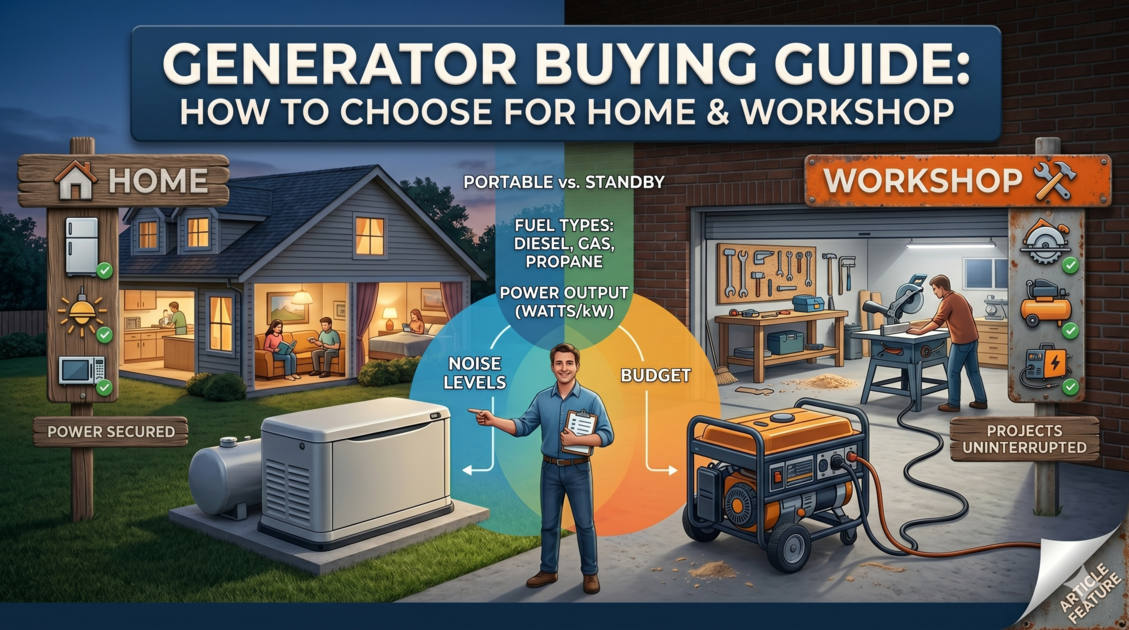
Whether you are a homeowner looking for a backup solution during power outages, or a workshop owner who needs an independent power source to run heavy equipment at remote job sites, choosing the right generator is an important decision that will affect your productivity and comfort for years to come. In Jordan specifically, with the growing construction projects and urban expansion in Amman and other governorates, generators have become an indispensable tool for contractors, tradespeople, and even homeowners.
In this comprehensive guide, we will help you step by step understand the different types of generators, how to accurately calculate the power you need, the most important specifications to look for, and practical recommendations for the best products available at ESCO -- the largest industrial tools and hardware store in Jordan.
Types of Generators: Which One Suits You?
1. Gasoline Generators
Gasoline generators are the most common choice for home use and small workshops. They are known for their reasonable price, ease of operation, and simple maintenance. They are available in capacities ranging from 1,000 watts to 12,000 watts, making them suitable for most needs.
- Advantages: Lower purchase price, relatively lightweight, easy to start, available in multiple sizes
- Disadvantages: Higher fuel consumption compared to diesel, shorter lifespan, relatively loud
- Best for: Backup home use, small workshops, camping and outdoor activities, temporary construction sites
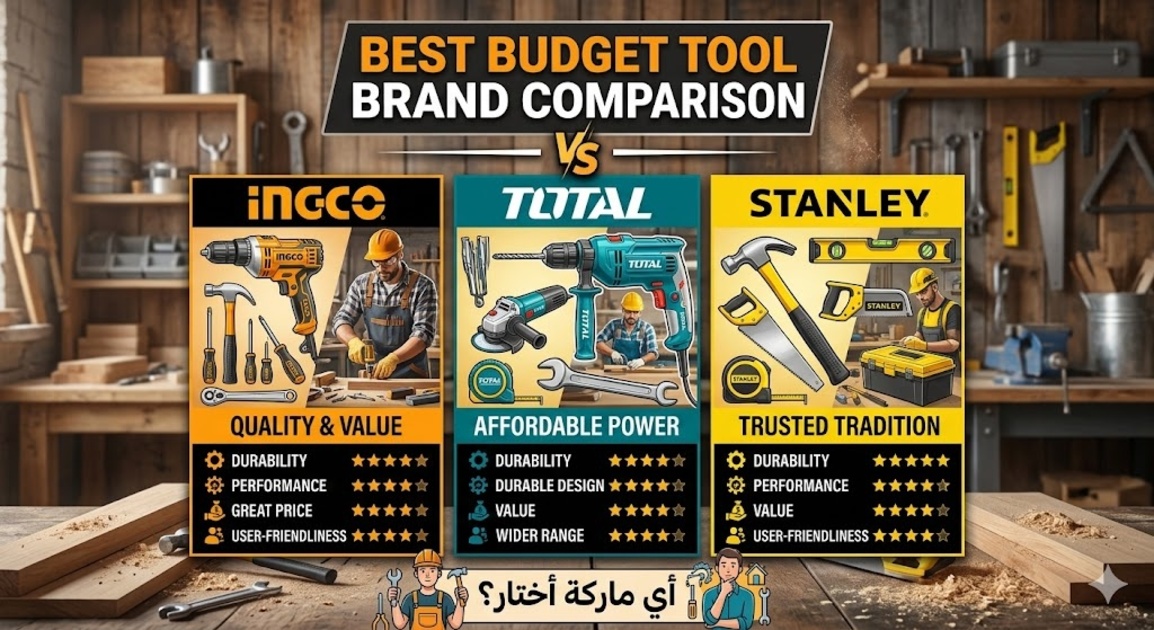
Among the top options available at ESCO are INGCO generators with capacities from 2,500 watts to 6,500 watts starting at around 180 JOD, and TOTAL generators that offer reliable performance at an economical cost.
2. Diesel Generators
Diesel generators are the ideal choice for heavy commercial and industrial use. They feature high fuel efficiency and a much longer lifespan than gasoline generators, but come at a higher price and larger size.
- Advantages: Excellent fuel efficiency (30-50% savings compared to gasoline), very long lifespan (10,000-30,000 hours), higher torque, suitable for continuous operation
- Disadvantages: Higher purchase price, heavier weight, requires more specialized periodic maintenance, louder in older models
- Best for: Large workshops and factories, permanent construction sites, commercial buildings, continuous operation over long hours
3. Silent/Inverter Generators
Silent generators or inverter generators are the newest and most advanced option. They use inverter technology to produce clean and stable electrical current, making them completely safe for sensitive electronic devices such as computers and electronic welding machines.
- Advantages: Very low noise level (50-60 decibels), clean electrical output safe for electronics, lightweight, economical fuel consumption thanks to smart speed control technology
- Disadvantages: Higher price per watt, usually limited capacities (1,000-7,000 watts), spare parts may be more expensive
- Best for: Quiet residential areas, powering sensitive electronic devices, outdoor work requiring low noise
4. Dual Fuel Generators
These generators offer the flexibility of switching between gasoline and natural gas (LPG). This option gives you the freedom to choose whichever fuel is available at a better price, making it a smart solution especially with fluctuating fuel prices in Jordan.
How to Calculate the Power You Need
Calculating the required power is the most important step in choosing the right generator. Follow these steps:
Step One: List Your Devices
Write a list of all the devices you want to run simultaneously, along with the power rating of each device (in watts). Here is a reference table for common devices:
- Home: Refrigerator (150-400W), small air conditioner (1,000-1,500W), television (100-200W), LED lighting per room (30-50W), washing machine (500-1,000W), microwave (800-1,200W)
- Workshop: Bosch or Makita electric drill (600-1,200W), DeWalt circular saw (1,400-2,000W), small air compressor (1,500-3,000W), welding machine (2,000-5,000W), INGCO or Milwaukee angle grinder (700-2,400W)
Step Two: Running Watts vs. Starting Watts
Pay close attention to this important point: many devices require starting watts much higher than their running watts. For example:
- Air compressor: 1,500W running, 4,500W starting (3 times more!)
- Refrigerator: 200W running, 600W starting
- Air conditioner: 1,200W running, 3,600W starting
The general rule: Add up the running watts of all devices, then add the highest starting watts from among the motor-driven devices. The resulting number is the minimum generator capacity needed.
Step Three: Safety Margin
Always add a safety margin of 20-25% above the calculated power. This ensures the generator does not operate at more than 75-80% of its maximum capacity, which extends its lifespan and maintains electrical stability.
Practical Example: A Home in Amman
Suppose you want to run the following devices during a power outage:
- Refrigerator: 200W running + 600W starting
- 3 rooms of LED lighting: 120W
- Television: 150W
- Phone charger and internet router: 50W
- Ceiling fan: 75W + 225W starting
Total running watts: 595W. Highest starting watts (refrigerator): 600W. Total: 595 + 600 = 1,195W. With a 25% safety margin: approximately 1,500W. A 2,000-watt generator would be perfectly suitable for this use.
Practical Example: A Carpentry Workshop
If you run a carpentry workshop and need to power:
- Table saw: 1,800W running + 4,500W starting
- Drill press: 600W
- Small air compressor: 1,500W + 4,500W starting
- Workshop lighting: 300W
Running watts: 4,200W. Highest starting watts: 4,500W. Total: 4,200 + 4,500 = 8,700W. With safety margin: approximately 10,000W (10 kW).
Important Technical Specifications When Buying
1. Engine Type
OHV (Overhead Valve) engines are the best in terms of efficiency and durability. Look for engines with 200cc displacement and above for professional use. TOTAL and INGCO generators available at ESCO come with high-quality OHV engines.
2. Fuel Tank Capacity and Runtime
Tank capacity determines how many hours the generator can run without refueling. As a general rule:
- 2,000-3,000W generator: 12-15 liter tank runs 8-12 hours at 50% load
- 5,000-6,500W generator: 15-25 liter tank runs 6-10 hours at 50% load
- 8,000-10,000W generator: 25-30 liter tank runs 5-8 hours at 50% load
3. Outlets
Make sure the generator has the outlets you need:
- Standard 220V outlets: At least 2 for home use
- 380V three-phase outlet: Essential for heavy industrial equipment
- 12V DC outlet: Useful for battery charging
- USB port: A useful additional feature in modern generators
4. Starting System
- Recoil Start: The simplest and cheapest, requires physical effort
- Electric Start: Start with a push button or key turn, very convenient and recommended
- Remote Start: Allows starting from a distance, available in advanced models
- Automatic Transfer Switch (ATS): Starts automatically when power goes out, the best option for homes and commercial buildings
5. Noise Level
Noise level is an important factor, especially in residential areas in Jordan. Here are the benchmarks:
- Below 60 decibels: Very quiet (like a normal conversation) - silent/inverter generators
- 60-75 decibels: Acceptable for home use
- Above 75 decibels: Loud, suitable only for industrial and remote sites
6. Protection Systems
Look for these safety features:
- Overload protection: Automatic shutdown when the allowed load is exceeded
- Oil level sensor: Automatic shutdown when oil level drops to protect the engine
- Automatic Voltage Regulator (AVR): Maintains electrical stability and protects devices
- Circuit breaker: Protection against short circuits
Best Generators Available at ESCO
For Light Home Use (1,000-3,000 Watts)
INGCO generators with 2,500W capacity are an excellent choice for small homes. They come with a fuel-efficient 4-stroke gasoline engine, with both manual and electric start systems. Prices start at around 150-200 JOD, making them the best value-for-money option.
TOTAL generators with 3,000W capacity offer reliable performance with a 15-liter fuel tank sufficient for about 10 hours of continuous operation. Ideal for those seeking a balance between power and price.
For Medium Workshops (3,500-6,500 Watts)
INGCO generators with 5,500W capacity are the dark horse in this category. They provide enough power to run most workshop tools with a built-in AVR system to protect sensitive equipment. Available with electric start and wheels for easy transport.
TOTAL generators with 6,500W diesel capacity are an economical choice for workshops that operate for long hours daily, offering high fuel efficiency over the long term.
For Industrial and Construction Sites (7,000-12,000 Watts)
For large projects and construction sites in Jordan, generators with 8,000-10,000W capacity are essential for running heavy equipment such as welding machines and large compressors. ESCO offers TOTAL and INGCO generators with high capacities backed by warranty and local technical support.
Golden Tips for Maintenance and Extending Generator Life
Regular Maintenance
- Oil change: Every 50-100 hours of operation or every 3 months (whichever comes first). Use SAE 10W-30 or 10W-40 oil depending on Jordan's ambient temperature
- Air filter: Clean every 50 hours and replace every 200 hours. In dusty areas (like construction sites in Jordan), clean more frequently
- Spark plug: Inspect every 100 hours and replace annually or every 300 hours
- Fuel filter: Replace every 200 hours or when you notice difficulty starting
- Fuel valve: Always close it after finishing use of the generator
Storage Tips
- Drain the fuel tank if you will not use the generator for more than 30 days, or add a fuel stabilizer
- Store the generator in a dry, ventilated place away from moisture and direct sunlight
- Run the generator for 15-20 minutes once a month even if you do not need it, to prevent residue buildup
- During Jordan's hot summer, ensure adequate ventilation around the generator during operation
Essential Safety Precautions
Important warning: Failure to follow safety rules when using a generator can lead to serious hazards including fires, electrical shock, and carbon monoxide poisoning. Always follow these rules:
- Never run the generator indoors: Carbon monoxide (CO) is colorless and odorless and can be lethal. Place the generator in an open area at least 5 meters away from any window or door
- Never refuel while the generator is running: Turn off the generator and wait 5 minutes for it to cool down before refueling
- Use appropriate extension cords: Cords with sufficient cross-section (at least 2.5mm) and length not exceeding 30 meters. FINDER and Stanley extension cords available at ESCO are designed for heavy-duty use
- Grounding: Connect the generator to a metal grounding rod driven into the ground to prevent electrical shock
- Never connect the generator directly to your home's electrical panel: Use a certified transfer switch to prevent backfeed into the public power grid
- Keep a fire extinguisher: Always have a dry chemical fire extinguisher near the generator location
- Children and animals: Keep the generator out of reach of children and in a place inaccessible to animals
Quick Comparison: Gasoline vs. Diesel
To help you make the final decision between gasoline and diesel generators, here is a direct comparison:
- Purchase price: Gasoline is 30-40% cheaper
- Operating cost: Diesel is 30-50% more economical in the long run
- Lifespan: Gasoline 2,000-5,000 hours vs. diesel 10,000-30,000 hours
- Weight: Gasoline is noticeably lighter
- Maintenance: Gasoline is easier and cheaper to maintain
- Noise level: Gasoline is generally quieter in modern models
- Best for intermittent use: Gasoline
- Best for continuous use: Diesel
Buying Tips: What to Know Before You Pay
- Do not buy less than you need: A generator constantly running at over 80% of its capacity will deteriorate quickly
- Do not buy much more than you need: An oversized generator running at only 20-30% load wastes fuel and accumulates carbon deposits
- Ask about warranty: Ensure a warranty of at least one year and know the authorized service centers in Jordan. ESCO products come with official warranty and technical support
- Check spare parts availability: Choose a well-known brand with locally available spare parts such as INGCO and TOTAL available at ESCO
- Read specifications carefully: Pay attention to the difference between peak/maximum watts and rated/running watts. Running watts is the true benchmark
- Think about the future: Will you add new devices or equipment? Choose a generator that accommodates your future needs
Why Buy Your Generator from ESCO?
When purchasing a generator in Jordan, ESCO (esco.jo) is the optimal choice for several reasons:
- Wide selection: Generators from the best global brands in various capacities to suit all needs
- Official warranty: All products are covered by manufacturer warranty with local technical support
- Competitive prices: Well-studied pricing with special seasonal offers
- Delivery across Jordan: Fast delivery service to Amman and all governorates
- Technical consultation: A specialized team to help you choose the right generator for your exact needs
- Accessories and spare parts: Full availability of accessories, spare parts, engine oils, and extension cords
Visit esco.jo now to explore the generator collection, or contact our team for a free consultation to help you choose the perfect generator for your home or workshop.