Regular Drill vs Hammer Drill vs Rotary Hammer: Complete Comparison
Introduction: Why You Need to Understand the Differences Between Drill Types
Walk into any hardware store in Jordan and ask for a "drill," and the salesperson will immediately ask: do you want a regular drill, a hammer drill, or a rotary hammer? This is where confusion begins for many people, especially those without extensive experience with drilling tools. The truth is that each of these three tools is designed for a different purpose, and choosing the wrong one can cost you time, effort, and money without achieving the desired result.
In this comprehensive guide, we will explain in detail the differences between the Regular Drill (Drill Driver), the Hammer Drill, and the Rotary Hammer, and help you choose the right tool for your work whether you are a hobbyist or a professional.
First: The Regular Drill (Drill Driver)
How It Works
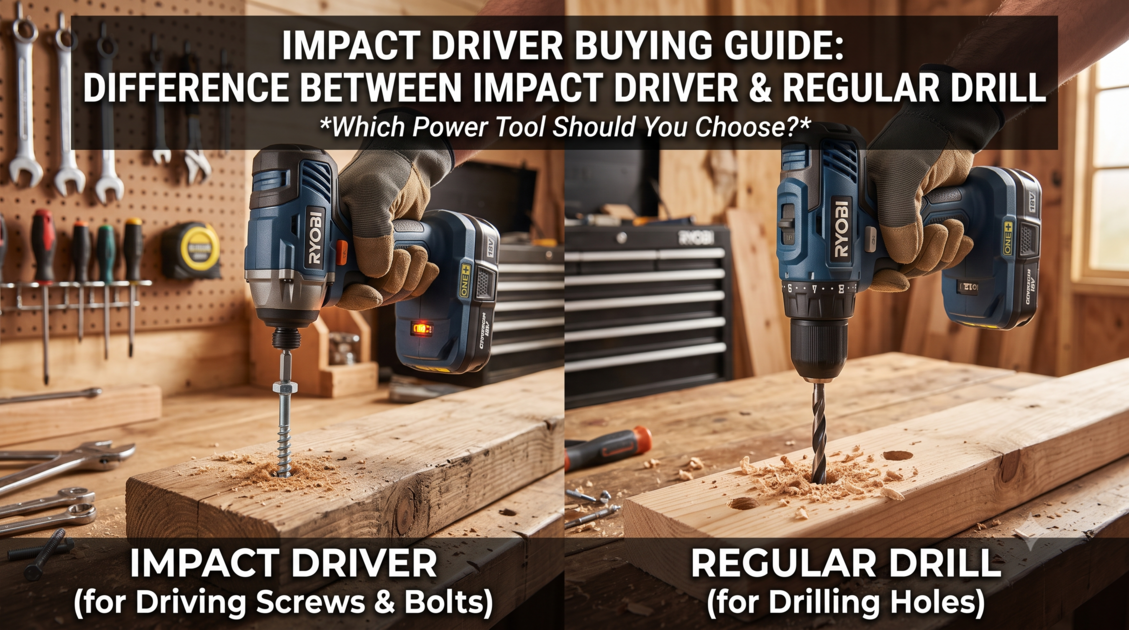
The regular drill is the simplest type of drilling tool, operating with a simple rotation mechanism only. The electric motor spins the drill bit at high speed without any hammering or additional vibration. This mechanism is ideal for soft and medium-hard materials such as wood, plastic, and thin metals.
Typical Technical Specifications
- Power: 400 to 800 watts for corded models
- Speed: 0 to 3,000 RPM
- Chuck Size: Usually 10mm or 13mm
- Weight: Approximately 1.2 to 2 kg
- Voltage (cordless): 12V to 20V
Suitable Applications
- Drilling all types of wood (natural, MDF, particle board)
- Drilling thin metals such as aluminum and light steel
- Driving and removing screws (driver function)
- Home assembly and installation work
- Drilling plastic, drywall, and soft materials
Recommended Models from ESCO
Some of the best options available at ESCO showrooms in Jordan:
- Bosch GSR 120-LI: A 12V cordless drill excellent for home use, lightweight and practical, starting at around 45 JOD.
- Makita DF333D: A 12V cordless drill with two batteries, suitable for beginners and hobbyists.
- INGCO CDLI1222: An excellent budget option priced under 25 JOD, suitable for light use.
- TOTAL TDLI1222: An economical cordless drill with good performance for simple tasks.
Second: The Hammer Drill
How It Works
The hammer drill combines rotational motion with a hammering (pulsing) action simultaneously. Its hammering mechanism relies on two ribbed cam discs (cam-action) that rotate against each other, generating rapid vibration that converts the rotational motion into rotation plus light hammering. This mechanism allows the hammer drill to drill through light concrete, bricks, and concrete blocks in addition to all materials that a regular drill can handle.
Important Note: The hammering action in a hammer drill is relatively weak compared to a rotary hammer and depends on the pressure you apply to the tool during operation.
Typical Technical Specifications
- Power: 600 to 1,100 watts
- Speed: 0 to 3,000 RPM
- Impact Rate: 0 to 48,000 BPM (Blows Per Minute)
- Impact Energy: Approximately 1.5 to 4 joules
- Chuck Size: Usually 13mm
- Weight: 1.8 to 3 kg
Suitable Applications
- Drilling light to medium concrete (diameters up to 16mm)
- Drilling bricks and concrete blocks
- Drilling natural stone at small diameters
- All regular drill applications (wood, metal, screws)
- General home maintenance and wall-mounted installations
Recommended Models from ESCO
- Bosch GSB 13 RE: A 600W electric hammer drill, one of the best-selling models in Jordan, priced at approximately 35-40 JOD.
- Makita HP1630: A 710W hammer drill with a 16mm chuck, an excellent choice for medium-duty use.
- DeWalt DWD024: A 700W hammer drill with durable design and long service life.
- INGCO ID11008: A 1,100W hammer drill at an excellent budget price, approximately 20-25 JOD.
- Stanley STDH8013: A reliable option at 800W with a mid-range price.
Third: The Rotary Hammer (SDS Hammer)
How It Works
The rotary hammer is the most powerful of the three and uses a completely different mechanism than the hammer drill. It relies on an electro-pneumatic mechanism that generates very high impact force without requiring you to press hard on the tool. Compressed air inside the cylinder transfers energy to the bit with high efficiency, which is what makes the rotary hammer capable of drilling through the hardest reinforced concrete with ease.
Most rotary hammer units use the SDS Plus or SDS Max system instead of a regular chuck, and this system allows for quick bit changes and ensures better stability during operation.
Operating Modes
Most rotary hammers provide three operating modes:
- Rotation Only: For drilling in wood and metals using a chuck adapter.
- Rotation + Hammering: For drilling concrete and stone.
- Hammering Only (Chisel Mode): For light demolition, tile removal, and chiseling work.
Typical Technical Specifications
- Power: 750 to 1,500 watts (large models up to 2,000 watts)
- Impact Energy: 2.4 to 12 joules (much stronger than hammer drills)
- Impact Rate: 0 to 5,000 BPM
- Maximum Concrete Drilling Diameter: 26mm to 52mm (depending on model)
- Bit System: SDS Plus (for diameters up to 32mm) or SDS Max (for larger diameters)
- Weight: 2.5 to 7 kg (heavier than the other two types)
Suitable Applications
- Drilling reinforced concrete at large diameters
- Drilling rocks and hard stones
- Installing HVAC systems and pipes in concrete buildings
- Electrical conduit work in concrete walls
- Light demolition and tile removal
- Making openings for plumbing installations
- Construction and contracting projects
Recommended Models from ESCO
- Bosch GBH 2-26 DRE: One of the most popular rotary hammers in Jordan and the region, 800W with 2.7 joule impact energy, SDS Plus, priced at approximately 75-90 JOD. An excellent choice for professionals.
- Makita HR2470: A 780W rotary hammer with three operating modes, very reliable with a long service life.
- DeWalt D25133K: An 800W rotary hammer with ergonomic design and excellent performance.
- Milwaukee M18 FH-0X: A cordless brushless rotary hammer with exceptional power and complete freedom of movement.
- Hilti TE 7-C: For professionals seeking the highest quality and performance, one of the most powerful units available.
- TOTAL TH110286: An excellent budget option at 1,050W, suitable for limited budgets at approximately 30-40 JOD.
Comprehensive Comparison Between the Three Types
By Working Mechanism
- Regular Drill: Rotation only - no hammering action.
- Hammer Drill: Rotation + light mechanical hammering via cam-action disc system.
- Rotary Hammer: Rotation + powerful electro-pneumatic hammering via piston system.
By Impact Force
- Regular Drill: No impact force (0 joules).
- Hammer Drill: Light impact (approximately 1.5 - 4 joules).
- Rotary Hammer: Very powerful impact (2.4 - 12+ joules).
By Concrete Drilling Capability
- Regular Drill: Not suitable for concrete at all.
- Hammer Drill: Light to medium concrete, diameters up to 16mm.
- Rotary Hammer: All types of concrete including reinforced, diameters up to 52mm.
By Price in Jordan
- Regular Drill: 15 to 80 JOD (depending on brand and specifications).
- Hammer Drill: 20 to 120 JOD.
- Rotary Hammer: 30 to 400+ JOD.
By Weight and Ease of Use
- Regular Drill: Lightest and easiest to use, suitable for extended work periods.
- Hammer Drill: Medium weight, requires user pressure when drilling concrete.
- Rotary Hammer: Heaviest, but requires less pressure due to its self-generated impact force.
How to Choose the Right Tool for Your Needs
Choose a Regular Drill If:
- Your primary work involves wood and light metals
- You need a tool for driving and removing screws
- You work on simple home projects like hanging shelves on drywall
- Your budget is limited and you want a lightweight, versatile tool
- You do not regularly work with concrete or brick
Choose a Hammer Drill If:
- You occasionally need to drill concrete at small to medium diameters
- You want one tool that covers most needs (wood, metal, light concrete)
- Your work involves general home maintenance and wall-mounted installations
- You are looking for a balance between price and performance
- The concrete holes you need do not exceed 16mm in diameter
Choose a Rotary Hammer If:
- Your daily work involves concrete and hard materials
- You need to drill reinforced concrete at large diameters
- You have construction or contracting projects
- You need chisel mode for tile removal or light demolition
- You work daily as a professional and need a tool that withstands heavy use
- You work with Jordan's natural stone, which can be very hard
Important Tips When Using Drilling Tools
Safety Tips
- Always wear safety glasses: Concrete and metal fragments can cause serious eye injuries.
- Use ear plugs: Especially with the rotary hammer, which produces noise exceeding 90 decibels.
- Wear a dust mask: Concrete and silica dust is very harmful to lungs over the long term.
- Secure the workpiece: Especially when drilling with a regular drill on metals or wood.
- Do not apply excessive pressure: The rotary hammer works efficiently with light pressure; excessive force causes tool damage.
- Check for electrical wires or water pipes: Before drilling into any wall, use a wire and metal detector.
Tips for Extending Tool Life
- Use the appropriate bit: Carbide-tipped bits for concrete, HSS bits for metal, and wood bits for wood.
- Do not overload the tool: A regular drill is not designed for concrete; using it on concrete will burn out the motor.
- Clean the tool after each use: Concrete dust accumulates and causes gear and bearing damage.
- Regularly grease the rotary hammer nose: Apply a small amount of grease to the end of the SDS bit before inserting it.
- Store the tool in a dry place: Moisture causes rust on internal parts and damage to electrical circuits.
Tips for Drilling in Concrete
- Start slowly: Begin at low speed to create a pilot hole that prevents the bit from slipping.
- Withdraw the bit periodically: This helps remove dust from the hole and prevents bit clogging.
- Use water when drilling at large diameters: Water cooling extends bit life and improves hole quality.
- Set the required depth: Use the depth stop included with the tool or place tape on the bit as a marker.
Bit and Accessory Prices in the Jordanian Market
It is also important to know that the cost of bits and accessories varies by tool type:
- Regular drill bits (HSS and wood): 0.5 to 5 JOD per piece depending on diameter and quality.
- Hammer drill bits (standard carbide): 1 to 8 JOD depending on diameter.
- SDS Plus bits for rotary hammers: 2 to 15 JOD depending on diameter and length.
- SDS Max bits: 10 to 50+ JOD for larger diameters.
- Core bits: 15 to 80 JOD depending on diameter.
All of these accessories are available at competitive prices at ESCO showrooms in Amman and throughout Jordan, with options from global brands such as Bosch and Makita, as well as budget options from INGCO, TOTAL, and FINDER.
When to Rent Instead of Buy?
If you need a rotary hammer for just one project such as installing an air conditioner or making an opening in a wall, renting might be the more cost-effective option. However, if you are a maintenance technician, contractor, or even a homeowner who performs regular maintenance, investing in a quality tool will save you money in the long run. At ESCO showrooms, you will find options to suit all budgets from economy to professional grade.
ESCO's Advice for Jordanian Buyers
If you are just starting to build your tool collection and are unsure where to begin, we recommend starting with a quality hammer drill as it is the most versatile option - covering most daily needs from drilling wood and metals to mounting on concrete walls. Then, when needed, add a rotary hammer for heavy concrete tasks.
Visit ESCO showrooms or browse esco.jo to check the latest offers and prices on all types of drills, bits, and accessories. Our specialized team is ready to help you choose the exact tool that fits your needs.
Conclusion
Understanding the difference between a regular drill, hammer drill, and rotary hammer is the first step toward choosing the right tool. Each tool has its place and applications:
- Regular Drill for wood, metals, and screws.
- Hammer Drill for everything plus light concrete.
- Rotary Hammer for heavy and reinforced concrete and demolition.
Do not pay more than you need, and do not save at the expense of performance. Choose wisely and invest in a tool that will serve you for years to come.