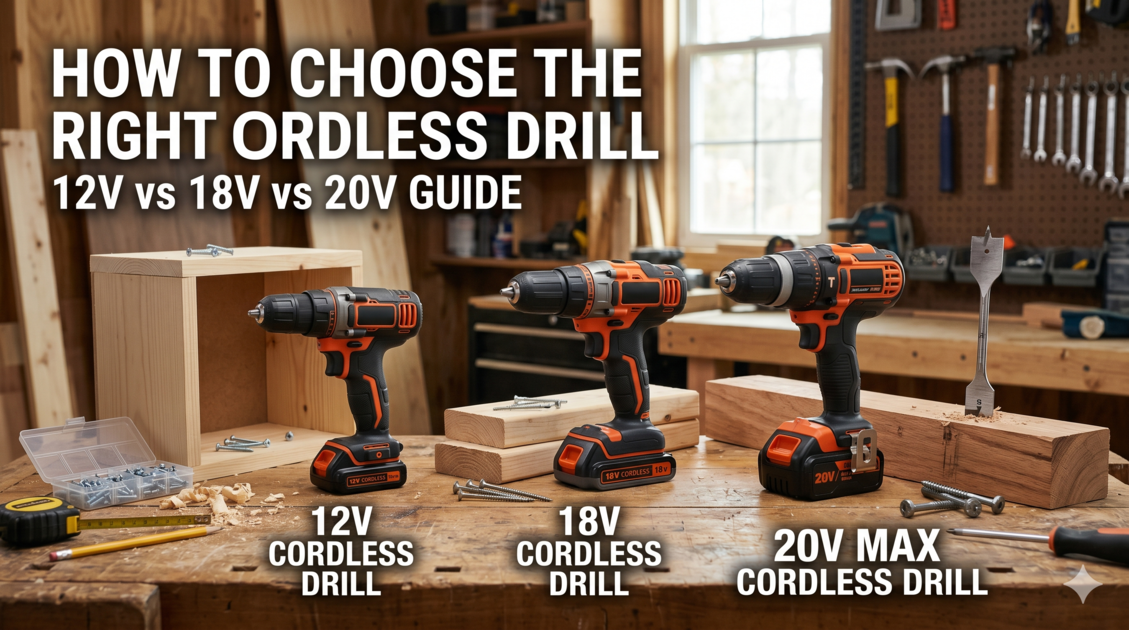
How to Choose the Right Cordless Drill: 12V vs 18V vs 20V Guide
Introduction: Why Voltage Matters When Choosing a Cordless Drill
If you are looking to buy a cordless drill, the first question you will face is: how many volts do I need? In the Jordanian market, you will find options ranging from 12V to 18V to 20V, and each category has its own advantages and applications. The problem is that many buyers assume higher voltage always means better performance, which is not necessarily true.
In this comprehensive guide from ESCO, we will explain in detail the real differences between these three categories and help you make the right decision based on the nature of your work, budget, and actual needs. Whether you are a hobbyist looking for a tool for home use or a professional technician working daily at construction sites, you will find the answer you are looking for here.
What Does Voltage Mean in a Cordless Drill?
Before we dive into the comparison, it is important to understand what voltage actually means. Voltage (electrical potential) represents the electrical driving force of the battery, and it directly affects several factors:
- Torque: Higher voltage means the drill can generate greater rotational force, enabling it to drill through harder materials and drive larger fasteners.
- Rotation Speed (RPM): Higher voltage typically allows for higher rotation speeds.
- Runtime: Higher voltage batteries are usually larger and carry more energy, but this also depends on battery capacity (Amp-hours).
- Weight and Size: As voltage increases, battery size and overall tool weight generally increase as well.
Important Note: 18V = 20V (Max)
This is one of the most confusing points for buyers. In reality, an 18V battery and a 20V Max battery are technically the same thing! The difference is only in the measurement method:
- 18V: This is the nominal voltage of the battery, which is the actual voltage during continuous operation. Companies like Bosch, Makita, and Milwaukee use this rating.
- 20V Max: This is the battery voltage at full charge with no load (not running). Companies like DeWalt, INGCO, and TOTAL use this rating. The word "Max" means maximum.
So do not be fooled by the numbers! A DeWalt 20V Max drill and a Makita 18V drill operate at approximately the same electrical power. The actual difference lies in motor design, build quality, and the technologies used in each device.
Category One: 12V Cordless Drill - Light and Practical
General Specifications
- Torque: Usually between 25 - 35 Newton meters
- Weight: Approximately 0.9 - 1.3 kg (with battery)
- Common Battery Capacity: 1.5 - 2.0 Ah
- Price Range in Jordan: 25 - 120 JOD depending on brand
Best Uses
- Installing shelves, curtains, and home accessories
- Furniture assembly and screw driving
- Drilling in wood, plastic, and thin metal
- Simple home maintenance tasks
- Working in tight spaces thanks to compact size
Recommended Models from ESCO
- Bosch GSR 12V-30: Extremely lightweight and practical, ideal for professionals who need a compact secondary tool. Features a brushless motor for longer performance.
- Makita DF333D: Reliable and durable, an excellent choice for daily use with the CXT battery system compatible with other tools.
- INGCO CDLI12325: An excellent budget option, starting at around 25 JOD, very suitable for home use.
- TOTAL TIDLI12201: Good performance at a reasonable price, comes with two batteries and a carrying case.
Advantages of 12V Drills
- Lightweight and comfortable for extended use
- Compact size makes it easy to work in corners and tight spaces
- Affordable price suitable for limited budgets
- Fast battery charging (usually 30-60 minutes)
- Excellent as a secondary tool in a professional technician's toolkit
Limitations of 12V Drills
- Limited power insufficient for drilling in concrete or stone
- Shorter battery life (especially with 1.5Ah batteries)
- Not suitable for large fasteners or very hard materials
Category Two: 18V / 20V Cordless Drill - Power and Balance
General Specifications
- Torque: Usually between 50 - 85 Newton meters
- Weight: Approximately 1.5 - 2.2 kg (with battery)
- Common Battery Capacity: 2.0 - 5.0 Ah
- Price Range in Jordan: 45 - 350 JOD depending on brand
Best Uses
- All home and commercial maintenance and installation work
- Drilling in wood, metal, and plastic of all thicknesses
- Driving and removing large fasteners in construction work
- Carpentry and finishing work
- Electrical installations and plumbing work
- Drilling in concrete and stone (with hammer function if available)
Recommended Models from ESCO
- Bosch GSB 18V-55: Outstanding professional performance with a Brushless motor and an 18V battery system compatible with over 100 Bosch Professional tools. Approximate price: 130-180 JOD.
- Makita DHP482: One of the best-selling drills in Jordan. Extremely reliable and suitable for daily professional use with torque up to 62 Newton meters.
- DeWalt DCD778 (20V Max): Powerful and robust, with a rugged design and torque up to 65 Newton meters. Excellent for construction sites.
- Milwaukee M18 FPD2: Exceptional performance with a POWERSTATE Brushless motor and torque up to 135 Newton meters. The top choice for professionals who demand the best.
- INGCO CIDLI20028: An excellent option at an economical price (around 45-65 JOD), delivering good performance for medium-duty use.
- Stanley SCD20C2K (20V Max): Reliable performance at a moderate price, comes with two batteries, a charger, and a carrying case.
Advantages of 18V/20V Drills
- Best balance between power, weight, and price
- The most popular and widely available category in the Jordanian market
- Suitable for most home and professional tasks
- Extensive battery system compatible with other tools from the same brand
- Wide range of options in terms of price and quality
Limitations of 18V/20V Drills
- Heavier than 12V drills, may cause fatigue during extended overhead use
- Larger size may make it difficult to work in some very tight spaces
- Professional models can be expensive
When Do You Need Higher Voltage: 36V, 54V, and Above?
Some companies like Bosch (BITURBO 18V x2 system), DeWalt (FLEXVOLT 54V/60V Max system), and Makita (40V Max XGT system) offer tools with higher voltages. This category is designed for:
- Heavy demolition and breaking work
- Drilling in reinforced concrete with large diameters
- Industrial cutting and sawing
- Tasks that traditionally required corded tools
We will not go into detail about this category as it is highly specialized, but if you are interested, you can visit any ESCO branch in Jordan for expert consultation from our technical team.
Comprehensive Comparison Table
Quick Comparison Between Voltage Categories
- 12V - Torque: 25-35 Nm | Weight: 0.9-1.3 kg | Price: 25-120 JOD | Best For: Home use and light tasks
- 18V/20V - Torque: 50-85 Nm | Weight: 1.5-2.2 kg | Price: 45-350 JOD | Best For: Multi-purpose and professional
- 36V and above - Torque: 100+ Nm | Weight: 2.5+ kg | Price: 200+ JOD | Best For: Industrial and heavy-duty
Other Important Factors Besides Voltage
Voltage is not the only factor that determines drill performance. Here are other factors to consider:
1. Motor Type: Brushed or Brushless?
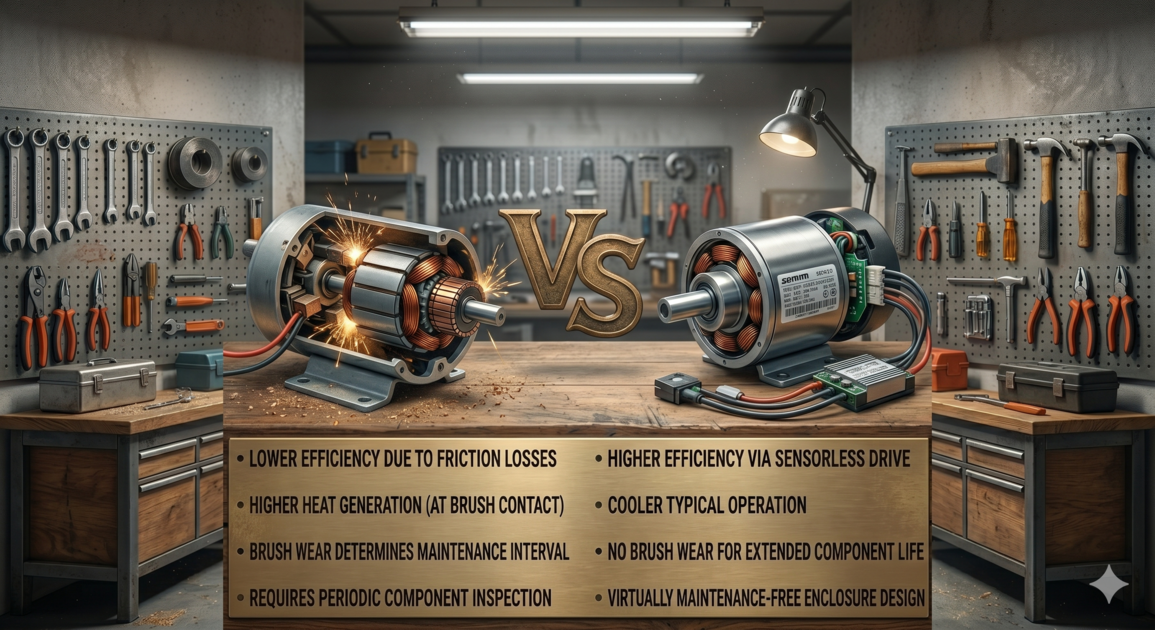
Brushless motors have become the standard in professional tools. Their advantages include:
- 25-50% higher efficiency, meaning longer battery life
- Much longer lifespan (no brushes to wear out)
- Less heat during operation
- More power in the same motor size
Most professional models from Bosch, Makita, DeWalt, and Milwaukee available at ESCO now use Brushless motors. Even budget brands like INGCO have started offering Brushless models at reasonable prices.
2. Battery Capacity (Amp-hours - Ah)
Battery capacity determines how long the tool will work before needing a recharge. The rule is simple:
- 1.5Ah: Suitable for light and intermittent use
- 2.0Ah: Good balance between weight and runtime
- 3.0Ah: Excellent for moderate professional use
- 4.0 - 5.0Ah: For intensive professional use throughout the day
- 6.0Ah and above: For demanding tasks requiring continuous operation
Tip: It is best to buy the drill with at least two batteries so you can work with one while the other charges. Most kits available at ESCO come with two batteries and a charger.
3. Drill Chuck
- 10mm: Common in 12V drills, sufficient for home use
- 13mm: The standard in 18V/20V drills, accepts larger bits and provides more flexibility
4. Speed Settings and Work Modes
- Single speed: Usually in very budget models (not recommended)
- Two speeds: The standard in most drills - slow speed for driving and high speed for drilling
- Three speeds: Available in some advanced models for greater flexibility
5. Hammer Function
If you need to drill in concrete, brick, or stone, make sure to choose a drill with a Hammer Drill function. This feature adds a forward hammering motion during rotation to facilitate drilling in hard materials. Note that cordless hammer drills are excellent for small and medium holes in concrete, but for large holes (more than 16mm), you will need a dedicated rotary hammer.
How to Choose the Right Voltage for Your Needs
To make the decision easier, here is a quick guide based on usage type:
Choose 12V If:
- You are a homeowner who needs a tool for simple maintenance
- Your primary work involves driving and removing screws
- You need a lightweight tool for working in tight spaces
- Your budget is limited and you want a reliable tool at a reasonable price
- You are a professional technician who needs a light secondary drill alongside your main drill
Choose 18V / 20V If:
- You are a professional electrician, plumber, or carpenter
- You need to drill various materials including metal and concrete
- You use the drill daily in your work
- You want a single tool that covers the widest range of tasks
- You plan to buy other cordless tools from the same brand in the future (single battery platform)
Choose 36V and Above If:
- You are a contractor or work on large construction projects
- You need power equivalent to corded tools
- You continuously drill in reinforced concrete
Expert Tip: The Single Battery Platform
One of the smartest decisions you can make when buying cordless tools is to commit to a single brand that uses a unified battery system. This means the same battery that powers your drill will also work in your circular saw, angle grinder, impact driver, sander, and more.
Leading battery platforms available at ESCO:
- Bosch Professional 18V: Over 100 compatible tools
- Makita LXT 18V: Over 300 compatible tools - the largest in the world
- DeWalt 20V Max: Over 200 compatible tools
- Milwaukee M18: Over 250 compatible tools
- INGCO P20S: A growing economical platform with excellent prices
- TOTAL 20V: A good economical platform for home and medium use
When you buy an 18V/20V drill from one of these brands, you are not just buying a single tool - you are entering a complete ecosystem of cordless tools that share the same batteries and chargers.
Tips for Caring for Your Cordless Drill and Extending Its Life
- Do not leave the battery fully depleted: Charge it when you notice performance dropping. Repeated full depletion shortens the life of lithium-ion batteries.
- Store batteries at 40-60% charge: If you will not be using the tool for an extended period, do not leave the battery fully charged or completely empty.
- Avoid high heat: Do not leave batteries in the car under the sun, especially during Jordan's summer when temperatures exceed 40 degrees Celsius.
- Clean the ventilation openings: Use compressed air to periodically clean dust from the drill's ventilation openings.
- Use the right drill bits: Sharp bits appropriate for the material reduce stress on the motor and extend its life.
- Do not apply excessive pressure: Let the drill work at its natural speed and do not press too hard against the material.
- Use the correct torque settings: Adjust the torque ring (clutch) according to the screw size and material to prevent damaging screws or materials.
Safety Tips When Using a Drill
- Always wear safety glasses when drilling, especially in metals and concrete.
- Use a dust mask when drilling in concrete or materials that produce dust.
- Secure the workpiece using a vise or clamps before drilling.
- Check for electrical wires or water pipes behind the wall before drilling. Use a wire and metal detector if possible.
- Hold the drill with both hands when using hammer mode or drilling in hard materials.
- Do not touch the drill bit immediately after drilling as it will be very hot.
- Remove the battery before changing bits or performing any maintenance on the tool.
Where to Buy a Cordless Drill in Jordan
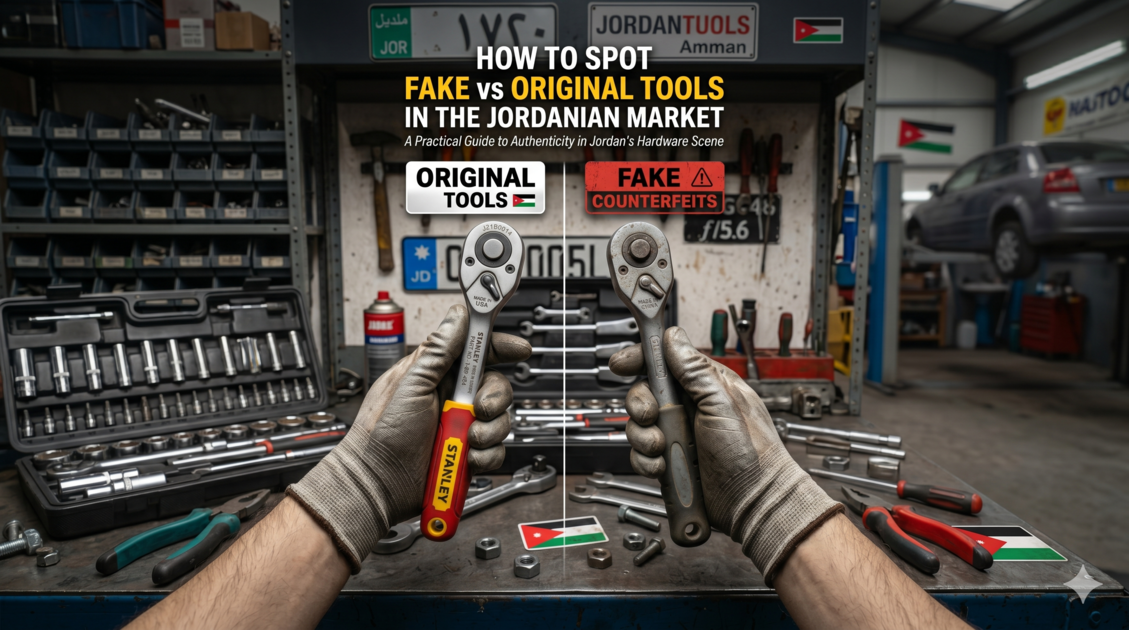
When buying a cordless drill, it is important to ensure you are getting a genuine product with a real warranty and available spare parts. ESCO is the largest specialized store for industrial tools and hardware in Jordan, and offers you:
- 100% genuine products from the best global brands
- Official warranty on all products
- Specialized technical consultation to help you choose the right tool
- Competitive prices with periodic offers and discounts
- Delivery to all areas in Jordan
- After-sales service and authorized maintenance centers
Browse our complete collection of cordless drills at esco.jo or visit your nearest branch to see and try them before buying.
Conclusion
Choosing the right voltage for a cordless drill depends primarily on the nature of your use:
- 12V: The optimal choice for light home use and tight spaces. Lightweight, practical, and economical.
- 18V / 20V: The most versatile and popular choice. Suitable for most users from hobbyists to professionals. If you are undecided, this is the safest category to choose.
- 36V and above: For professionals who need maximum cordless power.
Remember that voltage is not everything - motor type, battery capacity, and build quality are all influential factors. Most importantly, buy from a trusted source that guarantees you a genuine product and a real warranty. ESCO provides all of that along with free technical consultation to help you make the right choice.