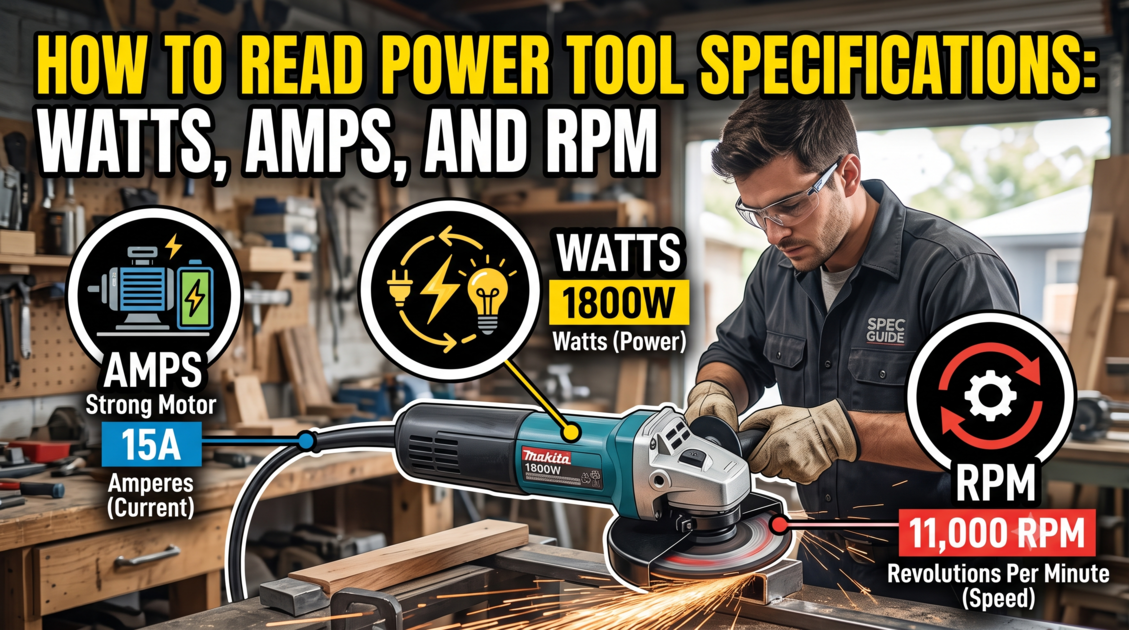
How to Read Power Tool Specifications - Watts, Amps, and RPM
Understanding Power Tool Specifications
When buying a power tool, technical specs can seem complex. This guide explains every number simply so you can compare and make the right decision.
Power (Watts - W)
Measures the energy the motor consumes. More watts means more power. But watts alone don't determine performance - efficiency matters too.
- Home drill: 400-700W
- Professional drill: 700-1200W
- 4.5" Angle grinder: 700-900W
- 9" Angle grinder: 2000-2600W
- Circular saw: 1200-2000W
Torque (Newton meters - Nm)
Measures turning and fastening force. Very important for drills and impact drivers. Higher torque = ability to drive larger screws and drill harder materials.
- Home drill: 20-40 Nm
- Professional drill: 50-130 Nm
- Impact Driver: 150-300 Nm
Rotation Speed (RPM)
Revolutions per minute. High speed for drilling and cutting, low speed for fastening. Variable speed tools are best.
No-Load Speed vs. Under-Load Speed
The listed speed is usually no-load speed. Actual speed under load is lower. This is normal.
Safety Standards
- CE: European safety standard.
- GS: German standard, higher than CE.
- UL: American standard.
- IP Rating: Dust and water resistance (e.g., IP54).
ESCO Engineering Warehouses team helps you choose the right specifications for your work.